
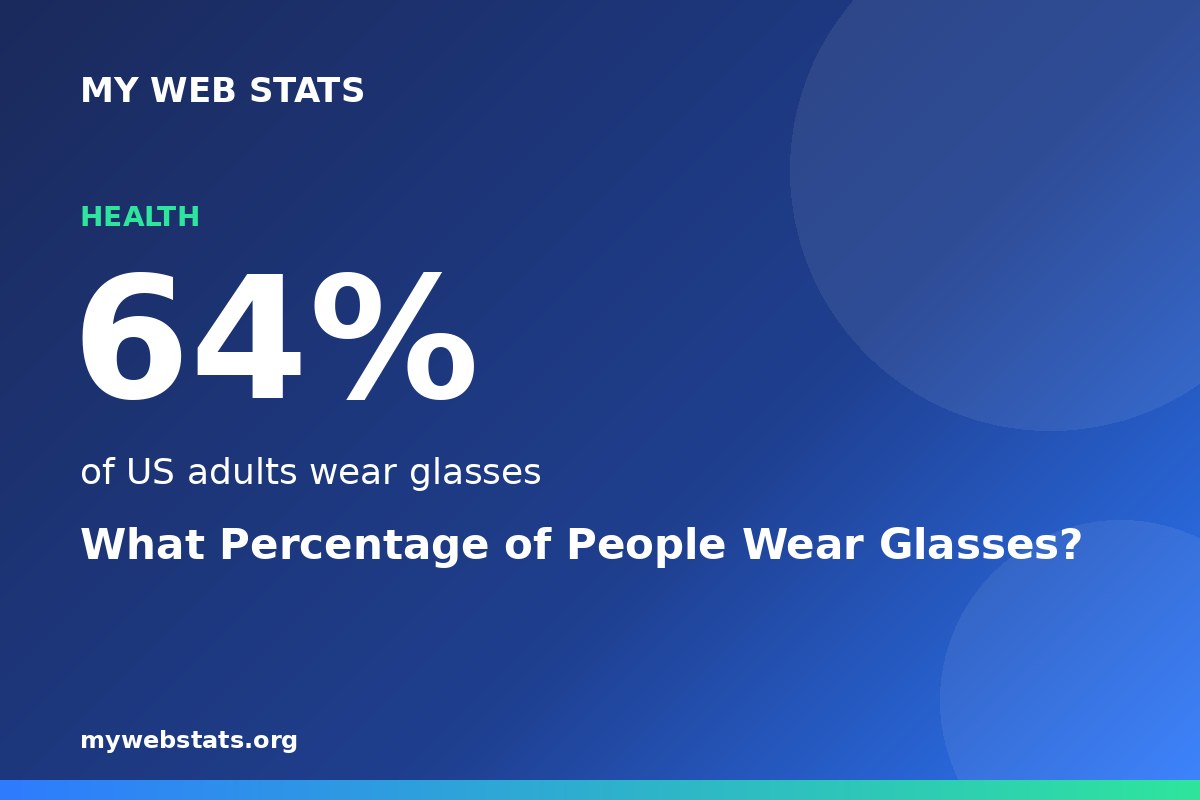
Short answer: About 64% of US adults (166.5 million people) wear prescription glasses, and 75.6% use some form of vision correction, according to The Vision Council. In Britain, YouGov finds 60% of people who need vision correction wear glasses only, while just 2% rely on contact lenses alone.
Last updated: November 2026. General information only, not medical advice.
Vision correction in the US
| Measure | Share of adults | People |
|---|---|---|
| Use any vision correction | 75.6% | about 197 million |
| Wear prescription glasses | 63.7% | 166.5 million |
| Wear over-the-counter reading glasses | 13.2% | 34.5 million |
| Children aged 2–17 with glasses or contacts (2019) | 25.3% | – |
Glasses or contact lenses?
| Adults who need vision correction | Britain | US |
|---|---|---|
| Glasses only | 60% | 48%* |
| Both glasses and contacts | 8% | 12%* |
| Contacts only | 2% | 3%* |
Why so many people need glasses
- Age. Almost everyone needs reading glasses from their mid-40s, as the eye’s lens stiffens (presbyopia).
- Short sight is rising. Myopia has become much more common among children and young adults, especially in East Asia.
- Multiple pairs. About 40% of US glasses wearers regularly use two or more pairs.
Frequently asked questions
What percentage of the population wears glasses?
About six in ten adults in the US and a similar share in the UK, rising to most people over 50.
Are glasses more popular than contact lenses?
Yes, by a wide margin in both countries.
How often should you have an eye test?
The NHS advises adults to have a sight test every two years, or more often if an optometrist recommends it.
Related: What percentage of people are short-sighted? · Average screen time · What percentage of people have aphantasia?





Leave a Reply