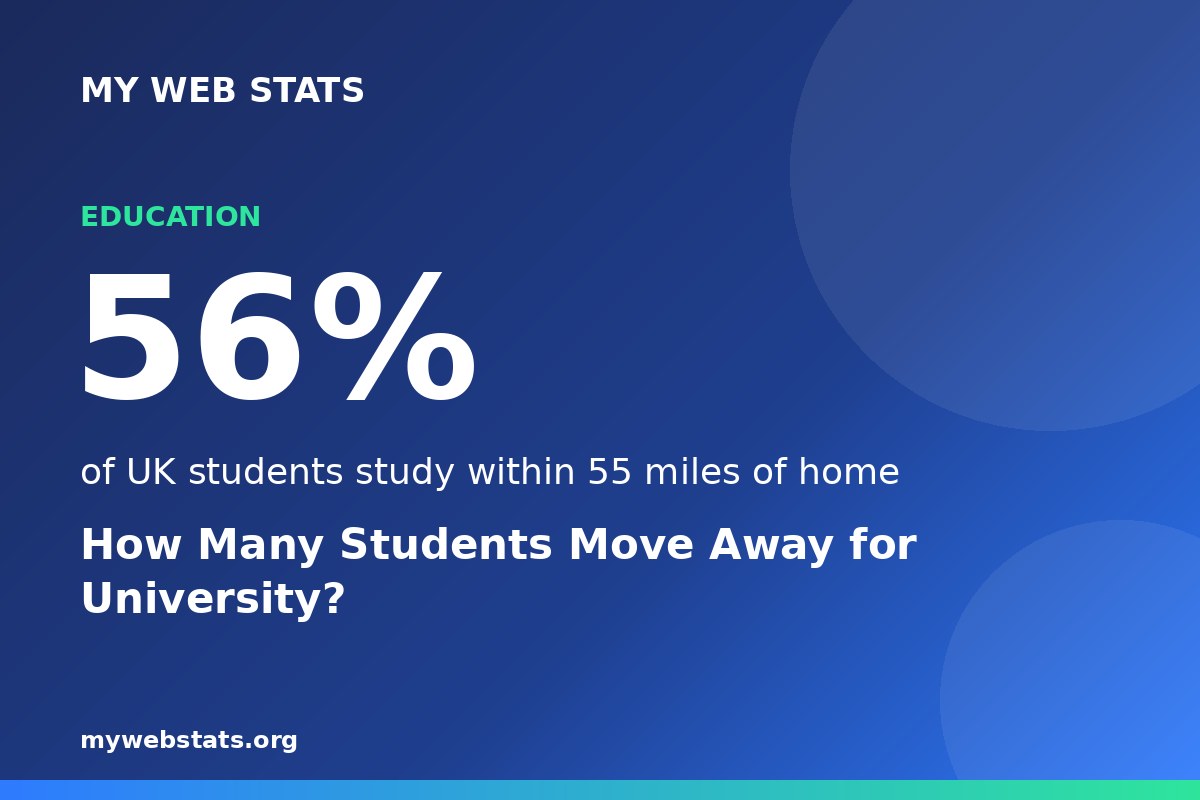
Short answer: in the UK, a majority of young full-time students still leave home, but most stay fairly close. Research by the Sutton Trust found that over half attend a university less than about 55 miles away and around a quarter live with their parents. In the US, most students go to college within an hour’s drive of home, and only about 1 in 5 first-year students leaves their home state.
Last updated: November 2026. Figures are approximate and drawn from studies in different years.
Key takeaways
| Measure | UK | US |
|---|---|---|
| Study close to home | About 56% within 55 miles | A majority within about 50 miles |
| Live with parents while studying | About a quarter, and rising | Roughly 4 in 10 undergraduates, including two-year colleges |
| Go a long way | About 1 in 10 move more than 150 miles | About 1 in 5 first-years attend out of state |
United Kingdom
Moving away at 18 has long been seen as the standard English university experience. The data show a more local picture. The Sutton Trust’s analysis of student records found that only around 1 in 10 students moved more than 150 miles, and that staying at home was far more common among students from lower-income families, those in London and the North East, and some British Asian communities.
Commuting has grown since. UCAS has reported record shares of 18-year-old applicants planning to live at home, at around 3 in 10, with rent and living costs the reason most often given. Maintenance loans have not kept pace with rents in many university cities.
- Scotland: students are more likely to stay at home, helped by free tuition at Scottish universities for Scottish residents.
- Northern Ireland: a large share leave for universities in Great Britain because local places are capped.
United States
American students stay closer still. Studies of enrolment data find that the typical student at a public four-year college is within about 50 miles of home, and at community colleges under 10 miles. In-state tuition at public universities is a strong reason: out-of-state students often pay two to three times as much.
Distance rises with income and with selectivity. Students at highly selective private universities come from across the country, while those from lower-income families are much more likely to enrol near home.
Does it matter?
- Cost: living at home can save several thousand pounds a year in rent.
- Choice: students who can only consider local options have fewer courses and institutions to pick from.
- Experience: commuter students report taking part less in clubs and social life, and UK data show they are somewhat more likely to drop out.
Frequently asked questions
Is it cheaper to live at home for university?
Almost always. Students in England living with parents can borrow less in maintenance loan, but avoid rent, which is the largest cost for most students.
How many UK students go abroad for a full degree?
A small share, around 1% to 2%.
Do students move back home after graduating?
Many do. Surveys in both countries find that around half of new graduates live with their parents for a period.
Related: College graduation rates · How much of your income should go on rent? · How much of your income should go to student loans?