
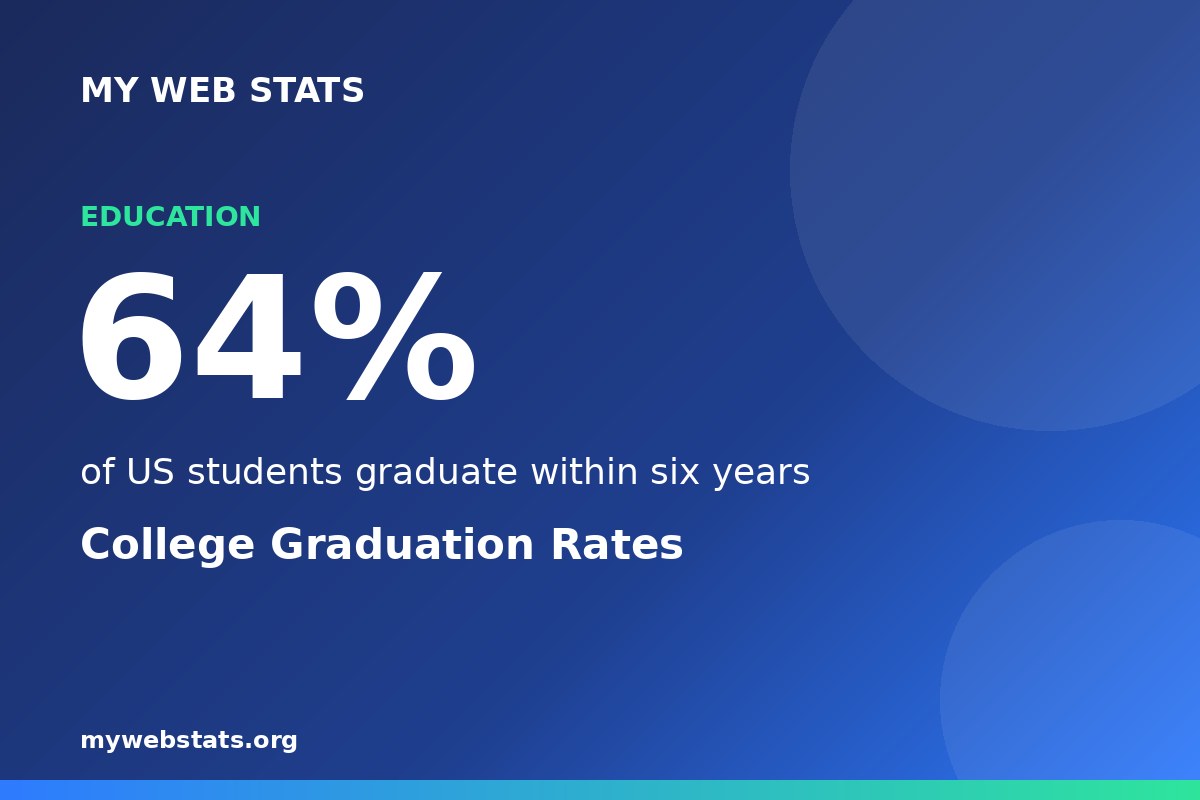
Short answer: about 64% of students who start a bachelor’s degree full time at a US four-year college finish it at that college within six years. Fewer than half finish in four. In the UK, close to 9 in 10 full-time undergraduates complete their course.
Last updated: November 2026.
US graduation rates at a glance
| Measure | Approximate rate |
|---|---|
| Four-year colleges, graduating within six years | About 64% |
| Four-year colleges, graduating within four years | About 47% to 49% |
| Private non-profit four-year colleges, six years | About 68% |
| Public four-year colleges, six years | About 63% |
| For-profit four-year colleges, six years | About 25% to 30% |
| Two-year colleges, completing within three years | About a third |
Why “six years” for a four-year degree?
The official US measure allows 150% of the normal time, so six years for a bachelor’s degree and three for an associate degree. Many students take longer than four years because they change subject, study part time, work alongside their course or take a break.
The official rate also misses students who transfer and graduate somewhere else. The National Student Clearinghouse, which follows students between colleges, finds that a little over 60% of everyone who starts any US college, including part-timers and community college students, has a qualification six years later.
What predicts finishing
- Selectivity: colleges that admit under a quarter of applicants graduate around 90% of students. Open-admission colleges graduate fewer than a third.
- Full-time study: part-time students are much less likely to complete.
- Money: students from lower-income families drop out more often, commonly citing cost and the need to work.
- Sex: women graduate at higher rates than men, by about six percentage points.
United Kingdom
UK completion is among the highest in the developed world. Office for Students data for England show that roughly 87% to 90% of full-time first-degree students complete their course, and only around 1 in 10 leave in the first year or two without a qualification. Degrees are shorter, usually three years in England, Wales and Northern Ireland, and students apply to a specific subject, which leaves less room to drift.
Rates vary between universities, from above 95% at the most selective to under 80% at some others, and are lower for part-time and mature students.
How many adults have a degree?
About 38% of Americans aged 25 and over hold a bachelor’s degree or higher, according to the Census Bureau. In the UK, around half of adults aged 25 to 64 have some form of higher education qualification, one of the highest shares in the OECD.
Frequently asked questions
What percentage of college students drop out?
In the US, roughly 3 in 10 students who start have left without a qualification six years later, and around 1 in 10 are still enrolled. About a quarter of first-year students do not return to the same college for a second year.
How many Americans have some college but no degree?
More than 40 million, according to the National Student Clearinghouse.
Have graduation rates improved?
Yes. The US six-year rate at four-year colleges has risen from about 55% for students who started in the mid-1990s to about 64% now.
Related: How much of your income should go to student loans? · How much do we remember of what we hear? · Average yearly income: UK vs US


Leave a Reply