
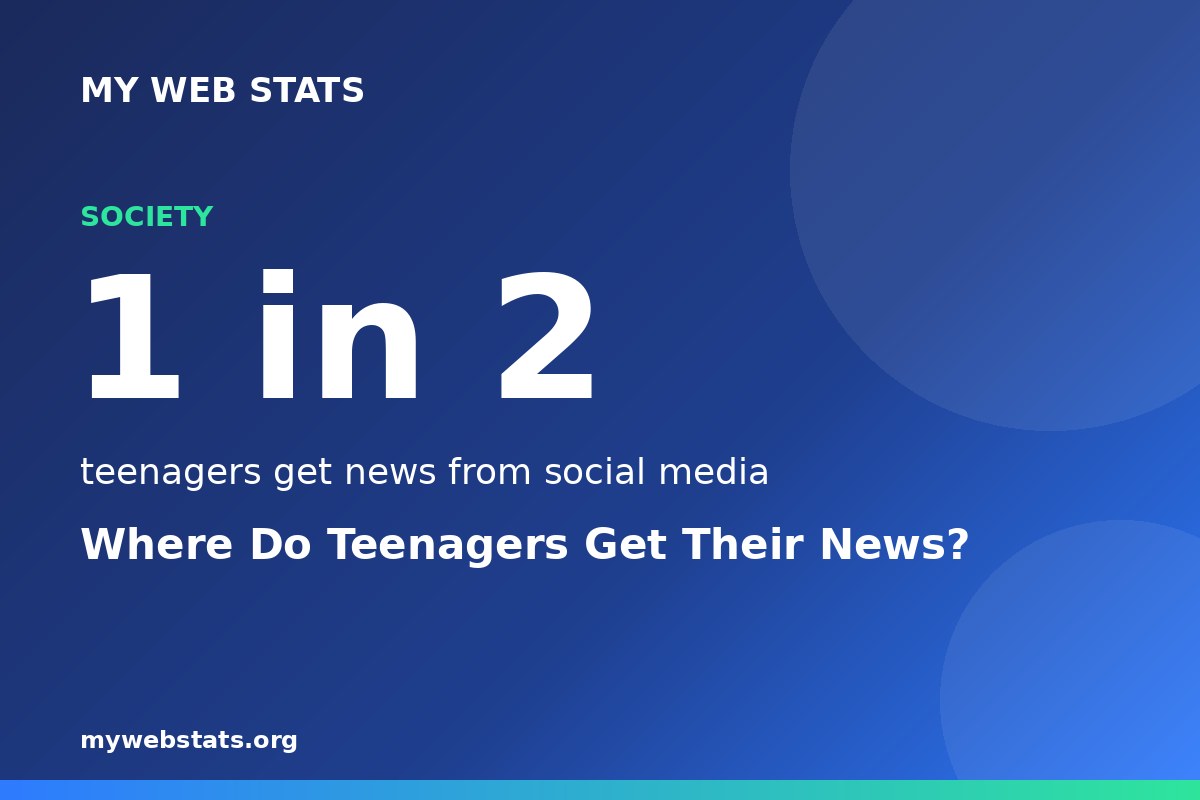
Short answer: mostly from social media and video platforms, and from family. Surveys in the UK and US consistently find that more than half of teenagers get news from social media, with TikTok, YouTube and Instagram leading. Only around 1 in 10 or fewer use radio or printed newspapers.
Last updated: November 2026. Percentages are approximate and differ between surveys and years.
Teenagers’ news sources at a glance
| Source | How widely used by teenagers |
|---|---|
| Social media (TikTok, Instagram, Snapchat, X) | More than half |
| YouTube | Around a third to a half |
| Family and friends | Around half or more; often the most trusted |
| Television | Around a third to a half, and falling |
| News websites and apps | Around a fifth to a third |
| Radio | Around 1 in 10 |
| Printed newspapers | Under 1 in 10 |
United Kingdom
Ofcom surveys children aged 12 to 15 each year. In recent editions TikTok has been the single most-used news source for this age group, used by around 3 in 10, with YouTube and Instagram close behind. BBC One, which was top a few years ago, has slipped down the list. Family remains the most common way of hearing about news overall, and the source teenagers say they trust most. Social media ranks lowest for trust, even among those who use it most.
United States
A Common Sense Media survey of 13 to 17 year olds found 54% got news from social media at least a few times a week and 50% from YouTube, compared with 41% from news organisations in print or online and 37% from television. Among those using YouTube for news, most were watching celebrities and influencers, not news outlets.
Pew Research Center’s work on young adults points the same way: the share of under-30s who regularly get news on TikTok has risen from under 1 in 10 in 2020 to around 4 in 10.
What has changed
- News finds them. Teenagers mostly come across news in a feed while doing something else, instead of seeking out a bulletin or front page.
- People over brands. They are more likely to follow individual creators than news organisations.
- Video first. Short video has overtaken text.
- Radio has faded. Teenagers still listen to audio, but through streaming services and podcasts, where news bulletins are absent.
Can they tell what is true?
Confidence is higher than ability. Ofcom’s media literacy research finds that most teenagers say they can spot fake content, but when shown real examples a substantial minority cannot identify a fake social media profile or a misleading post. Schools in England are being asked to do more on media literacy under the revised curriculum.
Frequently asked questions
Are teenagers interested in news?
More than is often assumed. In Ofcom’s survey around 6 in 10 children aged 12 to 15 say they are interested in news, with music, celebrities, sport and the environment the topics most often named.
Which source do teenagers trust most?
Family, followed by television and radio. Social media is trusted least.
How do adults compare?
Television is still a leading news source for UK adults overall, although online sources have drawn level or moved ahead, and BBC One remains the most-used single outlet.
Related: WhatsApp statistics · How much do we remember of what we hear? · Distracted driving statistics



Leave a Reply