
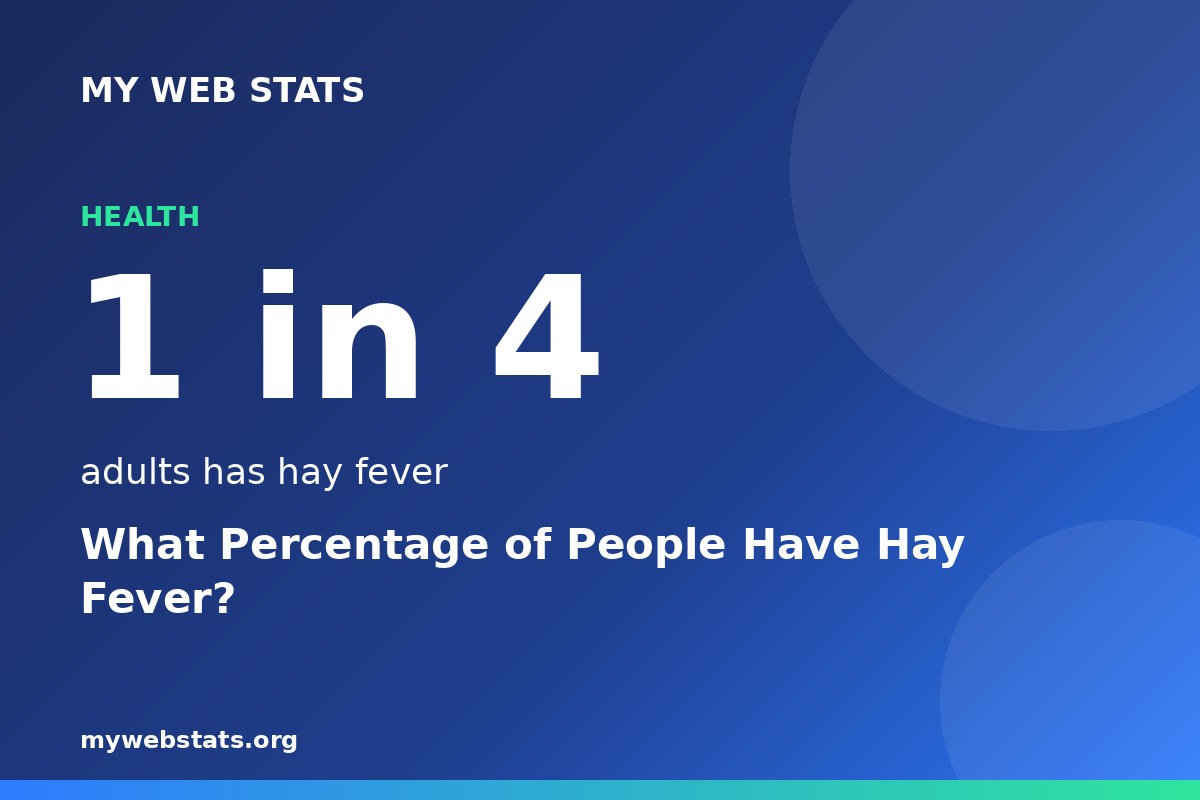
Short answer: about 1 in 4 adults. In the United States, 25.7% of adults had a seasonal allergy in 2021, according to the Centers for Disease Control and Prevention (CDC). UK estimates are similar, at roughly a quarter of adults.
Last updated: November 2026. General information only, not medical advice.
Seasonal allergy in US adults
| Group | Share with a seasonal allergy, 2021 |
|---|---|
| All adults | 25.7% |
| Women | 29.9% |
| Men | 21.1% |
| Aged 18 to 44 | 24.7% |
| Aged 45 to 64 | 27.9% |
| Aged 65 to 74 | 26.4% |
| Aged 75 and over | 21.7% |
Women are noticeably more likely than men to report a seasonal allergy. It is most common in middle age and less so after 75.
How it compares with other allergies
| Condition | US adults | Women | Men |
|---|---|---|---|
| Seasonal allergy | 25.7% | 29.9% | 21.1% |
| Eczema | 7.3% | 8.9% | 5.7% |
| Food allergy | 6.2% | 7.8% | 4.6% |
Seasonal allergy is about four times as common as food allergy. The three conditions often run together, along with asthma.
Hay fever in the UK
- The charity Allergy UK estimates that hay fever affects about a quarter of adults and around 1 in 8 to 1 in 10 children.
- That makes it the most common allergic condition in the country, with well over 10 million people affected.
- It usually starts in childhood or the teenage years, though people can develop it at any age.
The UK pollen calendar
| Pollen | Main season | Notes |
|---|---|---|
| Tree | Late March to mid-May | Birch is the main cause |
| Grass | Mid-May to July | Affects most people with hay fever |
| Weed | End of June to September | Nettle, dock and mugwort |
Is hay fever getting more common?
Yes. It was considered rare when it was first described in the early 1800s, and rates rose through the 20th century in every industrialised country. Explanations include cleaner childhood environments that leave the immune system less trained, air pollution making pollen more irritating, and warmer weather lengthening the pollen season.
What helps
- Antihistamine tablets, steroid nasal sprays and eye drops, available from pharmacies.
- Keeping windows shut and showering after being outdoors on high-pollen days.
- Wraparound sunglasses, and a little petroleum jelly around the nostrils to trap pollen.
- For severe cases, a GP can refer patients for immunotherapy.
Frequently asked questions
Is hay fever caused by hay?
No, and it does not cause a fever. It is an allergic reaction to pollen. The medical name is seasonal allergic rhinitis.
Can you grow out of it?
Symptoms often ease with age, which fits the lower rate among people over 75.
When is pollen highest?
In the early morning and early evening, on warm, dry, breezy days.
Related: What percentage of people have asthma? · What percentage of people snore? · How much water vapour is in the air?





Leave a Reply