

Short answer: freckles are small, flat, light brown spots that get darker in summer and fade in winter. Moles are clusters of pigment cells. They are usually darker, can be flat or raised, and stay all year. Light-skinned adults typically have 10 to 40 moles, according to the American Academy of Dermatology. Freckles themselves are harmless; a mole that is new, changing, itching or bleeding should be checked by a doctor.
Last updated: November 2026. General information only, not medical advice. If you are worried about a spot, see your GP or a dermatologist.
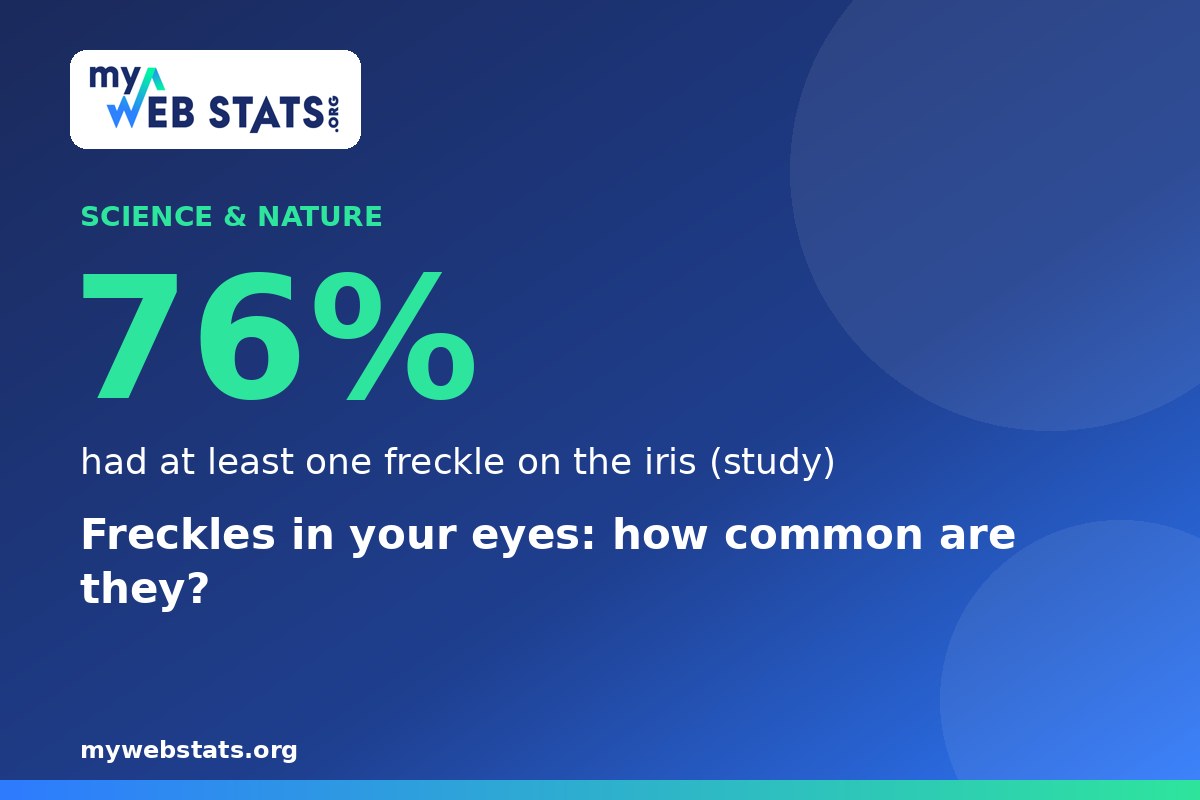
Graphic by mywebstats.org
Freckles vs moles at a glance
| Freckles | Moles | |
|---|---|---|
| What they are | Extra pigment made by normal skin cells after sun exposure | A cluster of pigment cells (melanocytes) |
| Feel | Always flat | Flat or raised |
| Colour | Light brown, tan or reddish | Usually darker brown or black; sometimes pink |
| Size | Tiny, often just a few millimetres | Usually larger; most normal moles are smaller than 6 mm |
| Pattern | Many together, on sun-exposed skin | Usually single, anywhere on the body |
| Over the year | Darker in summer, lighter in winter | Stay the same |
| When they appear | From about age 2–4, often fading later in life | Mostly in childhood and the teenage years |
| Cancer risk | Not cancerous, but a sign of sun-sensitive skin | Most are harmless, but melanoma can start in a mole |
Key facts
- Almost every adult has a few moles. Light-skinned adults often have 10 to 40.
- Having more than 50 moles, or several unusual (atypical) moles, raises the risk of melanoma.
- Freckles are strongly linked to the MC1R gene. In one large Dutch study, nearly everyone with freckles carried at least one MC1R variant, and the gene explained about 60% of freckling in the population.
- New moles become less common after the teenage years, so a new mole in adulthood is worth watching.
The ABCDE checklist for moles
The NHS and other health services use the ABCDE checklist to help spot a mole that could be melanoma:
- A – Asymmetry: the two halves look different.
- B – Border: the edge is ragged, notched or blurred.
- C – Colour: more than one shade, such as brown, black, red or grey.
- D – Diameter: wider than about 6 mm, the size of a pencil eraser.
- E – Evolving: changing in size, shape, colour or height, or starting to itch or bleed.
Dermatologists also use the “ugly duckling” sign: a spot that looks different from all your other moles or freckles. Check your skin every few months, in good light, using a mirror for your back.
Frequently asked questions
Can a freckle turn into a mole?
No. They are different things. But melanoma can sometimes look like a new dark spot, so any freckle-like spot that grows, darkens unevenly or changes shape should be checked.
Are freckles a sign of skin damage?
Freckles show that your skin reacts strongly to UV light. They are harmless, but people who freckle easily burn easily, so sunscreen and shade matter more for them.
How common are freckles?
There is no reliable worldwide figure. Freckles are most common in people with fair skin and red or blond hair. More in What percentage of people have freckles? and, for spots in the eye, freckles in your eyes.



Leave a Reply