
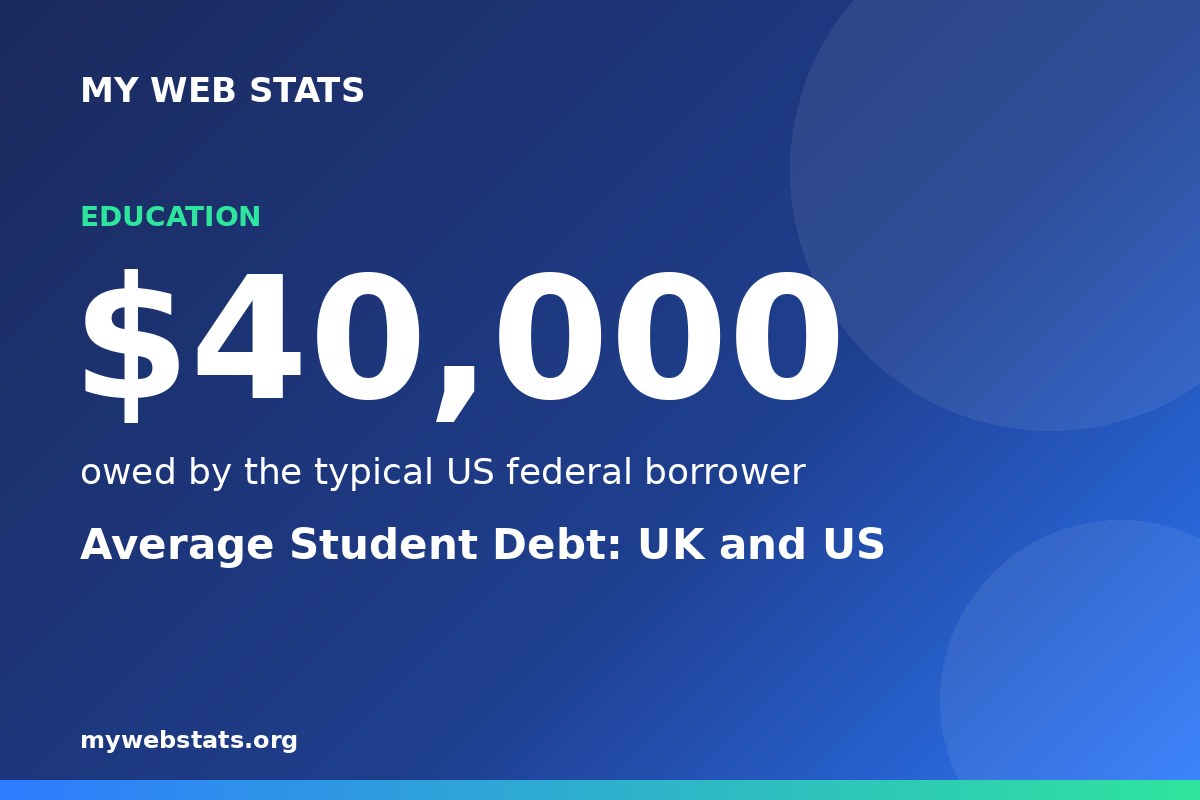
Short answer: about 45 million Americans have student loans, and the typical federal borrower owes nearly $40,000. Graduates in England finish with larger balances, around £50,000 or more on average, but the English system works more like a graduate tax, and most never repay in full.
Last updated: November 2026. General information only, not financial advice. Average balances are rounded.
The two systems side by side
| United States | England | |
|---|---|---|
| Borrowers | About 45 million | Most students who start a degree |
| Typical balance | Nearly $40,000 per federal borrower | Around £50,000 or more on graduation |
| Total owed | More than $1.7 trillion | More than £250 billion |
| Repayments based on | The loan balance, unless on an income-driven plan | Income only: 9% of earnings above a threshold |
| If you earn too little | Payments may still be due | You pay nothing |
| Unpaid balance | Forgiven only under specific programmes | Written off automatically after 30 or 40 years |
In the US, student loans are the second-largest type of household debt, behind only mortgages.
How repayment works in England
| Plan 2 | Plan 5 | |
|---|---|---|
| Who | Started between 2012 and 2022 | Started from August 2023 |
| Repayment rate | 9% of income above the threshold | 9% of income above the threshold |
| Threshold | Set each year; about £28,000 to £29,000 | £25,000 in 2026 to 2027, rising to £26,025 in 2027 to 2028 |
| Interest | Inflation (RPI) plus up to 3%, depending on income | 4.1% in 2026 to 2027, linked to inflation only |
| Written off after | 30 years | 40 years |
An example: a Plan 5 graduate earning £35,000 pays 9% of the £10,000 above the threshold, which is £900 a year or £75 a month. That is the same whether they owe £30,000 or £80,000. The size of the debt affects only how long payments last.
Will it ever be paid off?
For many, no. The Institute for Fiscal Studies has estimated that around three quarters of Plan 2 graduates will not clear their loan before it is written off. Plan 5 was designed to change that. With a lower threshold and ten more years of payments, a majority of borrowers are expected to repay in full, which means lower earners will pay considerably more over their lifetimes than under the old plan.
Why the balances are so large
- Tuition fees in England were capped at £9,000 a year from 2012 and have since risen above £9,500.
- Maintenance loans for living costs add up to £10,000 or more a year, with the most going to students from lower-income homes.
- Interest is added from the first day of the course. About 1.8 million people owe £50,000 or more.
Frequently asked questions
Does a UK student loan affect my credit score?
No. It does not appear on your credit file, though mortgage lenders take the monthly repayment into account when judging affordability.
Should I pay off my student loan early?
It depends on whether you are likely to clear it anyway. For those who will not, extra payments are money that would otherwise have been written off.
How do other countries compare?
Many European countries charge little or no tuition. In Germany, living-cost loans are interest-free and repayment is capped at €10,000. In France, fewer than 2% of students take out loans.
Related: How much of your income should go to student loans? · What percentage of people have a degree? · Average salary by age


Leave a Reply