
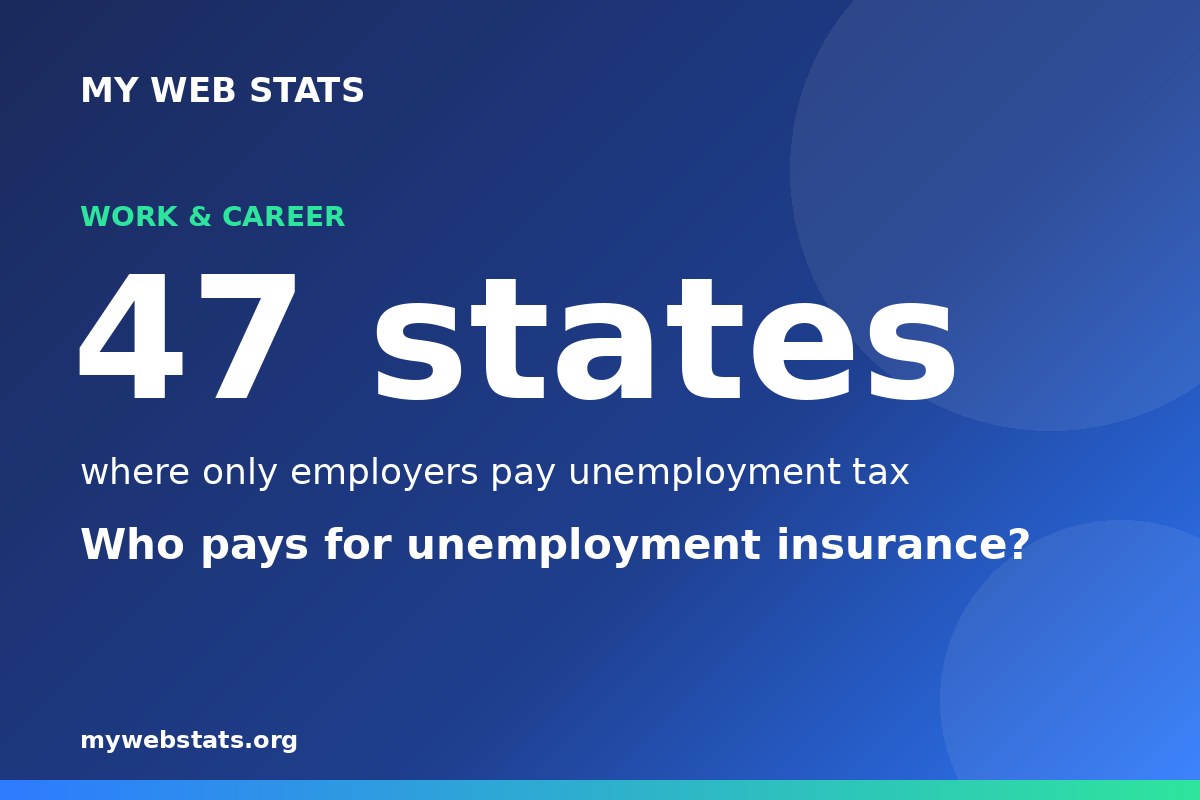
Short answer: in the United States, employers pay almost 100% of unemployment insurance taxes. Workers contribute in only three states: Alaska, New Jersey and Pennsylvania.
Last updated: November 2026. General information only, not tax advice.
The two US taxes
| Tax | Who pays | Rate |
|---|---|---|
| Federal (FUTA) | Employer only | 6.0% on the first $7,000 of each employee’s pay. A credit of up to 5.4% usually cuts this to 0.6%. |
| State (SUTA) | Employer in every state; employees too in Alaska, New Jersey and Pennsylvania | Varies by state and by the employer’s claims history |
What FUTA costs per employee
With the full credit, the federal tax is 0.6% of $7,000, which is $42 per employee per year. Without any credit it would be $420. Employers in states that owe money to the federal unemployment fund can lose part of the credit and pay more.
Why state rates differ between employers
States use “experience rating”. A business whose former workers claim benefits often pays a higher rate than one with few claims. New businesses start on a standard new-employer rate. Each state also sets its own taxable wage base, from the federal minimum of $7,000 to much higher figures.
Does it come out of your pay cheque?
In 47 states and Washington DC, no. Unemployment insurance is not deducted from wages. In Alaska, New Jersey and Pennsylvania a small employee contribution appears on the pay slip.
How the UK is different
- The UK has no separate unemployment insurance tax.
- Out-of-work benefits are funded from National Insurance and general taxation. Both employees and employers pay National Insurance.
- The main benefits are New Style Jobseeker’s Allowance, which depends on your National Insurance record, and Universal Credit, which is means-tested.
- UK benefits are flat-rate. US benefits are a share of previous earnings, up to a state maximum.
Frequently asked questions
What percentage of unemployment is paid by the employer?
All of the federal tax and, in 47 states, all of the state tax.
Do self-employed people pay unemployment tax?
Generally not on their own earnings, and as a result they are not normally eligible for regular state unemployment benefits.
Related: how much of your income is taxed · average yearly income: UK vs US · what percentage of the week is 40 hours

Leave a Reply