
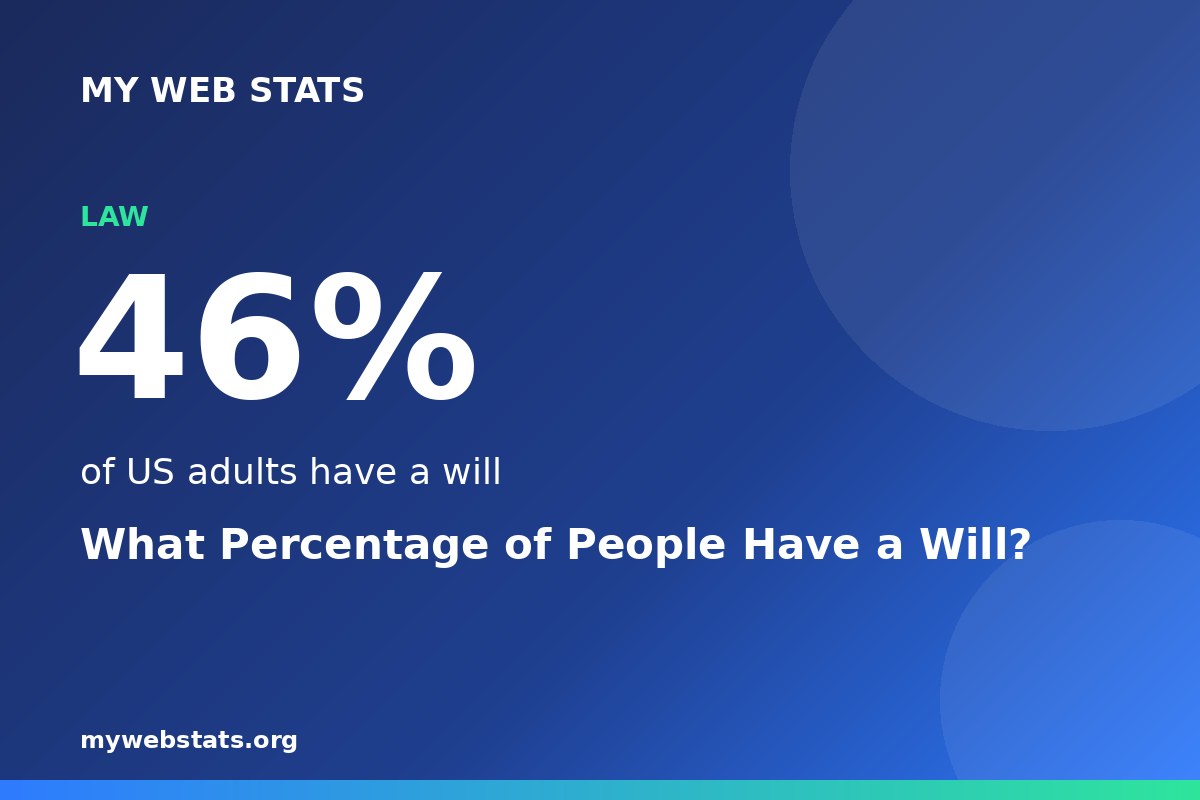
Short answer: fewer than half. In a 2021 Gallup poll, 46% of American adults said they had a will. UK surveys consistently find that around half of adults have not made one either.
Last updated: November 2026. General information only, not legal advice.
Who has a will in the US
| Group | Share with a will |
|---|---|
| All adults | 46% |
| Aged 18 to 29 | 20% |
| Aged 30 to 49 | 36% |
| Aged 50 to 64 | 53% |
| Aged 65 and over | 76% |
| Household income under $40,000 | 30% |
| Household income $40,000 to $99,999 | 49% |
| Household income $100,000 or more | 61% |
Age and income are the two things that matter most. Even so, about a quarter of Americans aged 65 and over have no will, and nearly 4 in 10 of the highest earners do not.
It has barely changed in 30 years
Gallup has asked the same question several times since 1990. The share with a will has stayed between 44% and 51% throughout. Online will-writing services and cheaper legal help have not shifted the overall figure.
The UK
- Surveys by insurers, charities and legal firms repeatedly find that about half of UK adults have no will.
- Among parents of young children the share without one is even higher, at well over half.
- Many who do have a will made it years ago and have not updated it after marrying, divorcing or having children.
What happens without one
Dying without a valid will is called dying intestate. The law, not the family, then decides who inherits. The rules differ between England and Wales, Scotland, Northern Ireland and each US state, but some points apply widely.
| Situation in England and Wales | What the intestacy rules do |
|---|---|
| Married or in a civil partnership, with children | The spouse receives personal belongings, the first £322,000 and half of the rest. The children share the other half |
| Married, no children | The spouse inherits everything |
| Living together but not married | The partner inherits nothing automatically |
| Stepchildren who were not adopted | They inherit nothing |
| No surviving relatives | The estate passes to the Crown |
The position of unmarried partners causes the most hardship. However long a couple have lived together, a surviving partner has no automatic right to anything and may have to go to court.
Why people put it off
- They have not got round to it. This is the most common answer in every survey.
- They think they have nothing worth leaving.
- They assume everything will go to their partner or children anyway.
- They would prefer not to think about dying.
Frequently asked questions
How much does a will cost in the UK?
A simple will from a solicitor typically costs £150 to £300. Online services charge less, and several charities offer free will-writing in certain months.
Does marriage cancel a will?
In England and Wales, yes, unless the will was made in expectation of that marriage. Divorce does not cancel a will but removes the former spouse from it.
What makes a will valid?
In England and Wales it must be in writing, signed by an adult of sound mind, and witnessed by two people who are not beneficiaries.
Related: Average cost of a funeral · Average savings, UK and US · What percentage of people never marry?


Leave a Reply