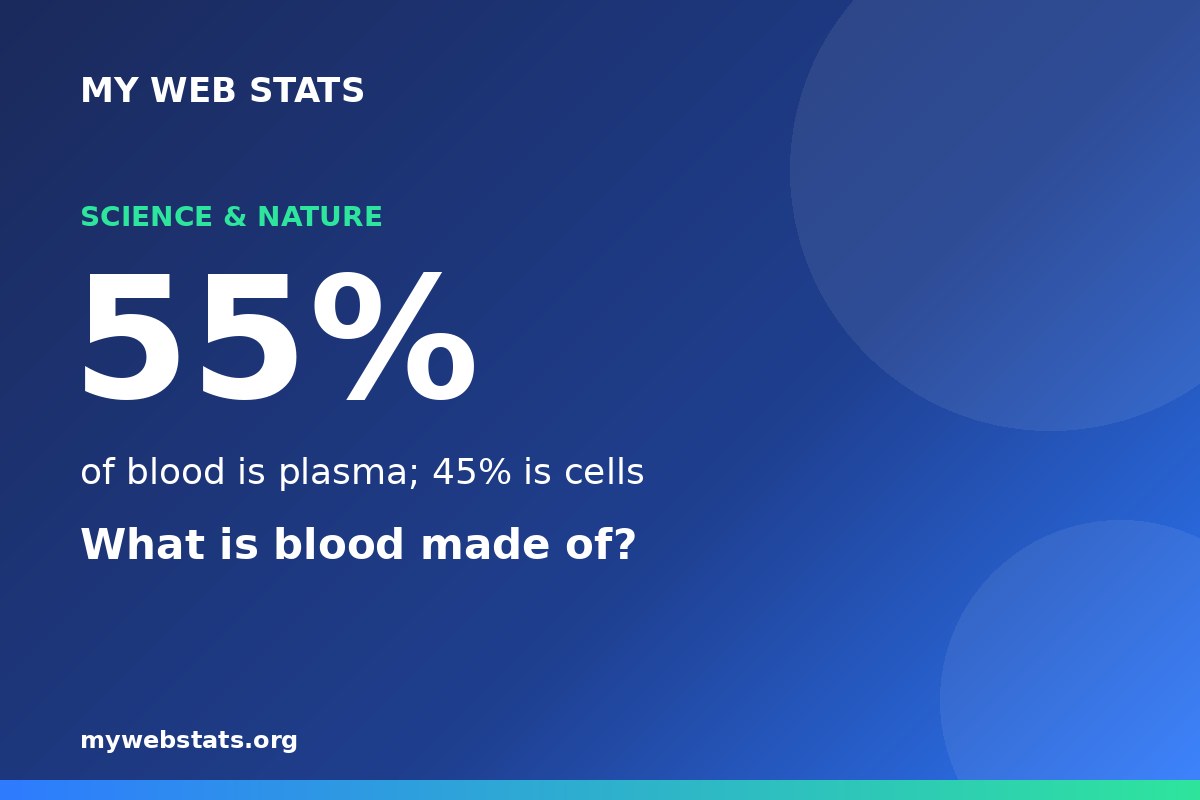
Short answer: blood is about 55% plasma and 45% cells. Nearly all of the cells are red blood cells. White blood cells and platelets together make up less than 1%. Plasma is about 92% water.
Last updated: November 2026. General information only, not medical advice.
The four parts of blood
| Component | Share of blood volume | Main job |
|---|---|---|
| Plasma | About 55% | Carries cells, nutrients, hormones and waste |
| Red blood cells | About 44% | Carry oxygen from the lungs to the body |
| White blood cells | Under 1% (with platelets) | Fight infection |
| Platelets | Under 1% (with white cells) | Help blood to clot |
What plasma is made of
| Part of plasma | Share |
|---|---|
| Water | About 92% |
| Proteins (albumin, antibodies, clotting factors) | About 7% |
| Salts, sugars, fats, hormones and vitamins | About 1% |
Plasma is a pale yellow liquid. The red colour of blood comes from haemoglobin, the iron-rich protein inside red blood cells.
How much blood is in the body?
- An average adult has about 4.5 to 5.5 litres (roughly 8 to 10 pints).
- Blood is about 7% to 8% of body weight.
- A standard blood donation in the UK is about 470 ml, a little under a pint.
How long do blood cells last?
| Cell | Typical lifespan |
|---|---|
| Red blood cell | About 120 days |
| Platelet | About 8 to 10 days |
| White blood cell | Hours to years, depending on the type |
New blood cells are made in the bone marrow. The body makes millions of red blood cells every second to replace those that wear out.
Frequently asked questions
What percentage of plasma is water?
About 92%.
What is the haematocrit?
The share of blood volume made up of red blood cells. It is typically a little higher in men than in women.
Related: how much of blood is water · how much of the human body is water