
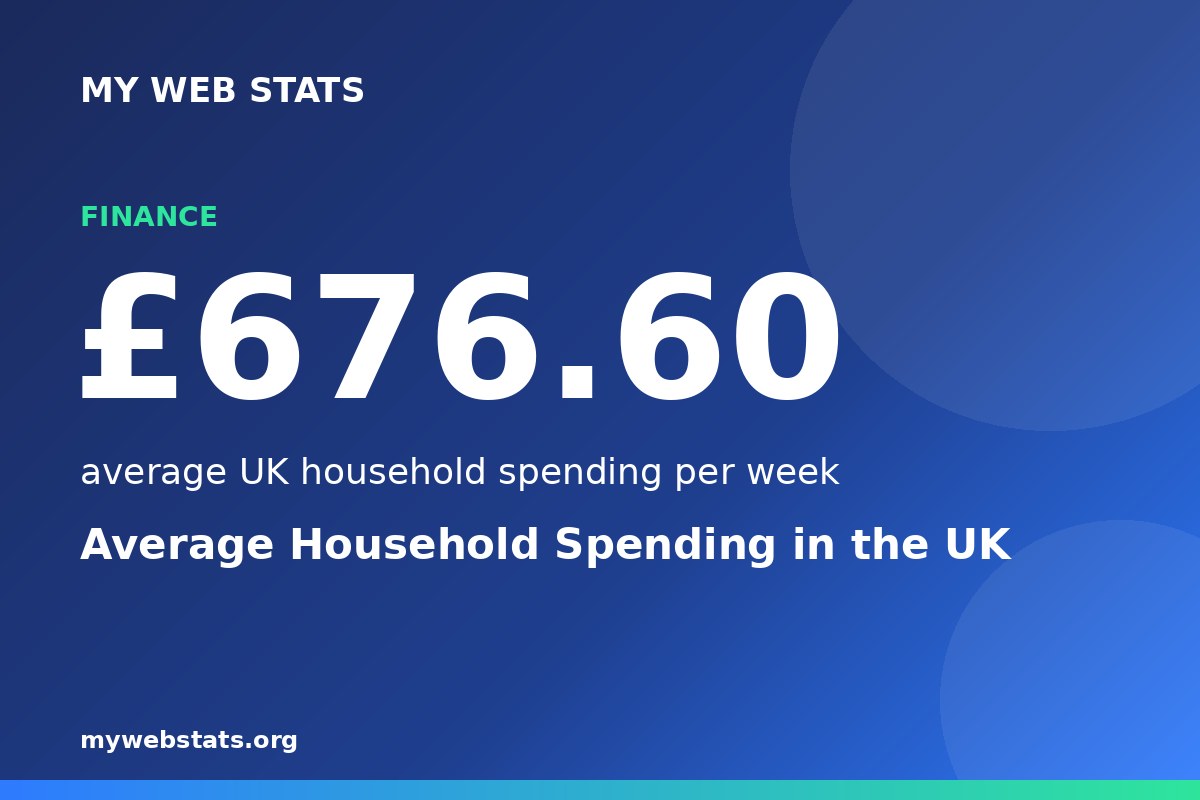
Short answer: the average UK household spent £676.60 a week in the year to March 2025, according to the Office for National Statistics (ONS). Of that, roughly £67 a week went on food and non-alcoholic drinks bought to eat at home, about £290 a month.
Last updated: November 2026. The ONS publishes this survey once a year; these are the latest figures.
Where the money goes
| Category | Average weekly spend | Change on the year before |
|---|---|---|
| All spending | £676.60 | Up £53.30, or 9% |
| Housing (net), fuel and power | £118.40, 18% of the total | Up £5.60, or 5% |
| Transport | £96.40, 14% of the total | Up £8.10, or 9% |
| Food and non-alcoholic drinks | About £67 | Up £3.20, or 5% |
| Recreation and culture | Up £6.70, or 9% | |
| Restaurants and hotels | Up £2.80, or 6% |
After allowing for inflation, total spending rose by £35.10 a week, or 5%. The ONS says most of the rise in food spending reflected higher prices, not people buying more.
The food shop
| Period | Average household food shop |
|---|---|
| Per week | About £67 |
| Per month | About £290 |
| Per year | About £3,480 |
| Per person per week, at 2.36 people per household | About £28 |
Food takes about 10% of the average household budget. A century ago it was closer to a third. The share is much higher for poorer households, which is why rising food prices hit them hardest.
Rich and poor
| Household group | Average weekly spend | Rise on the year before |
|---|---|---|
| Richest fifth | £1,083.60 | £98.10, or 10% |
| All households | £676.60 | £53.30, or 9% |
| Poorest fifth | £407.30 | £18.10, or 5% |
The richest fifth of households spend 2.7 times as much as the poorest fifth, up from about 2.5 times a year earlier. The ONS describes this as the largest widening of the gap since 2021.
How the US compares
The US Bureau of Labor Statistics runs a similar survey. It shows the average American household spending around $6,000 a year on food at home, about $115 a week, and a further $4,000 or so on eating out. American households are slightly larger and spend a smaller share of their budget on food than British ones, but considerably more on health care and transport.
Frequently asked questions
Is £67 a week realistic for a family?
It is an average across all households, including people living alone. A family of four typically spends well over £100 a week.
How fast are food prices rising?
Food inflation peaked at about 19% in early 2023 and has since fallen to low single figures, but prices remain roughly a third higher than in 2021.
Does the total include mortgage payments?
No. Mortgage interest and repayments are recorded separately, so the true cost of housing is higher for home buyers.
Related: Average energy bill in the UK · Average rent in the UK and US · Average household size




Leave a Reply