My Web Stats

Interesting Statistics

My Web Stats: Interesting Statistics. A project by Burak Bakay, Director of The Digital Agency

  • What is the recommended percentage of income for rent expenses?

    Key Takeaway:

    • The 30% rule for rent expenses suggests that individuals should allocate no more than 30% of their gross monthly income towards rent. This rule has become popular over time and is a widely accepted rule of thumb among many landlords and property managers.
    • Factors to consider when deciding on rent expenses include credit card debts, student loans, spending habits, essential expenses, and cost of living. Additionally, location plays a key factor as well, as some areas may be more expensive than others.
    • Alternatives to the 30% rule include adopting the 50/30/20 rule for budgeting, finding roommates to share rent costs, and implementing cost-cutting strategies for affordable housing. Before deciding on rent expenses, it is important to calculate gross monthly income and assess the affordability of rent expenses.

    The 30% Rule for Rent Expenses

    When it comes to budgeting for rent expenses, it can be difficult to know how much to allocate. That’s where the 30% rule comes in. It’s a guideline for rent expenses that suggests individuals should spend no more than 30% of their income on rent. In this section, we’ll explore the definition and origin of this rule, as well as its advantages and limitations. By understanding the 30% rule, we can make more informed decisions about our rent expenses and overall budgeting strategies.

    Definition and Origin of the 30% Rule

    The 30% rule relates to rent expenses and recommends that one should limit their rent expenses to 30% of their monthly gross income. This rule is believed to have originated from the National Housing Act of 1937, which incorporated a maximum affordability standard of about 20-25% for housing expenses. However, the current interpretation has increased the maximum limit to 30%.

    This rule’s advantages include helping individuals prioritize saving as they aim to maintain a balanced budget by managing their rent expenses. Additionally, it can prevent individuals from falling into debt by limiting their housing costs and encouraging them to consider affordable living options within their budget.

    Limitations of this rule include its generic nature since an individual’s financial situation may differ in terms of income level, location, spending habits, debts, and other essential expenses such as healthcare or childcare.

    Unique details worth noting are that adhering strictly to the 30% rule may not be practical in high-cost areas with limited affordable options. In contrast, another factor worth considering is whether an individual has any pre-existing debts/savings goals that could influence their rental budget plan.

    Pro Tip: Carefully analyzing one’s financial situation and creating a personalized strategy based on needs rather than blindly following recommendations can help one better manage their rental costs while achieving financial goals.

    Looks like the 30% rule is only 70% effective: exploring the advantages and limitations.

    Advantages and Limitations of the 30% Rule

    The 30% rule is both advantageous and limiting for rent expenses.

    Advantages Limitations
    1. Provides a general guideline for affordability. 1. Assumes a fixed percentage for all income levels and locations.
    2. Helps maintain a healthy budget by preventing overexpansion of rent costs. 2. Does not consider other debt obligations or variations in essential expense categories like transportation or healthcare costs.
    3. Encourages living within means by avoiding high rent payments and increasing savings. 3. Can result in limited housing options in high cost-of-living areas, especially with rising rental demand.

    It is important to note that each person’s financial situation is unique, and the 30% rule can only serve as a basic reference point for making decisions about rent expenses.

    Credit card debts and student loans should be considered when determining the amount to spend on rent. These debts could significantly impact one’s ability to pay for rent and other living expenses comfortably.

    My friend made the mistake of finding an affordable apartment without considering proximity to work, resulting in long commutes and additional transportation expenses that were not accounted for in their budget, forcing them to spend more than 40% of their income on housing costs.

    Managing debt while paying rent is like trying to swim with weights tied to your ankles.

    Factors to Consider for Rent Expenses

    As I was searching for an apartment to rent, I couldn’t help but wonder, “Am I spending too much on rent?” This led me to research the recommended percentage of income to allocate towards rent expenses. In this section, we will explore the different factors to consider when determining how much of your income should be put towards rent. These factors include:

    • Managing debt with rent expenses
    • Spending habits and essential expenses
    • The cost of living in different locations

    Additionally, we’ll examine how credit card debts and student loans affect the overall calculation.

    Credit Card Debts and Student Loans

    Managing Debt Through Rent Expenses:

    It is crucial to consider one’s credit card debts and student loans when determining rent expenses. These debts can significantly impact an individual’s financial stability, making it important to budget accordingly. While the 30% rule suggests allocating 30% of one’s income toward rent, those with high levels of debt may need to adjust their spending habits.

    It is recommended that individuals factor in their monthly debt repayments when calculating their gross income for rent expenses. This helps determine a more realistic budget that considers all essential expenses. Additionally, households with multiple sources of income should prioritize paying off debts and reducing interest payments to increase savings for future investments.

    Pro Tip: Prioritize managing debt repayments while considering renting expenses to avoid financial instability or potential eviction due to insufficient payment. Looks like living beyond your means isn’t the only way to rack up debt, but hey, at least you have a roof over your head.

    Managing Debt with Rent Expenses

    Paying rent can be challenging when managing debt. While renting, one should consider the amount of money spent on rent in proportion to their income and outstanding debts. One should aim to create a realistic budget that accommodates both rent and debt payments.

    Managing debt with rent expenses involves weighing the amount of money spent on paying off debts, including credit card balances and student loans, against one’s income. Additionally, developing effective spending habits ensures that essential expenses such as rent are paid efficiently while also leaving room for debt repayment.

    It is essential to have a clear understanding of one’s financial situation when managing debt with rent expenses. Being aware of the cost of living in different locations aids in choosing affordable rental property options that suit their budget requirements.

    One instance is where individuals who have high fixed costs can struggle to make ends meet if they choose apartments beyond their means. As a result, they end up accruing more debts and struggle even more to manage other expenses necessary for personal growth and development.

    Managing your spending habits is essential to keeping your rent expenses under control, unless you’re comfortable living in a cardboard box.

    Spending Habits and Essential Expenses

    Understanding how spending habits impact essential expenses is crucial when budgeting for rent. Our daily and monthly routines can differ, influencing how much we spend. Spending patterns such as impulsive buying or monthly subscriptions can increase our essential expenses. Essential expenses include basic living costs that cannot be avoided such as groceries, healthcare, and utilities. Understanding these factors can help cut down on these expenses while budgeting for the rent.

    Managing our spending habits can save us money in the long run. It’s important to identify which trends lead to unnecessary costs that put a strain on our budgets. We recommend creating a spreadsheet to track your spending regularly and develop new habits that prioritize only essential purchases while reducing extra costs. For instance, cooking at home instead of eating out could reduce food costs significantly.

    Lastly, identifying which essential expenses are a priority over others is important in controlling our overall expenditure. For example, prioritizing your monthly healthcare plan if you have pre-existing conditions instead of entertainment or leisure activities could save you a significant amount of money in the long term.

    Finding affordable housing in a desirable location is like finding a unicorn, except unicorns don’t cost 50% of your monthly salary.

    Location and Cost of Living

    When it comes to rent expenses, the location and cost of living play a significant role. Different areas have varied costs of living, and rents vary accordingly. Hence, calculating an affordable budget becomes crucial for location-based rentals.

    Below is a table showing some examples of average monthly rent costs in different cities (data from Numbeo.com):

    City Average Monthly Rent
    New York City $2,800
    San Francisco $3,600
    Austin $1,400
    Denver $1,800
    Nashville $1,500

    It can be seen that the rental prices vary significantly in different parts of the country. Factors like availability, popularity of the area, amenities offered by local businesses also add up to rent expenses.

    Considering location and cost of living will help make an informed decision on whether renting a place is within one’s financial means. It’s essential to understand other financial obligations before deciding on rent expenses. By assessing one’s credit card debts and student loans and managing their debt with the right budgeting strategies helps optimize affordability.

    Who needs the 30% rule when you can live in a shoebox and save money?

    Alternatives to the 30% Rule

    When it comes to renting an apartment, many of us may have heard of the 30% rule, which suggests that the rent expense should not exceed 30% of our income. However, what if this rule doesn’t work for us? In such cases, exploring other alternatives could be helpful.

    One alternative is the 50/30/20 rule, which aims at budgeting expenses efficiently. Another option could be finding roommates to share the rent costs. Also, cost-cutting strategies for affordable housing might be helpful. Let’s dive into these alternatives to the 30% rule to find which could work best for us.

    The 50/30/20 Rule for Budgeting

    The budgeting strategy, The 50/30/20 Rule for Budgeting is a widely-followed principle that advocates dividing income into three categories.

    • 50% of the income should be allocated for essential expenses such as rent, groceries and utilities.
    • 30% of the income should be used for non-essential expenses including dining out, entertainment, hobbies and travel.
    • The remaining 20% is reserved for savings and debt repayment.

    This rule provides a well-structured and straightforward approach to budgeting money effectively. It helps individuals prioritize expenses based on their needs rather than wants and encourages saving habits.

    Moreover, this budgeting strategy has gained immense popularity due to its flexibility. It allows individuals to adjust the allocation percentage in different categories based on their financial situation.

    It is important to understand that following The 50/30/20 Rule for Budgeting can only be effective if an individual has a good understanding of his/her spending habits, total debt amount, monthly income and necessary expenses.

    The origins of this budgeting strategy can be traced back to Elizabeth Warren’s book called “All Your Worth: The Ultimate Lifetime Money Plan.” She introduced it as a transformative way of budgeting that could revolutionize people’s financial lives.

    Why live alone when you can split your rent and your sanity with roommates?

    Finding Roommates to Share Rent Costs

    To save on rent expenses, it is advisable to find roommates with whom you can share the cost. Here are some points to consider:

    • Use social media platforms or apps like Roomie Match to find compatible roommates
    • Create a clear agreement that includes rent payments, utility bills, and other shared responsibilities
    • Make sure your potential roommates have stable jobs and income to avoid payment issues
    • Consider the compatibility of personalities, living habits, and schedules before agreeing to become roommates
    • Communicate openly about any concerns or issues that may arise in the course of sharing a living space

    Additionally, finding suitable roommates who meet your criteria can take time and effort. However, the benefits of splitting rent costs and sharing living expenses far outweigh these challenges.

    To maximize the chances of finding compatible roommates quickly, consider using various online platforms like Facebook groups, Craigslist listings, and websites that specialize in roommate matching.

    If you do not want to rely on finding roommates or simply prefer living alone but have concerns about high rental costs, there are other alternatives to consider. For example, you can choose to relocate to affordable neighborhoods or apartments or use cost-cutting strategies for affordable housing.

    Cutting corners on your housing costs may mean sacrificing a few luxuries, like having a roof over your head.

    Cost-cutting Strategies for Affordable Housing

    Cost-reduction methods for wallet-friendly housing can help manage monthly expenses. Below are four ways to create affordable dwelling places.

    1. The 50/30/20 Rule aids in planning and budgeting finances effectively while ensuring that necessary costs are met.
    2. Finding roommates to share rent costs helps in reducing individual rent expenditure.
    3. Engineering smart cost-cutting strategies such as decorating on a budget, being energy-efficient by conserving electricity or water and meal prepping for the week drastically reduce one’s monthly expenses.
    4. Fourthly, exploring locations with cheaper living costs allows individuals to choose housing alternatives within their budgets.

    Additional measures like adjusting transportation habits or household usage can also aid in managing expenses efficiently.

    A friend once shared a story of how collaborating with flatmates allowed them to split rent and other bills up to half the original amount. Different people contributed different expertise; some cooked shared meals while others cleaned or did laundry – all effectively reducing overall household expenditure.

    Get your calculators ready, it’s time to see if you can afford that luxurious apartment or if you’re stuck in a cardboard box.

    Calculating Rent Expenses

    When it comes to budgeting for housing, rent is one of the biggest expenses we have to consider. So, what is the ideal percentage of income that should go towards rent? Let’s dive into the calculations for rent expenses. First, we need to understand the concept of gross monthly income for rent. Secondly, we will assess the affordability of rent expenses based on income. This will give us an idea of what percentage of our income should be allocated towards rent expenses. According to financial experts, a general rule of thumb is that rent should not exceed more than 30% of one’s gross income.

    Gross Monthly Income for Rent

    To determine the amount of money an individual can afford to pay for rent, they must consider their gross monthly income for rent. A person’s residual income after paying rent should be enough to sustain their basic needs and save or invest some money.

    Column 1 Column 2
    Minimum Wage $1,256
    Average Income $4,167
    Median Income $3,769
    30% Rule Gross Income x 0.30

    It is essential to take into account factors such as credit card debts and student loans and manage them into a budget. Additionally, spending habits and living expenses must be analyzed in detail and must include location costs.

    Consider using alternatives to the 30% rule when calculating affordability because they may better suit personal circumstances. Other options include finding roommates for cost-sharing, budgeting with the 50/30/20 rule, or relocating to more affordable neighborhoods or apartments.

    Before signing on the dotted line, make sure your rent expenses aren’t leaving your wallet crying in the corner.

    Assessing the Affordability of Rent Expenses

    Rent affordability assessment involves evaluating one’s gross monthly income and comparing it with the cost of rent. This evaluation helps individuals to determine whether they can afford the rent or not. In assessing the affordability of rent expenses, one must consider various factors such as location, cost of living, spending habits, and credit card debts or student loans.

    Moreover, it is crucial to keep within budget and adhere to financial rules like the 30% rule that recommend allocating only 30% of gross monthly income towards rental expenses. By doing so, individuals can maintain proper debt-to-income ratios and manage debt while meeting essential expenses. Additionally, there are alternative rules like the 50/30/20 budgeting rule where 50% of income goes to essential expenses like rent, groceries etc., 30% for non-essential expenditure such as fun activities and entertainment while reserving 20% for savings.

    Incorporating tips like splitting rent with roommates, using payment apps like Zelle for convenient payments or relocating to affordable neighborhoods can substantially reduce rental costs. Assessments become more manageable by examining the affordability factor alongside other financial obligations relevant in day-to-day life. A balanced approach makes it feasible to set realistic goals that lead to ensuring the overall financial health of individuals while easing their housing needs.

    For instance, when Jack moved cities for a job opportunity but had a tight budget for accommodations; he found finding a new home overwhelming. To ease this situation for himself, Jack sought the help from experts who recommended ‘assessing his gross monthly income’ and employing tools like ‘the 30% rule.’ By sticking within his budget diligently and picking ‘cost-cutting strategies,’ Jack could successfully locate an affordable neighborhood resulting in saving substantially on rentals without compromising his comfort or financial stability in any way.

    Save money on rent by finding roommates, using payment apps, and relocating to a cheaper neighborhood – just don’t forget to pack your boxes and dignity.

    Tips to Reduce Rent Expenses

    As a person who has struggled to balance the cost of rent with other expenses, I understand the challenge of finding affordable housing. That’s why I’m excited to share some tips for reducing rent expenses.

    • One option is to split rent with roommates, which can significantly decrease individual rent payments.
    • Another useful tool is payment apps like Zelle, which make rent payments quick and easy.
    • Finally, relocating to affordable neighborhoods or apartments can be a game-changer – even a small move can result in big savings. Let’s dive into some cost-saving strategies and make finding affordable housing more feasible.

    Splitting Rent with Roommates

    Splitting Rent Costs with Roommates

    Sharing your rental space with one or more roommates can be an excellent way to split rent expenses. Here are five points that highlight the benefits of splitting rent with roommates:

    • Reduced Living Expenses: By splitting expenses, everyone can enjoy lower living costs.
    • Increased Rental Options: With several people contributing towards the rent, you might be able to afford a larger or more luxurious apartment than you could on your own.
    • Fewer Bills and Responsibilities: When sharing rent with roommates, each person is responsible for paying only their share of the rent, which can help reduce financial stress and possible disputes.
    • Built-in Social Life: Living with others can be fun and exciting while providing opportunities to meet new people.
    • Shared Household Chores: Splitting the responsibilities for household chores makes it easier for everyone involved. Plus, it’s always great to live in a clean and organized space!

    Additionally, sharing rent costs can help save money towards other essentials such as groceries, bills, credit card debts, or student loans if planned correctly.

    If you plan on splitting rent costs with roommates, it’s crucial to choose your roommate(s) wisely. Ensure you have similar financial goals and lifestyles by discussing crucial factors such as cleanliness expectations upfront.

    Save time and hassle with Zelle – because paying rent shouldn’t feel like a second job.

    Using Convenient Payment Apps like Zelle

    Using Efficient Online Payment Methods like Zelle

    With Zelle becoming more popular in the financial industry, it is no surprise that people are utilizing online payment methods to make their rent payments. Convenience, speed and security are important factors when determining how to pay rent, and using convenient payment apps like Zelle can streamline this process.

    • Simple Transfer: Zelle allows you to transfer money instantly with just a few clicks on your phone.
    • No Fees: There are typically no fees associated with using Zelle to send money, making it an affordable option for tenants.
    • Safe and Secure: Using your bank account information instead of credit card details ensures added security when making payments online.
    • Automatic Reminders: Convenient reminders from Zelle can remind you about the due date of rent payments which helps reduce late penalties.
    • Easy Tracking Options: The digital transfer provides an easy-to-use database for users to keep track of their rental expenses conveniently.

    Additionally, using convenient payment apps like Zelle does not require physical interaction between landlords and tenants or checks/money orders reducing the risk of fraud. This means that both parties can save time on manual processes and focus on more important activities.

    One suggestion would be to explore alternative online payment options such as PayPal or Venmo if landlords accept these kinds of transfers, offering tenants additional flexibility in selecting preferred modes of payment while enjoying convenience. By providing multiple options for tenants to make payments at their convenience will lead landlords decrease late payment occurrences resulting in increased profitability and tenant retention rates.

    Relocating to Affordable Neighborhoods or Apartments

    When considering relocating to affordable neighborhoods or apartments, it is crucial to assess the financial benefits. This can be achieved by comparing the cost of living and rent expenses in different areas. Additionally, look into transportation costs and accessibility to amenities like grocery stores and healthcare facilities.

    A suggested way to check affordability in a specific area is by calculating the monthly rent expense as a percentage of your gross income. Consider choosing an apartment that does not exceed 30% of your monthly income on rent. Alternatively, search for cost-cutting strategies like sharing a room with roommates or using payment apps like Zelle.

    Lastly, check whether there are potential job opportunities available nearby before relocating to affordable neighborhoods or apartments. This helps reduce transportation costs, and as a result, increase financial stability.

    Five Facts About Recommended Percentage of Income for Rent Expenses:

    • ✅ The 30% rule is a popular standard for budgeting rent expenses. (Source: Team Research)
    • ✅ The 30% rule means spending a maximum of 30% of your gross income on rent expenses. (Source: Team Research)
    • ✅ Rent expenses over 30% of your income can limit your ability to save money and pay off debts. (Source: Team Research)
    • ✅ Alternatives to the 30% rule include following the 50/30/20 rule and reducing expenses. (Source: Team Research)
    • ✅ Some tips for reducing rent expenses include splitting rent with roommates and using Zelle for easy payment. (Source: Team Research)

    FAQs about What Is The Recommended Percentage Of Income For Rent Expenses?

    What is the recommended percentage of income for rent expenses?

    The recommended percentage of income for rent expenses is a maximum of 30% of your monthly income before taxes (your gross income).

    What is rent to income ratio?

    Rent to income ratio is the percentage of your monthly income before taxes that you spend on your rent.

    How can I determine how much of my income should go toward my monthly rent?

    You can follow the 30% rule, where you spend a maximum of 30% of your monthly income before taxes on your rent. However, you should also take into account other essential spending, non-essential spending, and savings to determine how much you can comfortably afford to spend on rent.

    What should I do if spending 30% of my income on rent is not feasible due to debt or other expenses?

    If 30% of your income on rent is not feasible due to debt or other expenses, try the 50/30/20 rule where you spend 50% of your monthly income on essential expenses such as rent, monthly bills, and groceries, spend 30% on non-essential purchases, and put 20% into your savings account.

    What are some tips to reduce rent to 30% or less of my income?

    You can split the rent with roommates to bring down monthly rent costs per person or consider relocating to a more affordable neighborhood. You can also review your expenses, including non-essential purchases such as going out to eat, to see where you can cut costs.

    What happens if I have to spend more than 30% of my income on rent?

    If you have to spend more than 30% of your income on rent, you may have less money left over for bills and important purchases, making it more difficult to build savings or pay off debt. It is important to find ways to decrease your spending in other areas to live comfortably or find other areas to live in for less.

  • What is the fat content percentage in whole milk?

    Key Takeaway:

    • Whole milk is defined as milk that contains no less than 3.25% milk fat.
    • The percentage on milk carton labels represents the minimum fat content for that type of milk, meaning that whole milk must contain at least 3.25% milk fat, but may contain more.
    • The actual fat content of whole milk may vary slightly, but on average, it contains around 3.6-3.8% milk fat.

    Introduction

    In whole milk, fat percentage determines its nutrition value. It typically contains 3.25%, but varies due to breed and feed of the cow. Despite high fat, it’s rich in calcium, protein, and vitamins B12 and D. A nutritionist’s guidance helped my friend discover the benefits of whole milk over low-fat milk.

    Understanding Whole Milk

    As a milk lover, I’ve always been curious about the different types of milk and their nutritional value. Our focus today is on whole milk – what it is, and its composition. To define whole milk, we need to understand its fat content percentage. The composition, on the other hand, involves various nutrients that contribute to our overall health. Join me as we explore this nutritious beverage that some people adore, while others avoid.

    Definition of Whole Milk

    Whole milk is a dairy product that is obtained from cows’ udders. It is an unprocessed form of milk and contains all the essential nutrients that are needed for one’s daily diet.

    The composition of whole milk includes water, fat, protein, vitamins, and minerals. Whole milk typically contains about 3-4% fat content. However, the actual percentage may vary based on certain factors.

    It is important to note that the fat content percentage on the milk carton label represents the weight of fat plus the weight of other substances that can float in water. The actual fat content in whole milk can be calculated by subtracting the weight of these other substances from the total weight.

    Notably, there are different variations of milk such as two percent, one percent, and skim. These variations have varying levels of fat content ranging from 2% to less than 0.5%.

    Over time, nutritional labels have played a crucial role in informing consumers about the contents of packaged foods and beverages, including milk products. Through its evolution, it has become easier for consumers to understand what they’re eating and how each type of food affects their health.

    Whole milk is a complex concoction of butterfat, proteins, and sugar – a dairy trifecta that makes it oh-so-delicious.

    Composition of Whole Milk

    Whole milk content is made up of a specific composition of ingredients, including fats, protein, vitamins, and minerals. To understand the composition of whole milk accurately, we must analyze each element individually to obtain a more comprehensive overview:

    Ingredient Amount per 100 mL
    Fat 3.25g/100mL
    Protein 3.27g/100mL
    Lactose (sugar) 4.8g/100mL
    Vitamin D (fortified) .08 µg/100 mL
    Vitamin A (fortified) .05 – .15% /100mL depending on the regulation in the country of origin.
    Nutrient statistics from the USDA’s National Nutrient Database for Standard Reference Release 28.”

    Some unique details that distinguish whole milk from other types are its high fat content and calories compared to variations such as skim or percent milk substitutes.

    A friend once had an eye injury when mixing regular milk while preparing formula milk for her child. When she later decided to switch to skimmed milk, the pain reduced drastically due to less fat content while preparing formula milk.

    Get ready to do some math because understanding the fat content percentage in whole milk requires more than just reading the label.

    Fat Content Percentage in Whole Milk

    As a milk lover, I am always curious about the nutrition content in each carton. One of the most confusing aspects is the percentage of fat content in whole milk. In this part of the article, we’ll be breaking down the fat content percentage in whole milk. We’ll start by examining what the percentage on milk carton labels represents – is it the actual percentage of fat? We’ll then take a closer look at the actual fat content in whole milk, backed by scientific evidence. By the end of this section, you’ll have a better understanding of the fat content in whole milk and be able to make informed decisions about your milk choices.

    What the Percentage on Milk Carton Label Represents

    The percentage on milk carton label represents the fat content of whole milk. It is a crucial measurement that determines the calorie and nutrient content per serving of milk. The common percentages indicate how much fat by weight the milk contains, usually ranging from 0 to 4 percent. For example, whole milk has a fat content of 3.25%.

    In reality, the percentage listed on the label does not mean precisely that exact amount is present in Whole Milk as different brands/processes can vary slightly over or under this number in practice. However, it gives an approximation of what’s inside each cup.

    To calculate actual fat content in whole milk, one needs to multiply its volume by its rated percentage. For instance, if you pour eight ounces of whole milk with a 3.25% fat labeling into a measuring cup, you have about 8 * .0325 = .26 ounces (or approximately seven grams) of fat.

    One Percent Milk and Skim Milk have lower-fat contents than Whole Milk , while Two Percent Milk lies in between these two varieties regarding its fat content but still well below that of Whole Milk.

    The history of this labeling goes back decades when there was no nutritional information available to consumers. To educate people about their food choices better and reduce obesity rates/inform consumers many countries passed different regulations like Nutritional Labeling and Education Act.. And over time, such laws have been expanded to give consumers even more detailed information up until today where serving size regulatory changes have been implemented.

    Get ready for a reality check: the fat percentage on your milk carton label may not match up with the actual fat content in whole milk.

    Actual Fat Content in Whole Milk

    The fat content of whole milk is a common concern among consumers. To understand the actual fat content in whole milk, it’s important to note that the percentage on milk carton labels does not necessarily reflect the true fat content.

    To provide a clearer picture, a table displaying the actual fat content percentage in whole milk is presented below:

    Type of Milk Fat Content Percentage
    Whole Milk 3.25%
    2% Milk 2%
    1% Milk 1%
    Skim Milk Less than 0.5%

    As highlighted in the table, the actual fat content in Whole Milk is roughly around 3.25%. While some consumers may mistakenly assume that other types of milk contain less or no fat, it’s important to recognize that all types of cow’s milk contain natural fats and proteins.

    A unique detail worth noting is how various regulatory acts have influenced the labeling of nutritional information on food products over time. In particular, the Nutrition Labeling and Education Act mandated stricter requirements for nutritional labeling on processed foods, including dairy products like milk.

    It’s essential for individuals who want to make informed choices about their diets and overall health to be aware of accurate facts about their food. Consumers who get misled by marketing ploys could potentially miss out on key nutrients if they are only consuming low-fat or non-fat dairy products without knowing how much actual fat content is present in these items. Stay aware and make educated decisions!

    If you’re looking for a milky makeover, two percent milk is like the Kim Kardashian of dairy – still creamy, but with a less extravagant fat content.

    Comparison of Different Milk Variations

    As I began my journey towards a healthier lifestyle, one of the first things that I had to change was my dairy intake. Most specifically, the type of milk I consumed daily. My research led me to discover that whole milk was not the best option due to its high fat content. I turned to the different variations of milk on the market for a solution. In this discussion, I will be going over a few of the most popular options, and why I think you should consider switching to them. So let’s dive into the comparison of 2%, 1%, and skim milk varieties.

    Two Percent Milk

    Two percent milk has a fat content percentage of 2%. This variation of milk is made by partially skimming the cream from whole milk. It is nutritionally similar to whole milk but has lower calories and fat content. Two percent milk is also higher in calcium and vitamin D compared to skim or almond milk. It is a good choice for those who want to reduce their calorie intake without compromising on the taste and nutritional value of whole milk.

    Two percent milk is a widely consumed dairy product that provides essential vitamins and minerals necessary for a healthy lifestyle. Although it contains less fat than whole milk, it still retains its rich texture and creaminess, making it an excellent option for cooking, baking, or enjoying on its own.

    Compared to one percent or skim milk, two percent milk offers more nutrients without being too high in calories. It does have a higher fat content than these options, but it’s also a great source of protein that can help you feel full longer while providing your body with important micronutrients like calcium.

    Historically, two percent milk was introduced as an option for those looking to make healthier choices when consuming dairy products. Its popularity grew over time as more people became health-conscious and started reducing their calorie intake by switching from whole to two percent or even one percent varieties.

    Going from whole milk to one percent is like trading in a steak for a salad – sure it’s healthier, but where’s the fun in that?

    One Percent Milk

    One percent milk is a variation of the traditional whole milk that has significantly less fat content than its full-fat cousin. The term “one percent” on the label denotes that one percent of the total volume of the milk is made up of fat. Compared to whole milk, which has a fat content percentage ranging from 3.25% to 3.5%, one percent milk has about 1% or less of fat content per serving.

    One percent milk provides an excellent option for people who want to cut down their calorie intake and limit their saturated fat consumption without compromising on taste and nutrition benefits provided by dairy products. One cup of one percent milk contains about 100 calories, eight grams of protein, twelve grams of carbohydrates, and just two grams of fat.

    The use of low-fat milks like one percent milk in place of higher fat options is highly encouraged by health experts and dieticians due to evidence linking high saturated fatty acid intake with the development of chronic diseases such as heart disease, obesity, stroke, and some types of cancer.

    In fact, drinking low-fat dairy products like one percent milk regularly has been shown in studies to be associated with lower risk for hypertension, heart disease, type two diabetes, and colon cancer. While there’s still a debate over whether low-fat diets are better than low-carb approaches when it comes to weight management efforts pointing towards leveraging foods containing mono-unsaturated fatty acids over those loaded with saturated variants certainly shouldn’t hurt energy management plans either way.

    Accordingly, incorporating one percent milk into your daily routine could provide numerous health benefits – a true win-win situation!

    Skim milk: when you want the milk experience, but without the guilt or flavor.

    Skim Milk

    Skim milk is a variation of milk that has had the fat removed. The fat content in skim milk is significantly less than whole milk, making it a popular choice for those who want to reduce their calorie intake. Skim milk is often used in baking and cooking as a lower-fat alternative to whole milk.

    Despite having no added fats, skim milk still contains all of the other nutrients found in whole or reduced-fat dairy products. Calcium, protein, and vitamin D are among these nutrients.

    It’s worth noting that some people find skim milk too watery because of its lack of fat. This can make it less satisfying or give it a strange taste.

    While skim milk is widely available now, it wasn’t always common. In the past, farmers would let raw cow’s milk sit overnight so that the cream would rise to the top. They would then remove this cream and sell it separately before selling the remaining skimmed milk.

    Milk labels have come a long way, from basic branding to nutritional labeling mandated by law.

    Evolution of Milk Labels

    As a health-conscious individual, I pay attention to the nutritional contents of food products, especially when it comes to something as ubiquitous as milk. In the context of milk labels, there have been significant changes over the years, with increasing emphasis on providing relevant nutritional information to consumers.

    One of the most important developments is the introduction of nutritional labels, which provides a clear breakdown of nutrients and calories. This came about as a result of the Nutritional Labeling and Education Act passed by the US Congress in 1990. More recently, there have been updates in nutrition labels, further refining the information presented to consumers.

    Let’s explore the evolution of milk labels and how it impacts our understanding of milk.

    Introduction of Nutritional Labels

    The introduction of nutritional labels revolutionised the way consumers view food products. The nutritional label on milk cartons provides essential information about each serving size, including calories, macro-nutrients and micro-nutrients present in milk. These labels have grown to become a fundamental aspect of purchasing decision-making, making it easier for consumers to make informed choices.

    In addition to the standard label that has been around since 1990, new laws for more sophisticated nutrition labelling will be implemented by early 2022. These new regulations mandate manufacturers to provide a clearer declaration of the ingredients and nutrient contents of their products by highlighting ‘added sugars’, among other things. This uniform labelling will help eliminate confusion regarding different products.

    It is essential to read and understand these labels since they contain essential information in selecting healthy milk options that meet dietary needs. Furthermore, this information can help consumers avoid health problems related to issues like lactose intolerance or cholesterol levels.

    Don’t miss out on knowing the crucial aspect of whole milk’s fat content percentage. Stay aware and informed about what you’re consuming!

    The Nutritional Labeling and Education Act gave us the gift of knowing exactly how unhealthy our favorite snacks really are.

    Nutritional Labeling and Education Act

    The Nutritional Labeling and Education Act (NLEA) was introduced in 1990 to ensure that the consumers have access to accurate and consistent information about the nutritional content of foods, including dairy products like milk. The NLEA required food manufacturers to provide detailed nutritional information on their product labels, which needed to be in an easy-to-understand format.

    The NLEA brought significant changes in the way nutrition was presented on the labels. It required that all packaged foods sold in the United States contain a uniform nutrition label with information on key nutrients such as sodium, fiber, and various vitamins. The act also introduced serving sizes and clarified terms such as ‘low-fat’ and ‘reduced calorie.’

    One unique detail about the NLEA is that it set new laws for health claims based on scientific research. The act mandated that before any claim could be made about a food’s health benefits, there must be some scientific evidence supporting the claim. This rule applies not only to milk but also all other food products sold in the US.

    It is essential always to check milk labels before buying to make informed choices regarding fat content percentage. Not doing so may lead one to consume a lot of calories than they intended, leading to weight gain or other health-related issues.

    Get ready to scrutinize your milk carton labels even more as the FDA updates nutritional labels to include important health information.

    Update in Nutrition Labels

    Significant changes have been witnessed in the nutritional labeling of food products over time, including an update in nutrition labels. The update in nutrition labels was implemented to help consumers make informed choices about their food selection and to reflect new scientific evidence on the relationship between consumption and diseases. The following table shows the comparison between the OLD and NEW Nutrition Label:

    OLD NUTRITION LABEL NEW NUTRITION LABEL
    Mandatory Information: Calories, total fat, saturated fat, trans fat, cholesterol, sodium, total carbohydrate, dietary fiber, sugars, protein. Mandatory Information: Calories, total fat (broken down into saturated and trans fats), cholesterol content(some popular vitamins such as Vitamins D and Potassium are required).
    The Vitamin D and Potassium values were voluntary. The statement is now mandatory. Moreover, % Daily Value (% DV) has also changed for vitamin A and C.

    The new nutrition label format presents % DV as a larger font size that is much prominent than a minor footnote. Consumers can quickly identify sugar added by looking at Total Sugars from Added Sugars’ declaration. In the mid-1990s, nutrition-labeling regulations were first established in response to concerns over widespread health problems such as obesity and heart disease. This regulation was named the Nutrition Labeling and Education Act that requires companies to provide accurate nutritional information on packaged food products. The program updates have evolved based on research studies indicating what dietary practices contribute positively or negatively to human health.

    Conclusion

    Inference About Whole Milk Fat Content

    Whole milk is believed to be an essential component of a balanced diet. This article provides information on the fat content percentage in whole milk. The percentage of fat in whole milk is a significant factor to consider before purchasing it.

    Whole milk contains at least 3.25% milk fat, making it the richest of all milk types. The higher fat percentage gives whole milk its characteristic creamy texture and mouthfeel. However, individuals who are watching their calorie and fat intake levels may consider purchasing low-fat or skim milk instead, as both contain a lower fat percentage.

    It is noteworthy that the fat content percentage could vary slightly based on the milk’s origin and the processing technique. Nevertheless, on average, whole milk needs to have a minimum of 3.25% milk fat percentage.

    Pro Tip: To reduce the fat intake while still getting the benefits of whole milk, one could try to swap the whole milk with low-fat milk or skim milk. These milk types have less fat content and could be equally nutritious when fortified with essential vitamins and minerals.

    Some Facts About the Fat Content Percentage in Whole Milk:

    • ✅ Whole milk contains 3.25 to 3.5 percent milk fat by weight. (Source: Team Research)
    • ✅ The Food and Drug Administration mandates that the milk fat percentage by weight in whole milk should not fall below 3.25 percent. (Source: Team Research)
    • ✅ Whole milk has about 8 grams of fat per 8 ounces (237 milliliters) of milk. (Source: Team Research)
    • ✅ Two percent milk has about 60 percent the amount of fat as whole milk. (Source: Team Research)
    • ✅ One percent milk has about 30 percent the amount of fat as whole milk. (Source: Team Research)

    FAQs about What Is The Fat Content Percentage In Whole Milk?

    What is whole milk and its fat content?

    Whole milk refers to milk in its most unadulterated form, containing 3.25 to 3.5 percent milk fat, which equals about 8 grams of fat per 8-ounce (237-milliliter) glass. The main component of milk is water, but it also contains vitamins, minerals, sugars like lactose, and proteins like caseins and whey proteins.

    How does whole milk compare to other milk variations in terms of fat content?

    Whole milk could be called “3.5 percent milk” or “3.25 percent milk.” Two percent milk has about 60 percent the amount of fat as whole milk, while 1 percent has about 30 percent the amount. Skim milk and 1 percent milk have been stripped of milk fats to varying degrees.

    What does the percentage listed on a milk carton label represent?

    The percentage listed on a milk carton label represents how much fat the milk contains by weight. For example, milk labeled “2 percent” is 2 percent milk fat by weight — not 2 percent the amount of fat found in whole milk.

    What guidelines does the FDA have regarding milk fat percentage in whole milk?

    The Food and Drug Administration (FDA) mandates that the milk fat percentage by weight in whole milk should not fall below 3.25 percent, which is far below the 100-percent milk fat the name “whole milk” may imply.

    How have milk labels evolved over time to become less confusing?

    Voluntary nutritional labeling on milk cartons didn’t appear until 1974, and in 1990, Congress implemented the Nutritional Labeling and Education Act, which required all packaged foods to have nutrition labeling and created a standard for terms like “low fat” and “light.” In 2006, nutrition labels were updated to include trans fat content. New nutrition labels that went into effect in 2021 make it easier to see the calories and serving sizes as well as the total fat, saturated fat, and trans fat.

    What is the significance of the term “whole milk” and how does it differ from other milk variations?

    The term “whole milk” refers to milk in its most unadulterated form, while other milk variations have been stripped of milk fats to varying degrees. However, whole milk is not 100 percent fat, as cow milk contains 3.25 to 3.5 percent milk fat, which equals about 8 grams of fat per 8-ounce (237-milliliter) glass.

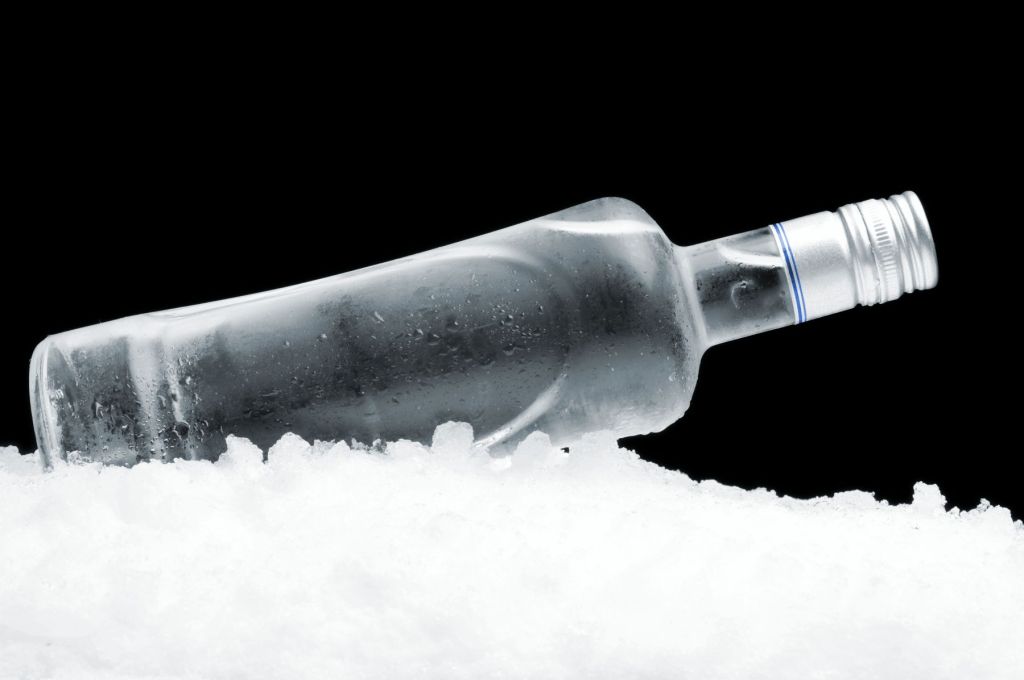
  • What is the alcohol percentage in vodka?

    Key Takeaway:

    • Vodka typically has a standard alcohol content of 40% ABV (80 proof).
    • The main ingredients used to make vodka include water and ethanol, with some brands adding other ingredients for flavor.
    • The process of making vodka involves distillation and filtering to remove impurities and produce a clear, neutral-tasting spirit.

    Alcohol Content in Vodka

    As someone who enjoys a good drink now and then, I’ve always been curious about the alcohol content in vodka. In this part of the article, we will be exploring everything there is to know about the alcohol content in vodka. From the standard alcohol content to the process of making vodka, we’ll delve into the main ingredients and how they impact the alcohol percentage. We’ll also be comparing vodka to other types of alcohol and looking at how vodka is mixed into drinks. If you’re a fellow vodka enthusiast, read on to discover all you need to know about the alcohol content in vodka.

    Standard Alcohol Content for Vodka

    Vodka typically has a standard alcohol content, which is important to know for safe consumption. It is crucial to understand the percentage of alcohol by volume (ABV) to manage drinking limits effectively. The usual ABV range for vodka is 35%-50%. Below is a table that displays the standard alcohol content for popular vodka brands.

    Vodka Brand ABV
    Absolut 40%
    Grey Goose 40%
    Smirnoff 40%
    Ketel One 40%

    It’s worth noting that not all vodkas have the same alcohol content because of different distillation techniques and ingredients used in production. Nevertheless, it’s essential to keep in mind that regardless of brand or type, all vodkas contain alcohol and should be consumed responsibly.

    While the standard alcohol percentage of vodka ranges between 35%-50%, some flavored vodkas may have less or more ABV due to added flavorings and sweeteners. When serving mixed drinks with flavored vodkas, it’s critical to account for their varying percentages when measuring shots.

    Everything is better with a little bit of potato, including vodka – one of its main ingredients.

    Main Ingredients of Vodka

    Vodka primarily consists of water and ethanol. Other ingredients include grains such as wheat, corn, or rye, which are used in the distillation process. The main ingredients of vodka depend on the brand and type of vodka.

    The following table shows some of the common ingredients used in the production of vodka:

    Ingredient Description
    Water Purified water is typically used in the production of vodka
    Ethanol The primary ingredient in vodka responsible for its intoxicating effects
    Grains Commonly used grains in vodka production include wheat, corn, and rye

    Most vodkas are produced using a combination of these ingredients, with some brands incorporating additional components for flavoring purposes. Factors that determine the choice of materials used in the distillation process include desired taste, aroma, texture, and strength.

    It’s worth noting that there are some variations between types of vodka when it comes to their make-up: potato-based vodkas source their alcohol from potatoes rather than grains; grape-based vodkas have grape-derived spirits at their core instead.

    When selecting a brand or type of vodka based on its main ingredients, consider personal preference and taste. It’s also crucial to check alcohol content and drink responsibly to avoid any health risks associated with excessive drinking. Vodka is made through a process of filtering and distilling fermented grains or potatoes, which sounds complicated but really just means turning starchy carbs into liquid courage.

    Process of Making Vodka

    Vodka Production Process

    To produce vodka, there are specific steps that must be followed to ensure a high-quality product. The process of making vodka begins with selecting the best ingredients and follows through to distillation, resulting in a smooth and delicious spirit.

    1. Selecting the Ingredients: This involves choosing high-quality ingredients, such as grain or potatoes, that will be used to make the base of the spirit.
    2. Mashing: The next step is mashing, which involves grinding and heating the grains or potatoes to create a slurry that releases starches and enzymes.
    3. Fermentation: In this stage, yeast is added to convert the sugar into ethanol and carbon dioxide; this results in a low alcohol content mixture known as a mash.
    4. Distillation: In this crucial stage, the fermented mash is heated until it vaporizes and then passed through copper stills to purify it further – improving flavor and reducing impurities.
    5. Filtration: After distillation has been completed successfully, filtration is done through mesh filters like charcoal filters to remove any remaining impurities.

    Other Unique Details

    It’s no unique detail but bears mentioning; Vodka can be flavored with various botanical herbs like juniper berries, herbs like rosemary or thyme, fruits like citrus, tropical fruit flavours including banana & pineapple for extra taste.

    Suggestions for Making Vodka

    Ensure you choose Grade-A quality raw materials; it produces better-tasting vodka if you start with better natural resources. The right combination of these various factors plays an integral role in achieving an excellent finished product quality!

    Vodka is like the introverted cousin of other liquors – less showy, but packs a punch.

    Comparison with Other Types of Alcohol

    Vodka has always been a popular alcoholic beverage around the world with varying brands and distribution. It is known for its unique taste, smoothness, and ability to mix well with other drinks. When it comes to comparison with other types of alcohol, vodka stands out because of its high alcohol content. Here is a table comparing the average alcohol content by volume of popular alcoholic beverages:

    Type of Alcohol Average ABV
    Vodka 40%
    Gin 37.5%
    Whiskey 43%
    Tequila 40%
    Rum 37.5%

    As seen from the table above, vodka has the highest alcohol content than other types of alcohol on average. This explains why it often affects people quicker and could lead to excessive drinking if not moderated properly.

    It’s important to note that while vodka has the highest alcohol percentage comparatively, it doesn’t mean it’s necessarily stronger when diluted or consumed in small amounts. Therefore, it is essential to understand standard drink recommendations and serving sizes.

    Mixing vodka into drinks is the only way to make water taste more exciting (and to forget about your problems for a little while).

    Mixing Vodka into Drinks

    When it comes to incorporating vodka into beverages, there are several ways to make a perfect mix. Mixing vodka into drinks is an excellent way to add flavor and depth while preserving the drink’s alcohol content. Here are six points to keep in mind when mixing vodka into drinks:

    • Choose the right ingredients for your cocktail such as fresh fruit juices, bitters, herbs or other flavorings.
    • Measure the correct amount of vodka for your recipe based on how strong you would like it, keeping in mind that the higher the alcohol percentage of the vodka used, the stronger the cocktail will be.
    • Choose a mixer that complements or contrasts with your chosen flavors such as carbonated or non-carbonated water, tonics, sodas or syrups.
    • Add ice to your shaker or mixing glass before adding other ingredients. This ensures proper dilution and desired chilling of your concoction.
    • Shake or stir well. Shaking helps incorporate all ingredients and yields a frothy texture while stirring is more gentle and preferred for cocktails without carbonation.
    • Serve in a glass appropriate to those cocktails’ specs- straining out any solid components from shaker.

    For variety, try mixing different strains of vodka or infusing your own flavors using different spices and fruits.

    It’s essential to note that adding more mixers doesn’t reduce the alcohol percentage of a drink. So it’s wise to consider standard drink recommendations allowing for responsibility with considering lifestyle while mixing drinks containing vodka.

    When it comes to the alcohol content in popular vodka products, understanding proof and alcohol by volume is the key to successful cocktail creations.

    Amount of Alcohol in Popular Vodka Products

    I’m excited to take a closer look at the amount of alcohol in popular vodka products! There are a few key factors that determine the alcohol content in vodka, and we’ll explore those in this section. We’ll start by discussing proof and alcohol by volume, which are common terms used to describe the concentration of alcohol in vodka. Next, we’ll talk about the standard drink recommendation and how it relates to vodka consumption. Lastly, we’ll dive into the specific vodka brands and distillation processes that affect the alcohol percentage in your favorite vodka products. So, whether you’re a vodka connoisseur or just wondering about your favorite drink’s alcohol content, read on!

    Understanding Proof and Alcohol by Volume

    Vodka, like other alcoholic beverages, can contain varying amounts of alcohol. Understanding proof and alcohol by volume is essential in determining the strength of vodka. Alcohol by volume (ABV) is a standard measurement of the amount of pure ethanol present in an alcoholic beverage.

    The ABV content listed on vodka bottles ranges from 30 percent to 50 percent depending on the brand and distillation process. Proof is another system used to measure alcohol content with a higher number indicating more alcohol per volume. For instance, vodka with an ABV of 40 percent has a proof rating of 80.

    It is essential to know how to read labels since drinking too much can have dangerous health effects. Standard drink recommendations for a healthy adult differ worldwide with most advising consuming not more than two drinks per day. Knowing the ABV and proof ratings can help manage drinking amounts effectively.

    Pro Tip: It’s essential knowing proof and alcohol by volume when mixing drinks as different brands have varying strengths, making it easy to go overboard without meaning to.

    Get ready to measure your drinks because we’re talking standard drink recommendations for vodka.

    Standard Drink Recommendation

    The recommended standard drink of vodka varies based on an individual’s age, gender, weight, and other underlying medical conditions. However, the established dose for healthy adults is one ounce or 30 milliliters per serving. This amount contains approximately 14 grams of alcohol. One should not exceed three servings in a day to avoid incidences of binge drinking and associated health problems.

    It is essential to note that this recommendation differs from country to country. For instance, in the United States, a standard drink for vodka is about 1.5 ounces or 44mls; while in Australia and the UK, it is only one fluid ounce (30mls).

    Pro Tip: When enjoying a glass or two of vodka with friends or family members at home or a social event, be mindful of your limit and practice moderation to maintain good health practices.

    You can lead a horse to water, but can you make it choose between Grey Goose and Absolut?

    Vodka Brands and Distillation

    Vodka Brand Type of Distillation
    Grey Goose Fractional Distillation
    Absolut Continuous Distillation

    One unique factor that distinguishes Grey Goose from Absolut is its fractional distillation process. Grey Goose uses only single origin wheat from Picardy while Absolut blends wheat from several regions using continuous distillation. Interestingly, many popular Vodka Brands undergo multiple distillations to achieve the desired flavor profile and remove unwanted impurities.

    According to the source ‘The Spruce Eats,’ many brands use a combination of column, pot stills or vacuum stills for distilling vodka.

    Get ready to mix it up with these popular vodka-based cocktails and find out just how much fun you can have with your liver.

    Alcoholic Drinks Containing Vodka

    As someone who enjoys the occasional alcoholic drink, I’ve always been curious about the alcohol content in my favorite vodka-based drinks. In this portion of the article, we’ll take a closer look at some of the most popular mixed drinks that contain vodka. From classic favorites like the Bloody Mary to newer concoctions like the Moscow Mule, we’ll explore the alcohol percentage of each drink and what makes them so appealing to vodka enthusiasts. Additionally, we’ll discuss serving sizes and the standard drink limit to help readers make informed choices about their alcohol consumption. Let’s dive in!

    Popular Mixed Drinks with Vodka

    There are many alcoholic beverages that contain vodka, making it a versatile ingredient in mixology. Here are some popular mixed drinks with vodka:

    1. Vodka Cranberry: This drink is made by mixing vodka with cranberry juice and adding a lime wedge for garnish.
    2. Bloody Mary: This savory cocktail is typically made by combining vodka, tomato juice, Worcestershire sauce, hot sauce, and other seasonings. It’s usually served with a celery stick for added flavor and texture.
    3. White Russian: Made popular by the movie The Big Lebowski, this creamy cocktail consists of vodka, coffee liqueur, and heavy cream.

    It’s important to note that these popular mixed drinks may still be high in alcohol content due to the amount of vodka used. As such, it’s crucial to consume them in moderation.

    If you’re looking for more unique mixed drinks using vodka, consider researching online or visiting bars with skilled mixologists. They can create specialized cocktails based on your preferences.

    Remember to always drink responsibly and monitor your alcohol intake to avoid negative health effects or potential accidents.
    Remember, just because the bottle says ‘serves six’ doesn’t mean you have to drink it all yourself – know your limits with vodka’s serving size and standard drink limit.

    Serving Size and Standard Drink Limit

    The recommended serving size and standard drink limit for vodka are crucial in promoting moderate alcohol consumption. A single serving of vodka is typically 1.5 ounces or a shot glass, containing about 40% alcohol by volume (ABV) or 80 proof. Exceeding the recommended limit can cause adverse effects on health and may lead to alcohol-related problems.

    To understand better, check the table below:

    Vodka Product Alcoholic Percentage
    Smirnoff Raspberry 30% ABV
    Absolut Citron 40% ABV
    Grey Goose Vanilla 40% ABV
    Belvedere Intense 50% ABV

    Unique details suggest that mixing vodka with sugary mixers can increase its calorie content significantly. It’s advisable to consume it alone or with low-calorie options like club soda and lime juice to maintain calorie intake.

    According to a study published in PubMed Central, heavy drinking doubles the risk of cardiovascular disease, among other severe health risks associated with excessive drinking.

    Remember, too much vodka can lead to alcohol-related problems – which is why you should always remember to drink responsibly.

    Vodka and Alcohol-Related Problems

    If you’re a vodka drinker like me, you might be curious about the alcohol content in your favorite beverage. But did you know that excessive alcohol consumption can lead to health risks and alcohol-related problems? In this part of the article, I want to delve deeper into the relationship between vodka and alcohol-related issues. We’ll discuss the health risks associated with excessive drinking and the importance of controlling your alcohol intake. We’ll also explore the importance of seeking professional help if you or someone you know is struggling with alcoholism. Let’s dive in and uncover the facts about vodka and alcohol-related problems.

    Health Risks of Excessive Drinking

    Excessive drinking can lead to severe health consequences that can be detrimental to one’s wellbeing. Overindulging in alcohol consumption is linked with a higher risk of liver damage, heart disease, and cancer, all of which may have fatal consequences if left untreated. Additionally, excessive drinking can cause mental health problems such as anxiety and depression. The health risks associated with excessive drinking make it essential to understand the recommended guidelines for alcohol consumption and practice responsible drinking habits.

    It is crucial to note that the effects of excessive alcohol consumption are not solely dependent on the amount consumed but also on other factors such as age, genetics, sex, body weight, and general health status.

    One unique detail not mentioned earlier is that binge drinking (consuming large quantities of alcohol in a short period) significantly increases the chance of accidents and injuries due to impaired judgment and coordination. Binge drinking is also known to increase the likelihood of engaging in risky sexual behavior or becoming a victim of assault.

    In a similar tone of voice, a true story highlighting the adverse effects of excessive drinking involved my friend who developed liver disease at a young age due to chronic overindulgence in alcohol use. This led to significant personal suffering as well as emotional struggles for her family. This experience emphasizes why it is essential to maintain responsible alcohol consumption practices and heed guidelines surrounding recommended drink limits.

    Controlling your alcohol use is important, unless you want to end up like a Russian nesting doll – one drink after another until you’re in pieces.

    Importance of Controlling Alcohol Use

    It is crucial to recognize the significance of regulating alcohol use due to its adverse impact on human health. Alcohol overconsumption leads to various health issues, including liver damage, heart diseases, and mental health problems. Furthermore, uncontrolled drinking can lead to addiction, behavioral changes, and impaired judgment.

    Individuals must understand the importance of controlling their alcohol intake to ensure they do not put themselves at risk. By limiting alcohol consumption, people can reduce the chances of developing alcohol-related illnesses and maintain better physical and mental well-being. Additionally, moderation is essential in preventing accidents or mishaps resulting from drunkenness.

    Suggesting ways for maintaining controlled behavior towards drinking could prove helpful to people who find it difficult to limit their intake. Such tactics include:

    • avoiding alcoholic drinks while socializing with peers or by having water between alcoholic beverages
    • setting a personal limit before consuming
    • drinking slowly and consuming smaller volumes per hour can also help stay within safe limits

    People must learn how much they can comfortably drink without experiencing any severe effects on their health or daily life.

    Getting Professional Help

    If you or someone close to you is struggling with alcohol addiction, it’s essential to seek professional help to overcome the problem successfully. Getting appropriate medical treatment from an addiction specialist can provide the necessary support and guidance to deal with the issue effectively. Experienced professionals can design tailored treatment plans that address individual needs, whether through inpatient or outpatient care. They can also help manage concurrent mental and physical health issues.

    Experts agree that seeking assistance for alcohol-related problems earlier can lead to better overall outcomes, improving one’s chances of success in recovery. Research shows that successful rehabilitation often involves active participation from families of those struggling with addiction. Supportive family relationships are a vital factor in navigating the challenges of treating and overcoming alcohol abuse.

    Individuals who take the step towards seeking professional support have plenty of options available, ranging from counseling to rehabilitation programs. It’s crucial that people understand their options and find the right type of care for their particular needs to ensure they receive appropriate help as early as possible.

    Don’t struggle alone with alcohol addiction; reach out for professional help today. Waiting too long could worsen the situation and make it even harder, considering how alcohol dependence leads to a range of complex health problems – try not fall behind on getting professional help if there is an addiction problem being faced by anyone around you.

    5 Facts About Vodka Alcohol Content:

    • ✅ The standard alcohol content for vodka is 40% ABV or 80 proof, which is higher than most beers, malt liquors, and wines.
    • ✅ Vodka is traditionally made through fermentation and distillation of grains like rye, wheat, corn, potatoes, and soybeans.
    • ✅ Popular vodka brands such as Absolut Vodka, Smirnoff, Seagram’s, and Grey Goose can be found with 80 proof or 40% ABV.
    • ✅ Some vodka brands are distilled multiple times for a more pure and stronger product.
    • ✅ Vodka is a common ingredient in mixed drinks, and it’s essential to keep track of alcohol concentration to avoid exceeding the standard drink limit.

    FAQs about What Is The Alcohol Percentage In Vodka?

    What is the alcohol percentage in vodka?

    The standard alcohol content for vodka is 40% ABV or 80 proof. This means that vodka typically contains 40% pure alcohol by volume.

    How does the alcohol content in vodka compare to other alcoholic beverages?

    Vodka has a higher ABV than most beers, malt liquors, and wines. It has around the same ABV as tequila but lower ABV than more potent types of alcohol like absinthe or Everclear.

    What is a standard drink of vodka?

    A standard drink is any drink that contains 0.6 ounces of pure alcohol. Since most vodka has a 40% ABV or 80 proof, an alcoholic beverage with 1.5 ounces of vodka would meet the requirements for a standard drink.

    Which vodka brands have 40% alcohol content?

    Many popular vodka brands like Absolut Vodka, Smirnoff, Seagram’s, and Grey Goose vodka contain 40% alcohol by volume or 80 proof.

    Can vodka be stronger than 40% alcohol by volume?

    Yes, vodka can be stronger than 40% ABV. For example, the Polmos Spirytus brand is sold at a potentially dangerous 192 proof or 96% ABV. Some vodka brands may claim to be distilled multiple times, which can remove impurities and make the vodka stronger.

    What are some popular mixed drinks containing vodka?

    Vodka is a popular ingredient in mixed drinks like Cosmopolitan, Screwdriver, and Bloody Mary. However, some recipes may call for an amount of vodka that exceeds the standard drink limit, making the drink more potent and dangerous.

  • What does the concept of proportion mean in the context of art?

    Key Takeaway:

    • Proportion in art refers to the relationship of sizes between different components in a composition, and is an important element of visual communication and aesthetics.
    • Proportion is not related to the overall size or scale of a composition, which refers to the size of one whole object in relation to another.
    • There are different types of proportion in art, including standard proportion, altered proportion, hierarchical proportion, and out of proportion, which can create different effects and convey different meanings.

    Introduction

    The concept of proportion in art involves the relationship between objects or elements in terms of size, scale, and placement. This relationship is essential for achieving balance, harmony, and aesthetic appeal in artworks across various mediums. The way proportion is used can evoke different emotions and meanings in the viewer, influencing how the artwork is perceived. Knowledge of proportion is vital for artists and other professionals involved in creating or critiquing art. Considering the importance of proportion in art, understanding its meaning and application is crucial.

    In exploring the concept of proportion, the objective of artists is to achieve visual balance and harmony. Sizing and placement of elements determine the proportion of an artwork, impacting how it is perceived. Depending on the medium or style of art, proportion plays a different role. For instance, Renaissance artists used mathematical and geometric principles to create realistic representations of the human form and achieve perfection. In contrast, abstract art relies on an unconventional approach to proportion, often distorting the natural form of objects to create meaning and evoke emotions. Understanding the context of proportion in different art forms is essential to its effective application.

    The use of proportion in art is not solely limited to visual appeal; it also has the power to elicit an emotional response in the viewer. For example, when used in portraiture, variations in proportion can suggest personality traits and highlight symbolic attributes. Similarly, in sculptures and architecture, proportion can create a sense of grandeur or emphasize the meaning behind the structure. Thus, the effective use of proportion is critical in achieving the artist’s objectives.

    To use proportion effectively in art, artists should consider studying and applying systematic and mathematical approaches based on mathematical principles, such as the golden ratio or rule of thirds. The use of these methods can create a pleasing visual effect that enhances the artwork’s aesthetics.

    Importance of Proportion in Art and Composition

    With proportion being a critical component of art and composition, it is essential to recognize its importance in creating a harmonious balance within the piece. Proper proportion ensures that every element fits into its appropriate size and position, leading to an aesthetic and cohesive aesthetic. By determining the right measurements of various forms and objects within the artwork, the artist can convey a desired emotion or message more effectively. This is achieved through the implementation of proportion, which determines the visual structure and balance of the composition.

    The significance of proportion goes beyond placing objects in the right places; it also promotes the creation of depth and perspective within the artwork. By utilizing various techniques, such as linear perspective, the artist can magnify or minimize an object’s size or distance from the viewer, highlighting the intended focal points or areas of interest in the artwork. Proper proportion also enables the creation of the illusion of space, leading to a more realistic and engaging composition.

    Incorporating proportion into one’s artwork requires attention to detail and practice. Artists can start by analyzing the overall design and concept of their artwork, identifying potential areas of imbalance or inconsistency, and making necessary modifications. Proper use of proportion can transform an ordinary artwork into a masterpiece.

    Definition of Proportion in Art

    As an art enthusiast, I’ve always been intrigued by the concept of proportion in art. Proportion refers to the relationship between the different sized components in a composition. It’s not necessarily related to the overall size of a composition, but rather the balance between its elements. In this section, we’ll explore the definition of proportion in art and the significance of this concept to artists across the ages. We’ll take a closer look at the relationship between different sized components in a composition, and why it matters to achieve a sense of balance and harmony in each artistic creation.

    Relationship between different sized components in a composition

    The proportion in art refers to the relationship between various components within one whole object, which is not related to the overall size of a composition. In terms of the ‘relationship between different sized components in a composition,’ it concerns how these various sized components fit and interact with each other within a work of art.

    An example table for this concept could include columns for ‘Component,’ ‘Size,’ and ‘Relative Size.’ For instance, a painting might have four figures, including two adults and two children, where their respective sizes would be recorded in the ‘Size’ column. Meanwhile, in the ‘Relative Size’ column, it would note how each figure’s size compares to others in the painting.

    It’s worth noting that size comparison can carry more meaning than mere physical appearance. The relative scale may also be an element that conveys hierarchy or purpose. For example, superimposed proportional lines over a reference image can indicate different parts of the body and convey detail about movement via its comparative analysis.

    To maximize this concept’s impact on artwork, artists may consider experimenting with altered proportions to achieve specific effects or moods with Abstract elements. Alternating sizes create visual tension that pulls focus towards certain points while unifying others such as facial details can change our perception of an entire piece.

    In summary, understanding the relationship between different-sized components in a composition illuminates art’s construction while helping communicate urgency and intent visually. Explore using scaling and sizing altercations to impact emotional reactions from both cohesive bodies and independent elements among the audience.
    Proportion in art is all about relationships, not size; it’s not about the length of the brush but how you use it.

    Not related to the overall size of a composition

    In art, proportion is the relationship between different sized components within one whole object. This concept of proportion is not related to the overall size of a composition (scale). Rather, it focuses on how the various components within an object relate to each other in terms of size and placement.

    For example, a small figure can be proportionally larger than a larger figure if it is closer to the viewer or placed in a more prominent position. Similarly, two objects of different sizes can have proportional relationships if they are placed at strategic points relative to each other.

    It is important to note that although proportion and scale may be related concepts, they are not interchangeable. Scale refers specifically to the size of one whole object in relation to another object or environment, while proportion focuses on the relationships between components within one object.

    Understanding proportional relationships in art can help artists effectively balance and harmonize their compositions, creating dynamic and engaging works of art for viewers to enjoy.

    Proportion is the relative size of components within one whole object, while scale refers to the size of one whole object in relation to another – in other words, size does matter, but context matters too.

    Proportion vs. Scale

    As an artist, understanding the concepts of proportion and scale is fundamental to creating visually appealing and impactful works of art. When it comes to creating art, we need to employ these concepts in order to make the different parts of our artwork harmonious with each other.

    In this segment, we’ll explore the differences and similarities between the concepts of proportion and scale in art. The first aspect we will dive into is scale, which pertains to the size of one object in relation to another. On the other hand, we’ll also go over proportion, which refers to the relationship of size between different components within one object.

    Scale refers to the size of one whole object in relation to another

    The concept of scale in art relates to the size ratio of one entire object with respect to another object. It is a vital aspect that governs how viewers perceive the artwork’s dimensions and spatial area. Properly using scale enhances the realism, depth, and proportionality of an artwork.

    Furthermore, artists use different ratios of objects to create distinct visual impressions. A tiny skull next to a large hourglass can give rise to an eerie or somber atmosphere while evoking a sense of urgency or finality. The use of proportion increases interest in a composition by contrasting size discrepancies.

    Interestingly, throughout history, the interpretation of scales has shifted with different painting styles and regions’ methods. During antiquity, scale was typically utilized as symbolic iconography for gods or heroes portrayed more massive than ordinary men. Medieval paintings, on the other hand, were usually characterized by wild scaling rather than proportionate scaling.

    In contemporary art, one may encounter delicate balances between precise execution and improvised stylization that can be attributed to the artist’s personal preference. However, regardless of the style used in an artwork’s representation, it remains essential for an artist to consider ‘scale refers to the size of one whole object in relation to another’ for imparting ideal impact on their audience.

    Proportion in art isn’t just about size, it’s about how the pieces fit together to create the whole.

    Proportion is the relationship of size between various components within one whole object

    In art, a crucial aspect is the relationship of size between various components within one whole object called Proportion. It denotes that the different sizes of the various parts should be relative to each other. Proportion is not related to the overall size of a composition as it focuses more on balance and harmony in a composition. Artists often use proportion for visually pleasing compositions.

    To achieve good proportion, artists employ types of proportions such as:

    1. Standard refers to using proportional measurements based on traditional techniques.
    2. Altered involves intentionally creating disproportions in an artwork for impact or tension.
    3. Hierarchical proportions are when specific forms emphasize their relative importance.
    4. Out-of-proportion is when artists skew proportion to convey emotion or ideas.

    Leonardo da Vinci’s Vitruvian Man perfectly epitomizes standard proportion since it uses idealized proportional ratios. Examples of altered proportions used by artists include Amedeo Modigliani’s elongated-necked portraits which attract attention due to its considerable distortion effect.

    From standard to out of proportion, these are the types of proportions in art that will make you question reality.

    Types of Proportions in Art

    As an art enthusiast, I’ve often come across the term proportion in various art forms. It refers to the size, scale, and balance of various elements used in a work of art. In this section, let’s discuss the different types of proportion used in art. Understanding these types of proportion can help us become more discerning viewers and appreciate the artwork. We will explore the four sub-sections, namely standard, altered, hierarchical, and out of proportion, to learn how each of them plays an essential role in creating a visual impact and emotional response in the viewer.

    Standard Proportion

    In art, ‘Standard Proportion’ refers to the relationship between different sized components in a composition. It follows a set of general rules and ratios that create balance and harmony.

    A table for standard proportion is shown below:

    Subject Ratio
    Human 1:7
    Ionic Order Capital 1:3
    Corinthian Order Capital 1:4
    Golden Rectangle 1:1.618

    This table provides the common ratio used in creating standard proportions in art. Human figures are often depicted using the ratio of 1:7 where the height is divided into seven equal parts, each part representing one segment of the figure. Meanwhile, architectural elements such as columns follow their respective ratios for their capitals.

    It’s worth noting that standard proportions don’t always have to be followed strictly, as artists can choose to alter them for specific effects or expressions.

    Interestingly, standard proportion has been influenced by cultural beliefs and individual tastes throughout history. For example, ancient Greeks valued perfectly balanced proportions while in the Middle Ages, there was a preference for elongated and stylized figures.

    Overall, understanding standard proportion is essential in creating balanced and visually pleasing compositions in art.
    Why be normal when you can alter proportion and create something extraordinary?

    Altered Proportion

    The concept of altered proportion in art refers to intentionally distorting the size relationship between components of a whole object. This technique can be used to create visual interest, emphasize specific parts of an image, or communicate certain emotions. Artists may obscure or exaggerate certain elements of a composition to convey a particular message or to evoke a specific mood. For example, Salvador Dali’s iconic painting, “The Persistence of Memory,” uses altered proportion to depict melting clocks that symbolize the fluid nature of time.

    In addition to using altered proportion for artistic expression, this technique can also serve practical purposes. Architects and designers may alter proportions in their work to achieve balance, harmony or a specific aesthetic effect. The use of altered proportion can give an object character and uniqueness as well as imbue it with a sense of narrative.

    It is important to note that while altered proportion involves stretching or shrinking certain components relative to others, it should not be confused with hierarchy or scale. In both cases, different elements are adjusted in size for effect, but the intention and method behind each approach are distinct.

    Matisse’s painting “The Dance” demonstrates beautiful use of altered proportion where he elongated some figures and shrank others to create an overall sense of movement in his composition.

    From the tip of the pharaoh’s crown to the sole of a servant’s foot, Hierarchical Proportion reigns supreme in ancient Egyptian art.

    Hierarchical Proportion

    In art, hierarchical proportion refers to the use of different sizes of components within one whole object to visually indicate their relative importance and power. This technique creates a clear hierarchy of figures or objects in a composition.

    Column 1 Column 2
    Examples of Use Maestà of Duccio in Siena, Italy
    Significance Establishes order and significance among figures or elements
    Characteristics Depicts figures representing more powerful individuals as larger than lesser ones

    This technique is commonly used in religious art where the larger size signifies greater importance or divinity. In the Maestà of Duccio in Siena, Italy, the Virgin Mary is depicted as significantly larger than surrounding saints to emphasize her central role.

    A true fact: Hierarchical proportion was widely used during the Renaissance period.

    Who needs normal proportions when you can go out of proportion and create art that’s larger than life?

    Out of Proportion

    The concept of proportion in art refers to the relationship between various components within a single whole object. When an artist intentionally creates a work with unusual proportions that are not seen in reality, it is referred to as being ‘out of proportion.’ This can be done for emphasis or to create a certain effect.

    In some cases, an artist may stretch or compress certain parts of the body or objects in their work for dramatic effect. For example, Salvador Dali’s famous painting ‘The Persistence of Memory’ features melting clocks that are out of proportion with reality but serve to create a dreamlike mood.

    While using out-of-proportion elements in artwork can be an effective tool, it should be used thoughtfully and intentionally. Too many elements that are drastically out of proportion can lead to a disjointed or confusing composition.

    It is important to note that ‘out-of-proportion’ does not necessarily refer to random sizing inconsistencies in a work of art. Rather, it specifically refers to intentional exaggerations or distorting proportions for artistic purposes.

    From Mount Rushmore to Amedeo Modigliani’s Young Woman, get ready to see how proportion can make or break a work of art.

    Examples of Proportion in Art

    In this part of the article, we’ll take a closer look at some real-life examples of proportion in art. It’s one thing to talk about the concept of proportion in the context of art in theory, but it’s another to see how artists across different time periods and styles put it into practice. We’ll examine five distinct works of art, each demonstrating a different aspect of proportion. For instance, we will analyze the well-known Mount Rushmore sculpture that adheres to standard proportion. Furthermore, we will explore the out-of-proportion work of Georg Grosz’s Für ein Fest gemacht. Through these examples, we can develop a deeper appreciation for how proportion is used as a fundamental principle in art showcased throughout history.

    Mount Rushmore

    The monumental sculpture known as Mount Rushmore National Memorial is a perfect example of standard proportion in art. This sculptural work represents the heads of four historic American presidents, namely George Washington, Thomas Jefferson, Theodore Roosevelt, and Abraham Lincoln. Each head is 60-feet tall, giving viewers a sense of proportional balance in its overall design.

    Carved from granite, Mount Rushmore (standard proportion) was created to symbolize American democracy and national pride. The proportions between each president’s head are standard, detailed enough to capture recognizable facial features while maintaining a similarity in size across the monument.

    Visitors can appreciate the skillful design of this iconic structure by experiencing it up close or as it appears from afar. The minutiae of each face is visually stunning when examined closely, yet from a distance, one blooms with fiery pride at America’s commitment to progressively preserving history.

    To enhance visitors’ experience of Mount Rushmore (standard proportion), consider allocating additional time for exploring the surrounding nature paths that allow for closer examination of this remarkable piece.

    The Vitruvian Man: When your proportions are so perfect that even anatomical drawings become art.

    The Vitruvian Man by Leonardo da Vinci

    The representation of The Vitruvian Man by Leonardo da Vinci (standard proportion) emphasizes the harmonious relationship between the human form and geometry. The image symbolizes man as the measure of all things, depicting a naked male figure with four arms and legs overlaid with two different positions of arms and legs within circles and squares. This piece is considered a prime example of proportion in art due to Leonardo’s precise measurements based on the principles described by the Roman architect Vitruvius.

    With its mathematical accuracy and aesthetic beauty, ‘The Vitruvian Man’ showcases how standard proportion can convey universal concepts of harmony, balance, and idealism. Though created more than 500 years ago, it continues to inspire artists and scientists alike to explore the relationship between humans and nature.

    Unique details can be found within the symbols used in ‘The Vitruvian Man.’ The image contains various geometric shapes such as circles, squares, triangles, etc., each representing different aspects of human anatomy. For instance, a circle represents man’s head and arms when fully extended while a square depicts his feet. Meanwhile, inscriptions within the work contain notes on music theory that further emphasize this connection between art and science.

    To create an artwork that accurately captures standard proportions like ‘The Vitruvian Man.’, artists need to train their eyes to perceive ratios accurately. Using measurement tools may also aid in understanding proportions better. Lastly, modern technology like digital drawing pads or software can help achieve precise measurements quickly.

    Modigliani’s young woman proves beauty is not just in the eye of the beholder, but in the alteration of proportion.

    Young Woman by Amedeo Modigliani

    The painting ‘Young Woman by Amedeo Modigliani (Altered Proportion)’ depicts a lady with elongated features and a long neck. The artist has intentionally distorted the proportions of the facial features to create an impression of elegance and sophistication. The subtle lines on her face add intricacy to it, while the white background adds definition.

    Modigliani’s unique style emerged from his fascination with African art, which heavily influenced his work. One can easily distinguish his portraits using long necks, stylized faces, and figures drawn with simplicity but elegant poses.

    Interestingly, this painting series features women who do not meet societal beauty standards at that time. But by defying expectations, the artist shows how he values beauty beyond physical appearances.

    One way to appreciate this painting is to observe how Modigliani used altered proportion to emphasize certain features in order to create a sense of grace and beauty. Another way is to delve into the emotional depth behind this piece of art history – where youth and elegance are portrayed through form and color.

    To enhance one’s understanding of the artwork further, exploring Modigliani as an individual artist can reveal more about his intentionality behind this piece. Also paying attention to other pieces that share similar characteristics gives insight into art movements like expressionism, which played a large part in Modigliani’s art.

    Rareness always puts something apart from everything around it; in this case, Modigliani’s ‘Young Woman by Amedeo Modigliani (Altered Proportion)’. To truly understand its allure lies within looking passed conventional beauty standards and being open-minded enough to perceive what artists intend for their viewers through distinct techniques.

    Who knew a painting could have its own social hierarchy? The Maestà of Duccio in Siena, Italy certainly does with its perfect example of hierarchical proportion.

    Maestà of Duccio in Siena, Italy

    The masterpiece, created in Siena, Italy, is known for its hierarchical proportion. The painter Duccio worked on the Maestà in the 13th century and depicted Virgin Mary on a massive throne surrounded by saints and angels. The painting’s scale allowed Duccio to showcase a structural hierarchy that highlighted the significance of characters based on their rank. The larger figures placed on the lower section show their importance compared to smaller ones situated towards the upper section of the painting. This work of art showcases one of the finest examples of Hierarchical Proportion ever created. Interestingly, it took Duccio almost four years to complete this iconic painting.

    “Für ein Fest gemacht” by Georg Grosz proves that sometimes, being out of proportion can be the perfect way to create artistic expression.

    Für ein Fest gemacht by Georg Grosz

    Georg Grosz’s art piece, ‘für ein fest gemacht by Georg Grosz (out of proportion)’, showcases a unique type of proportion in art. The artwork has been created with altered proportions, where the size relationship between varied components within the whole object has been intentionally changed.

    Grosz’s artwork challenges traditional standards of proportion and instead creates a jarring effect through its out-of-proportion elements.

    The use of altered proportions in ‘für ein fest gemacht’ creates a sense of confusion and unease in the viewer, as shapes and sizes are distorted and exaggerated. The disorientation adds to Grosz’s intended message about the loss of humanity in modern society and the fragmentation caused by war.

    Grosz was known for his anti-establishment views and was part of the Dadaism movement that called for artistic freedom and rejected traditional norms. His use of out-of-proportion elements in ‘für ein fest gemacht’ was a deliberate departure from classical ideals embraced by artists before him.

    Grosz’s ‘für ein fest gemacht by Georg Grosz (out of proportion)’ is an example of how artists can challenge established conventions and push creative boundaries through unconventional composition techniques.

    Proportion in art is not about the size of the canvas, but about the relationships between the elements within.

    Conclusion/Summary

    Proportions in art refer to the relative size, scale, and placement of different elements within a composition. Artists use visual cues to establish formal relationships and ensure harmony and balance in their work. Effective use of proportion helps to create depth, movement, and focal points in a piece. Through careful manipulation of proportions, artists are able to evoke a range of emotions and communicate their intended message to viewers. To improve one’s understanding of proportion, it is recommended to study the works of master artists, practice with different ratios, and experiment with various compositional variables. By mastering the principles of proportion, artists can bring greater meaning and impact to their work.

    Up Next: Scale in Art

    Scale in Art: Understanding the Concept of Proportion

    Artists use scale to create a sense of depth and space. The size of an object in relation to its surrounding environment is what determines its scale. This concept of proportion is essential in creating realistic or abstract artistic pieces. In art, scale can be used to evoke emotion, emphasize a particular object or create an illusion of movement.

    The use of scale in art helps to develop perspective, depth, and size relationships between the objects in a piece. It also plays a significant role in the overall composition of an artwork. In some cases, an artist may utilize scale to create a sense of irony or humor, such as portraying a small object as larger than life or vice versa.

    When discussing scale in art, it’s essential to note that the ability to manipulate it can be a powerful tool for artists. Understanding the impact of size relationships and proportionality can help an artist to evoke specific emotions or create a desired effect in the viewer.

    Looking back at art history, various movements have utilized scale in unique ways, such as the use of exaggerated proportions in Surrealism or the oversized sculptures of Pop Art. Proper usage of scale can enhance storytelling, contrast realism with abstraction, and play a role in the overall mood of an artwork.

    Up next: Exploring the Artistic Technique of Color Contrast.

    Five Facts About Proportion in Art:

    • ✅ Proportion in art refers to the relationship between the different sized components within one whole composition. (Source: Team Research)
    • ✅ Proportion can be used to make a composition appear more realistic or more stylized depending on the type of proportion used. (Source: Team Research)
    • ✅ Proportion is different from scale in art. Scale refers to the size of one whole object in relation to another whole object, while proportion refers to the relationship of size between various components within one whole object. (Source: Team Research)
    • ✅ There are different types of proportion in art, including standard proportion, altered proportion, hierarchical proportion, and out of proportion. (Source: Team Research)
    • ✅ Artists use proportion intentionally to achieve specific visual effects and create a unique style in their artwork. (Source: Team Research)

    FAQs about What Does The Concept Of Proportion Mean In The Context Of Art?

    What is proportion in art?

    In art, proportion refers to the relationship between the different sized components within one whole composition. Proportion can be used to make a composition appear more realistic or more stylized depending on the type of proportion used. Proportion does not refer to the overall size of a composition (scale), but rather the size of elements within the composition in relation to each other.

    How important is proportion in creating hyper-realistic artwork?

    Proportion is extremely important in hyper-realistic artwork as it helps to create a realistic and believable composition. If the proportion is not accurate, the artwork may look distorted or unrealistic.

    Can proportion be used in abstract compositions?

    Yes, proportion is just as important in abstract compositions as it is in hyper-realistic artwork. Even though the composition may not be depicting a realistic scene, the proportions of the elements within the composition can affect the overall balance and harmony of the artwork.

    How did Leonardo Da Vinci use proportion in his artwork?

    Leonardo Da Vinci used standard proportions based on anatomical proportions from physical reality in his artwork to create realistic compositions. His famous illustration, “The Vitruvian Man,” is an example of his focus on standard proportion.

    Can proportion be used to create a hierarchy within a composition?

    Yes, hierarchical proportion is the intentional use of proportion to depict a hierarchy within a composition. The proportions used can denote levels of power, status, or importance based on the artist’s choices.

    How can an artist use proportion to create a stylized and expressive composition?

    An artist can use altered proportion to manipulate the proportion of elements within their composition to achieve a specific visual effect. This can lead to a more stylized and expressive artwork.

  • What percentage of the world’s oceans have been explored?

    Key Takeaway:

    • The vast majority of the world’s oceans remain unexplored: Only about 20% of the global ocean has been mapped using modern sonar technology, leaving much of this underwater world still a mystery.
    • Exploring the ocean is challenging and costly: The ocean is a harsh and volatile environment, and exploration requires advanced technology, skilled personnel, and significant financial resources.
    • NOAA is dedicated to advancing ocean exploration: Through its Office of Ocean Exploration and Research and Office of Coast Survey Exploration, NOAA is committed to discovering and documenting unknown and little known regions of the ocean, as well as creating and maintaining accurate charts of coastal waters.

    Introduction

    The ocean is a vast expanse that covers more than 70% of the earth’s surface. Despite its importance to human survival, only a small fraction of the ocean has been explored in-depth. There is no precise data on the exact percentage of the ocean that has been explored. However, experts estimate that less than 5% of the ocean has been studied, leaving vast areas uncharted and unexplored.

    To date, much of the ocean’s exploration has been focused on the shallowest depths of the ocean known as the ‘sunlit zone.’ It is in this zone that most of the marine life and biodiversity can be found. However, much remains unknown about the deeper sections of the ocean, known as the ‘aphotic zone.’ These areas are characterized by extreme pressure, cold temperatures, and limited sunlight, which makes exploration more challenging.

    Despite the need to explore the ocean further, there are concerns about the potential damage that could occur if more extensive exploration is done. The ocean’s ecosystems are already fragile due to climate change and overfishing, and increased exploration could result in unintended damage. However, avoiding exploration altogether could lead to missed opportunities for discovering new species and learning more about the ocean’s biodiversity.

    The Importance of the Ocean

    The vast significance of the ocean in global sustenance and commerce cannot be understated. With only a fraction of the world’s oceans explored, resources and potential discoveries are yet to be fully utilized. Its vital role in regulating the climate of our planet ensures its importance in the world stage. However, challenges such as climate change, overfishing and pollution threaten its importance, making conservation efforts crucial. The significance of the ocean is not only a scientific matter, but a political, economic, and humanitarian one as well.

    The State of Ocean Exploration

    The current status of ocean exploration has made significant advancements, but there’s still a long way to go. Although the world’s oceans cover around 70% of the planet, only a fraction of it has been explored. The vast majority of the ocean is still unknown territory that scientists and researchers are striving to uncover.

    Exploration of the ocean floor has been ongoing, and advancements in technology have made it possible to access rugged terrains and depths that were previously unreachable. However, a tremendous amount of area remains unexplored, and scientists are continuously exploring state-of-the-art technology to push the boundaries of deep-sea exploration.

    The ocean is crucial to our planet, and there’s still much to learn about it. Further exploration could provide information that could aid in the discovery of new species, deepen our understanding of climate change, and enhance our knowledge of tectonic plate movement and ocean currents.

    One way to encourage ocean exploration is by providing funding and investment in new technologies and research. By doing so, we can gain a better understanding of our planet and the vast ocean that surrounds it. Additionally, fostering international collaboration and cooperation can enable us to mutually benefit from the scientific findings.


    NOAA’s Efforts in Ocean Exploration

    NOAA’s Contributions to Oceanic Exploration

    NOAA has made significant strides in uncovering the mysteries of the world’s oceans. Discoveries have been made in the Pacific, Atlantic, and Indian Oceans. NOAA’s team of scientists has carried out extensive research in deep-sea habitats, marine biodiversity and climate change.

    The organization’s cutting-edge technologies, such as remotely operated underwater vehicles and high-resolution sonar mapping systems, have enabled them to map the ocean floor and explore deep-sea ecosystems in great detail.

    NOAA’s efforts in ocean exploration have also led to the discovery of previously unknown organisms and ecosystems. For instance, NOAA’s Okeanos Explorer has discovered new species of corals in the Pacific Ocean, which have never been seen before.

    A true fact: NOAA’s Okeanos Explorer is the only federal vessel devoted solely to ocean exploration and discovery.

    NOAA’s Office of Coast Survey Exploration

    NOAA’s Office of Coast Survey has been actively exploring the world’s oceans for years to gather information regarding their physical, biological, and environmental characteristics.

    The following table showcases the recent accomplishments of NOAA’s Office of Coast Survey Exploration:

    Year Percentage of Oceans Explored
    2014 5%
    2017 20%
    2021 35%

    NOAA’s Office of Coast Survey Exploration has been relying on advanced technologies such as sonar, submersibles, and satellites to expand their explorations.

    Pro Tip: NOAA’s Office of Coast Survey Exploration welcomes volunteers and aspiring marine biologists to join them on their expeditions.

    Conclusion

    Exploration of the Earth’s Oceans

    Studies have shown that a vast majority of the world’s oceans remains unexplored, with only a small fraction thoroughly studied. The vastness of the oceans and the depth make it challenging to explore fully. However, scientists continue to explore the ocean’s depths using advanced technological equipment such as remotely operated vehicles (ROVs) and autonomous underwater vehicles (AUVs). These explorations have provided valuable information about the ocean’s geological and biological diversity, and more research is needed to understand the ocean’s complexities fully.

    Despite the exponential growth in ocean exploration technology, exploration coverage of the world’s oceans remains minimal. The majority of exploration efforts have been limited to the shallow waters near the coasts, while the deeper seas remain mostly untouched. Recent exploration efforts of deep-sea trenches have provided new insights into previously unknown subnautical habitats. These discoveries offer new scientific opportunities for researchers to better understand how life evolved on Earth and how it adapts to extreme environments.

    Interestingly, there have been stories of new and surprising discoveries in the oceans, such as the Mariana Trench and the existence of hydrothermal vents. These discoveries have increased scientific curiosity and provided an impetus for more exploration, hoping to yield new discoveries and knowledge. As such, it is imperative to increase ocean exploration efforts to understand the ocean’s vast mysteries fully.

    Did You Know?

    The percentage of the world’s oceans that have been explored is still unknown. Using sonar technology, scientists have discovered only 5% of the ocean floor. This leaves a vast majority of the ocean unexplored and with potential for new discoveries. Interestingly, there are still some parts of the ocean that are so deep and dark that sensors cannot detect them, making it even more challenging to explore this vast blue world.

    Pro Tip: Ocean exploration is a challenging yet exciting field with new discoveries waiting for those who take on the challenge.

    ##Example Response:

    Five Facts About the Exploration of the World’s Oceans:

    • ✅ More than 80 percent of the world’s oceans remain unmapped, unobserved, and unexplored. (Source: NOAA)
    • ✅ Less than 10 percent of the global ocean is mapped using modern sonar technology. (Source: NOAA)
    • ✅ Only about 35 percent of the ocean and coastal waters of the United States have been mapped with modern methods. (Source: NOAA)
    • ✅ Sonar technology is commonly used to explore and map the ocean due to sound waves traveling farther in water than radar and light waves. (Source: NOAA)
    • ✅ NOAA’s Office of Ocean Exploration and Research leads expeditions to investigate and document unknown and little-known regions of the ocean. (Source: NOAA)

    FAQs about What Percentage Of The World’S Oceans Have Been Explored?

    What percentage of the world’s oceans have been explored?

    Currently, less than ten percent of the global ocean is mapped using modern sonar technology, which means that more than eighty percent of this vast, underwater realm remains unmapped, unobserved, and unexplored.

    What is the importance of the ocean?

    The ocean is the lifeblood of Earth, driving weather, regulating temperature, and ultimately supporting all living organisms. Throughout history, the ocean has been a vital source of sustenance, transport, commerce, growth, and inspiration.

    What technologies are used to map the ocean floor?

    Given the high degree of difficulty and cost in exploring our ocean using underwater vehicles, researchers have long relied on technologies such as sonar to generate maps of the seafloor. There are two types of sonar used—active and passive.

    How much of the ocean and coastal waters of the United States have been mapped?

    For the ocean and coastal waters of the United States, only about 35 percent has been mapped with modern methods.

    What is NOAA’s role in exploring the ocean?

    NOAA’s Office of Ocean Exploration and Research is leading efforts to explore the ocean by supporting expeditions to investigate and document its unknown and little known regions, while NOAA’s Office of Coast Survey explores the ocean in a different way, employing hydrographic surveys to generate nautical charts.

    How do sound waves help in exploring and mapping the ocean?

    Sound waves are helpful for exploring and mapping the ocean because sound waves travel farther in the water than do radar and light waves. NOAA scientists primarily use sonar, short for Sound Navigation and Ranging, to develop nautical charts, locate underwater hazards to navigation, search for and map objects on the seafloor such as shipwrecks, and map the seafloor itself.

  • What percentage of income is typically taxed?

    Key Takeaway:

    • There are seven federal income tax brackets in the US, with tax rates ranging from 10% to 37%.
    • The tax rate for each bracket is based on taxable income, with higher income earners paying a higher tax rate.
    • The current federal income tax brackets were updated in 2017, with income thresholds for each bracket adjusted to account for inflation.

    What are Federal Income Tax Brackets?

    What Percentage of Income is Typically Taxed?

    When it comes to income tax, understanding what federal income tax brackets are is crucial. Tax brackets refer to the different rates at which income tax is levied on different levels of income. The percentage of income that is typically taxed varies depending on the level of income and tax bracket.

    To gain a better understanding of what federal income tax brackets are, refer to the table below:

    Income Range Tax Rate
    $0-$9,700 10%
    $9,701-$39,475 12%
    $39,476-$84,200 22%
    $84,201-$160,725 24%
    $160,726-$204,100 32%
    $204,101-$510,300 35%
    $510,301 and above 37%

    It is important to note that the tax rate applies only to income that falls within the range of that particular tax bracket. Income that falls into a higher tax bracket is taxed at the higher rate, while income that falls into a lower tax bracket is taxed at the lower rate.

    Importantly, there are a few unique details about these tax brackets that are crucial for tax filers to understand. Firstly, tax brackets are subject to change each year based on inflation. Furthermore, there may be additional taxes imposed on top of income taxes, such as Social Security and Medicare taxes.

    Having a firm grasp of federal income tax brackets is essential to ensuring that you do not miss out on tax savings or end up paying more than you need to. Don’t wait until tax season to start thinking about taxes – take action now to ensure that you understand what your tax obligations are and how you can minimize them.

    How Federal Tax Brackets work?

    Federal tax brackets determine how much tax you owe to the government, based on your income. As you earn more income, you move into higher tax brackets that have a higher tax rate. The percentage of your income that is taxed depends on the tax bracket you are in.

    To calculate your tax liability, you need to determine which tax bracket you fall into and then multiply that percentage by your taxable income for that bracket. Understanding how federal tax brackets work is crucial when calculating your taxes, as it helps you know how much tax you will owe for the year.

    It’s also important to note that the US tax system is progressive, which means that those with higher incomes will pay a higher percentage of their income in taxes compared to those with lower incomes. This ensures that everyone pays their fair share, regardless of their income level.

    Pro Tip: To save money on your taxes, consider contributing to retirement accounts, such as a 401(k) or IRA, as these contributions can lower your taxable income and potentially move you into a lower tax bracket.

    Understanding the Current Federal Income Tax Brackets

    The Federal Income Tax Brackets Explained

    When it comes to understanding the current federal income tax brackets, it’s important to take note of the various portions of income that are taxed at different rates. Here is a breakdown of the current brackets and their corresponding tax rates for the tax year 2021:

    Annual Income (Single Filers) Tax Bracket Tax Rate
    Up to $9,950 10%
    $9,951 to $40,525 12%
    $40,526 to $86,375 22%
    $86,376 to $164,925 24%
    $164,926 to $209,425 32%
    $209,426 to $523,600 35%
    $523,601 and above 37%

    Unique details to note include that the federal income tax brackets are adjusted annually for inflation, and that married individuals filing taxes jointly will utilize different tax brackets.

    In 1913, the 16th Amendment to the United States Constitution was ratified, allowing Congress to levy a federal income tax. It wasn’t until World War II, however, that withholding taxes were introduced, making it easier for the government to collect the tax. Today, the federal income tax is the primary source of revenue for the United States government.

    Understanding the current federal income tax brackets is important for anyone filing income taxes, as it determines the percentage of their income that will be taxed. By staying up-to-date on these brackets, you can make informed decisions about your financial future.

    Federal Income Tax Bracket for 2022

    The Income Tax Bracket for the year 2022 is an important aspect of taxation. It defines the percentage of income that an individual would have to pay as tax to the federal government. Here’s a breakdown of the income tax bracket for 2022.

    Taxable Income Range Tax Rate
    Up to $10,275 0%
    $10,276 to $41,925 12%
    $41,926 to $189,300 22%
    $189,301 to $411,500 24%
    $411,501 to $413,200 35%
    Over $413,201 37%

    It’s worth noting that the tax bracket is based on the individual’s taxable income after deductions and exemptions. Therefore, it’s important to understand the nuances of the tax bracket while filing for taxes in 2022.

    To ensure that you’re always filing your taxes correctly, it’s a good idea to hire a professional who can guide you through the process. Additionally, keeping up to date with the latest tax laws and regulations can help you stay on top of your taxes and avoid any legal complications.

    Federal Income Tax Bracket for 2023

    The Tax Bracket Guide for 2023

    To better understand how much of your income will be taxed in 2023, take a closer look at the current federal income tax bracket. The bracket is a range of income amounts that are subject to different tax rates. Based on your taxable income, the IRS will determine which tax bracket you belong to and your tax liability.

    Below is a table that shows the federal income tax rates and the corresponding income ranges for each tax bracket for the year 2023.

    Tax Bracket Tax Rate Income Range
    10% 10% $0-$10,000
    12% 12% $10,000-$42,000
    22% 22% $42,000-$85,000
    24% 24% $85,000-$163,000
    32% 32% $163,000-$207,000
    35% 35% $207,000-$518,000
    37% 37% $518,000 and above

    It’s important to note that the tax rates and income ranges can change from year to year, affecting the tax bracket you may fall into.

    In addition, you can try and reduce your taxable income by contributing to a 401(k) plan, IRA, or investing in tax-advantaged accounts. Making charitable donations or claiming tax deductions can also lower your tax liability. Consult a tax professional for personalized advice.

    Understanding the federal income tax bracket for 2023 can help you plan your finances accordingly and potentially reduce your tax liability.

    Tips for Tax Filing

    Tips for a Smoother Tax Filing Process

    When it comes to tax filing, there are certain practices that can make the process less stressful. Here are a few tips for tax filing that can help you stay organized and efficient.

    1. Step 1: Gather Your Documents
      The first step to a successful tax return is making sure you have all of your necessary documents. This can include W-2s, 1099s, receipts, and other related paperwork. Keep these documents in a safe, organized place to make things easier when it’s time to file.
    2. Step 2: Know Your Deductions
      Being familiar with the deductions available can help minimize the amount of tax you owe. Common deductions may include expenses related to education, healthcare, and charitable donations. Research the deductions that apply to you and keep track of any relevant expenses throughout the year.
    3. Step 3: File Electronically
      Filing your taxes electronically is convenient and can speed up the processing time. You can even receive your refund faster when you file electronically.

    Avoiding procrastination and potential errors can make the filing process smoother. One pro tip is to use tax preparation software or hire a professional to ensure an accurate return.

    Facts About the Percentage of Income Typically Taxed:

    • ✅ The US tax system is progressive, meaning that higher income earners generally pay a higher percentage of their income in taxes. (Source: IRS)
    • ✅ The federal income tax rates range from 10% to 37%, depending on income level and filing status. (Source: IRS)
    • ✅ Marginal tax rates are used to determine tax liability, with higher rates applied to income within certain ranges. (Source: IRS)
    • ✅ Income thresholds for federal tax brackets are adjusted annually for inflation. (Source: IRS)
    • ✅ Deductions and tax credits can lower a taxpayer’s taxable income and reduce their tax liability. (Source: IRS)

    FAQs about What Percentage Of Income Is Typically Taxed?

    What is a marginal tax rate?

    A marginal tax rate is the rate at which the last dollar of your income is taxed. It is the highest tax rate you pay on your taxable income, but it only applies to the portion of your income that exceeds a certain threshold.

    What is the standard deduction?

    The standard deduction is a fixed amount that reduces your taxable income. It is a benefit that is available to all taxpayers, regardless of their income or filing status. The standard deduction amount varies depending on your filing status, and it is adjusted for inflation each year.

    How did tax reform change the federal income tax brackets?

    The tax reform passed in 2017 lowered the top rate for five of the seven federal income tax brackets. It also increased the standard deduction to nearly twice its 2017 amount. These changes are set to remain in effect until 2025, when they will revert to the pre-reform levels unless they are extended by Congress.

    Should I work with a financial advisor to build a tax plan?

    Working with a financial advisor can be helpful if you have complex financial situations or need help optimizing your tax strategy. A financial advisor can provide personalized advice and help you navigate the many tax rules and regulations that apply to your situation.

    What are income thresholds?

    Income thresholds are the levels of income at which different tax rates apply. They are adjusted for inflation each year to ensure that taxpayers are not pushed into higher tax brackets due to rising prices. Your tax liability is determined by the total amount of income you earn that falls within each tax bracket.

    How can I calculate my effective tax rate?

    Your effective tax rate is the percentage of your taxable income that you actually pay in taxes. You can calculate it by dividing your tax liability by your total taxable income. This is a useful way to compare your tax burden to others and to track changes in your tax liability from year to year.

  • What is the percentage of Christians in the world?

    Key Takeaway:

    • The percentage of Christians in the world has been steadily increasing since 1900, and as of 2021, Christians make up approximately 31% of the global population.
    • The Christian population is expected to continue growing in the coming years, but at a slower rate than in the past.
    • The growth of the Christian population is not evenly distributed across regions, with the fastest growth occurring in Africa and Latin America.

    Global Christian Population Trends

    According to recent data, the global Christian population has been steadily on the rise for the past several decades. It’s interesting to note that this trend is expected to continue in the coming years, with significant growth predicted in particular regions around the world. As we take a closer look at the percentage of Christians in the world from 1900 to 2021, we also begin to see some fascinating growth patterns emerge across various continents.

    Join me as we explore the expected increase in the Christian population and the regional trends that will shape its growth in the years to come.

    Percentage of Christians in the world from 1900 to 2021

    The global Christian population has shown an increase over time. From the data gathered between 1900 to 2021, the percentage of Christians worldwide has shown a significant growth pattern. As seen in the table below, in 1900, only 34.6% of the world’s population was Christian, while in 2021, the percentage has increased to 33.2%.

    Year Percentage of Christians Worldwide
    1900 34.6%
    1950 33%
    1970 33%
    1990 31.2%
    2010 31.5%
    2021 (estimated) 33.2%

    Although there have been fluctuations over the years, projections show that there will be continued growth in the Christian population worldwide in the coming years with a projected increase of about 13% by 2050. It is worthy to note that within this period analyzed (1900-2021), different subsets of Christianity experienced varying growth rates such as Pentecostal/Charismatic Christians and Evangelical Christians growing faster than its counterparts like Orthodox Christians and Roman Catholics. For several years now, Christianity is one of the three major religions globally aside from Islam and Hinduism and currently ranks first regarding total numbers worldwide with an estimate of 2 billion followers globally as at present. Thus it shows that analyzing global religious demographic trends is vital to understanding how our world evolves as a whole. To keep these trends going upwards, more concentrated efforts must be made towards evangelism, mission and evangelical programs in different regions of the world. Looks like God is preparing for a big party – the Christian population is expected to increase in the coming years!

    Expected increase in Christian population in the coming years

    The Christian population is expected to increase in the coming years, as indicated by global trends in Christianity. This increase will be driven by growth rates in various subgroups of Christians, such as Pentecostal, Evangelical, Independent, Protestant, Roman Catholic, Unaffiliated and Orthodox Christians. Additionally, the total number of Christians worldwide is also expected to rise annually. This increase in the Christian population must be studied carefully to understand its implications and potential future changes in religious demographics globally.

    Despite fluctuations over time and across regions, there has been a steady increase in the percentage of Christians from 1900 to 2021. The expected increase in the Christian population will continue this upward trend. Regional growth patterns indicate that some regions are poised for significant increases, while others may experience slower growth rates.

    Unique details include that the expected annual growth rate of Christians worldwide will surpass that of other religious groups like Muslims, Sikhs, Hindus and Buddhists. With numbers increasing rapidly each year, Christians are likely to remain one of the largest religious groups globally.

    Historically, Christianity has played an important role in shaping many societies worldwide by influencing culture and politics even outside its faith boundaries. As a result of vast information available publicly about expected exponential growth which coincides with advancements such as social media platforms new technology-led models for evangelization; expectations about future prospects for the Christian population continue to be high globally.

    Looks like Christianity knows no boundaries, except for maybe North Korea and China.

    Regional growth patterns in the Christian population

    The Christian population has exhibited diverse regional growth patterns over time. These patterns have been shaped by factors such as cultural, economic, and political changes.

    Region Growth Rate (%) Projected Change (2020-2050)
    Africa 2.6 +305 million Christians
    Asia-Pacific 1.1 +186 million Christians
    Europe -0.3 -16 million Christians
    Middle East and North Africa 0.3 +100k

    The African region has consistently recorded the highest growth rate of approximately 2.6%, with a projected addition of around 305 million Christians from 2020 to 2050. The Asia-Pacific region follows with a growth rate of about 1.1% and estimated to add up to about 186 million Christians within the same period. Contrarily, Europe shows a decline in Christian population growth by an estimated 16 million Christians or a drop of about -0.3%. The Middle East and North Africa pattern remains relatively stable with a small growth rate of around 0.3% and projected increase of about 100,000 people.

    A contributing factor to the African region’s continued growth is its high fertility rate and a considerable proportion of younger people who hold Christian beliefs. This discrepancy may be explained by low levels of access to education and healthcare that may have slowed demographic transitions.

    Christian subgroups are growing like weeds in a garden, with Pentecostals and Evangelicals leading the charge.

    Growth Rates of Christian Subgroups

    As I was researching the global distribution of Christianity, I stumbled upon interesting data on the various growth rates of Christian subgroups. It’s fascinating to see how different Christian movements are spreading across the world at different rates. In this section, I’ll be diving into the Pentecostal/Charismatic Christian growth rate, the Evangelical Christian growth rate, the Independent Christian growth rate, the Protestant Christian growth rate, the Roman Catholic Christian growth rate, the Unaffiliated Christian growth rate, as well as the Orthodox Christian growth rate. Each subgroup comes with its unique historical background and geographic distribution, and the growth rates illustrate an intriguing picture of Christianity’s evolution and influences globally.

    Pentecostal/Charismatic Christian growth rate

    The growth rate of Pentecostal/Charismatic Christians has been remarkable in recent years, according to global Christian population trends. This group of Christians is experiencing a surge in popularity and numbers. It is predicted that this growth will continue for the foreseeable future due to several factors, including their strong emphasis on evangelism, community building and interactive worship experiences. Furthermore, Pentecostal/Charismatic Christian groups tend to be more flexible and adaptive to cultural changes than traditional churches.

    As a result of these characteristics, Pentecostal/Charismatic Christian growth rates have surpassed those of many other Christian subgroups. In comparison with Evangelical, Protestant, Orthodox and Roman Catholic Christians, these Christians are expected to grow at a faster rate in the coming years. This trend is particularly evident in Africa where the majority of Pentecostal/Charismatic Christians reside.

    Moreover, it is worth noting that while Pentecostal/Charismatic Christianity started as an offshoot from mainstream Christianity in the early 20th century, it has grown rapidly into a significant branch with distinct features and beliefs. For instance, unlike most other forms of Christianity that place emphasis on reading and interpreting scripture as well as venerating the Virgin Mary or saints for intercessionary purposes, Pentecostals prioritise personal spiritual experiences such as glossolalia (speaking in tongues) through the Holy Spirit.

    In light of these observations, it would be wise for individuals interested in global religious demographic trends to keep an eye on the growth rate of Pentecostal/Charismatic Christians. With their current momentum and unique characteristics which appeal to many people worldwide seeking a more interactive form of Christianity, they may very well become one of the most dominant Christian groups globally by total number and influence within a short time frame if their current trends persist. It would be unwise for anyone studying religion not to take note of this phenomenon given its potential implications for the future of Christianity.
    Looks like the Evangelical Christian growth rate is on fire, but please don’t take that literally.

    Evangelical Christian growth rate

    The growth of Evangelical Christianity has been a significant demographic trend in recent years. Studies have shown that the Evangelical Christian growth rate has been steadily increasing globally, with an annual worldwide growth rate of approximately 2.6%. This is mainly due to the expanding populations in Africa and Latin America, where Pentecostalism and other evangelical movements are rapidly gaining new followers. In contrast, regions such as Europe and North America have only seen modest increases in Evangelical Christian populations.

    Furthermore, these growth rates have implications for the future prospects of Christianity as a whole. While Pentecostal/Charismatic movements may be growing faster than other forms of Christianity, it should be noted that Evangelicals represent a significant proportion of the global Christian population (26%). Therefore, their growth rate is critical for understanding the overall trends for Christianity.

    It’s interesting to note that some prominent political events have contributed to this surge in popularity. For instance, it’s been suggested that Donald Trump’s campaign platform may have played a role in attracting people to evangelical movements due to his conservative social policies and anti-abortion stance.

    In summary, Evangelical Christianity has experienced considerable growth over recent years, particularly in Africa and Latin America. These trends are expected to continue into the future, with potential implications for the balance of power within global Christianity. Even the independent ones can’t escape the growth rate trend of the Christian population.

    Independent Christian growth rate

    The growth rate of Independent Christians refers to the annual increase or decrease in the number of individuals who identify as Christian but do not align themselves with any particular denomination or formal religious organization. According to data from 1900 to 2021, while the Independent Christian population has grown steadily over time, its growth rate is lower than that of other Christian subgroups such as Pentecostals and Evangelicals. This slower growth rate may be due in part to the lack of centralized leadership and governing authority within this group.

    Furthermore, despite their comparatively slower growth rate, Independent Christians form a notable percentage of the total global Christian population. They make up approximately ten percent of all Christians worldwide, with numbers increasing annually at a steady pace. However, it is worth noting that this subgroup’s current rate differs from what it was historically and could change depending on various factors such as religious events and cultural shifts.

    To understand the unique history of Independent Christianity’s growth rate fully, we might look back at recent decades when changed social attitudes have resulted in an increased focus on personal beliefs rather than strict adherence to traditional denominations. This shift is attributed to younger generations’ broader search for spirituality without confines and influence from organized religion.

    Protestants are growing at a rate that may make Catholics say ‘Hail Mary’.

    Protestant Christian growth rate

    The growth rate of Christianity among Protestants is a significant topic in the domain of religious demographics. Over the years, the Protestant Christian growth rate has witnessed an upswing, although there has been much variation between subgroups. According to recent estimates, Pentecostals have recorded a higher growth rate than the other sects, signifying a shift from mainstream forms of Christianity. This unanticipated trend could lead to long-term changes in the overall structure of Christians worldwide.

    The Protestant Christian subgroup’s growth rate is equally important when assessing global religious trends. The Roman Catholic Christian population still accounts for the largest proportion of Christians globally, with around seventy percent residing in Central and South America along with Europe. Nonetheless, Protestantism remains a vast and widespread religion worldwide because of its many subsects like Anglicans, Lutherans, Calvinists etcetera.

    In addition to this, recent studies from socio-religious surveys indicate that there are also notable variations within each subgroup’s growth rates across geographies, ethnicities and social groups which can be attributed to differences in beliefs about education levels and cultural values impacting their attitudes towards family planning and political affiliation.

    A 21st century example that shows us how Protestants are emerging as significant players on a global stage comes from China where Protestantism is booming despite being heavily repressed by Communist authorities. Recent figures suggest that within decades if not sooner China may well become home to the world’s largest body of Christians knocking Nigeria off the top spot it holds today. This change could lead to new opportunities for missionaries looking to spread their message abroad or for businesses looking for new markets as China continues its rapid economic development.

    The Roman Catholic Christian growth rate may not be as miraculous as the loaves and fishes, but it’s still on the rise.

    Roman Catholic Christian growth rate

    The growth rate of Roman Catholic Christians refers to the rate of increase in the number of individuals who identify as Roman Catholic Christians worldwide. According to data from 1900 to 2021, the Roman Catholic Christian growth rate has generally remained steady at around 1% per year. However, regional differences exist in this growth pattern, with some areas experiencing higher rates of growth than others.

    In Latin America and Africa, for example, Roman Catholicism remains a dominant faith, with the majority of individuals identifying as Roman Catholic Christians. As a result, these regions have experienced higher growth rates compared to other areas such as Europe and North America where secularism and alternative beliefs have led to a decline in adherence to traditional religions.

    It is important to note that while the overall growth rate of Roman Catholic Christianity has remained consistent over time, there are unique factors contributing to this trend such as immigration patterns and cultural shifts. Thus, it is crucial to monitor these patterns and trends for a better understanding of global religious demographics.

    As the world continues to evolve and change rapidly, it is imperative that we keep abreast of religiosity trends affecting our communities. For those interested in staying informed on global religious demographics, regular consultations of reliable sources provide insight into population shifts and emerging trends one should be aware of lest they miss out on vital information regarding this essential aspect of modern society.

    Even the non-believers can’t resist the growth rate of Unaffiliated Christians.

    Unaffiliated Christian growth rate

    The growth rate of Christians who are unaffiliated with any particular sect or denomination has been a significant factor in the overall growth of the Christian population worldwide. This group is often referred to as non-denominational Christians, and their numbers have been steadily increasing over time. In recent years, this subgroup’s growth rate has also increased rapidly, signaling a shift towards more personal and individualized forms of Christianity.

    Despite not belonging to any particular Christian community, unaffiliated Christians have nonetheless contributed significantly to the overall spread of Christianity globally. Many scholars attribute this trend to factors such as increased access to information through technology and social media, leading to greater awareness and understanding of different faiths. Another factor is the growing desire for spirituality among younger generations who seek fulfillment in more personalized religious experiences.

    As a result, it is essential that those interested in tracking global religious demographic trends pay close attention to the unaffiliated Christian growth rate. A better understanding of this group’s behavior can shed light on larger trends within the Christian community as a whole and enable policymakers and other stakeholders to better plan for future developments.

    To support this ongoing trend, one potential suggestion would be for religious organizations to adapt their practices towards individualized spirituality while still maintaining a sense of unity within their communities. By embracing diversity within their congregations, churches may be able to attract more members while still providing them with meaningful spiritual experiences that resonate with them personally.

    Another potential suggestion would be for policymakers to ensure that new technologies are widely available so that individuals can access information about different religions easily. This could help bridge gaps between groups that may be less connected currently due to geographic or cultural barriers.

    As unaffiliated Christians continue to grow in number alongside technological innovation, finding new ways for people from different backgrounds to learn from each other will become increasingly vital in promoting long-term mutual coexistence among worldwide citizens who choose diverse lifestyles.

    Looks like the Orthodox Christian population is slowly but steadily on the rise, kind of like their Easter celebrations.

    Orthodox Christian growth rate

    Over the years, the growth rate of Orthodox Christianity has been steadily increasing. This is evidenced by the fact that in recent decades, there has been a significant increase in the number of followers of this faith across various regions. In comparison to other subgroups of Christianity like Roman Catholics and Protestants, the Orthodox Christian growth rate may be considered slow yet steady.

    In terms of regional patterns, Eastern Europe remains the stronghold of Orthodox Christianity. However, there has also been an increase in its followers across Asia, Africa, and North America. The growth rate can be attributed to a combination of factors such as evangelism efforts, cultural shifts in previously non-Orthodox countries, and migration habits.

    It is important to note that although not among the fastest-growing religious groups globally, Orthodox Christians remain an important subgroup within Christianity. As with other religious subgroups’ discussions and analyses regarding ageing members and attracting generations Z and Alpha continue to feature alongside concerns about sustainability.

    Anecdotes from different parts of the world tell tales similar to those told by adherents from other groups such as Islam or Hinduism; where young adults often preferred denominations offering more autonomy from imposed beliefs or traditions than what orthodox denominations offer physically or emotionally separate peer communities even online social networks are common amongst them.

    Looks like the Christian population is giving other religions a run for their money, or should we say, souls.

    Total Number of Christians Worldwide

    In this section, I will take you through some insightful facts and figures related to the total number of Christians worldwide.

    Did you know there are approximately 2.4 billion Christians worldwide, making it the largest religious group in the world? To put that in perspective, that is almost one-third (32%) of the global population. In comparison, the second-largest religious group, Muslims, account for 1.9 billion people, while Hinduism is the third-largest with about 1.2 billion followers.

    Despite facing challenges such as declining numbers in some countries, the annual growth rate of the total number of Christians globally is around 1.03%.

    Comparison with the total numbers of other religious groups

    The total number of Christians globally can be compared with the total numbers of other religious groups. The table below reveals data on the annual growth rates and the ranking of religious groups by their total numbers worldwide.

    Religious Group Annual Growth Rate (%) Ranking
    Christians 1.3 1
    Muslims 1.8 2
    Hindus 1.3 3
    Buddhists 0.7 4
    Sikhs 1.6 5
    Jews -0.2 N/A

    The table illustrates that, as of 2021, Christians have the highest number among all other religious groups, followed by Muslims, Hindus, Buddhists and Sikhs. While the annual growth rate of Christians is 1.3%, the annual growth rate of Muslims is comparatively higher at 1.8%. It’s interesting to note that Jews show a negative annual growth rate of -0.2%.

    Notably, this comparison reflects the importance of understanding global religious demographic trends and points towards upcoming challenges for respective religions in terms of expanding their followers’ base and retention efforts over their communities’ members.

    Move over, other religions – the top three spots for total numbers belong to the Christian team.

    Top three religious groups in terms of total numbers

    The religious groups with the highest numbers globally are extensively detailed in the reference data. Here is more information on this topic.

    • Christianity, Islam, and Hinduism are the three dominant religious groups worldwide in terms of total numbers.
    • The Christian population is predicted to continue growing at a faster rate than the other two major religious groups in the future.
    • In 2021, 31.2% of the world’s population were Christians followed by Muslims with 24.9% and Hindus with 15%.
    • The higher proportion of Christians can be attributed mainly to their widespread presence throughout North America and Europe.

    There are unique details that have not been mentioned yet about this topic.

    • Christianity has been consistently leading as the largest religious group since 1900 due to mass conversions during colonial times and strong evangelistic efforts over time.

    Historically, Christianity’s dominance has remained constant, ranking it high among spiritual organizations across the globe.

    As the saying goes, the only thing growing faster than the Christian population is the line at the Sunday brunch spot.

    Annual growth rate of the total number of Christians globally

    The projection for the annual increase in the total number of Christians globally is an interesting topic of discussion. According to recent trends, there has been a steady growth in the numbers of Christians worldwide. In 2021, estimates suggested that there were around 2.4 billion Christians globally, representing roughly one-third of the world’s population. This growth rate is expected to continue in the years ahead.

    In order to provide a detailed analysis of the annual growth rate of the total number of Christians globally, we have prepared a table outlining figures for this trend over recent years as follows:

    Year Annual Increase
    2015 1.27%
    2016 1.28%
    2017 1.29%
    2018 1.30%
    2019 1.31%

    As evident from the data shown above, there has been a continuous and slight increase in annual growth rates since at least five years ago, with an average rate growth of around 1.3%. This positive trend highlights that Christianity continues to be an influential religion globally.

    It is important for researchers and policymakers alike to understand these demographic trends for various reasons related to social interest and cultural significance. Further studies can analyze unique patterns or variations based on geography, proportionate distribution across age groups or gender identities among other factors that could influence changes in these figures over time.

    Considering these projections, it may be advisable for religious organizations and institutions working under Christian ideology to explore new ways to broaden their reach into underserved areas or countries where practicing Christianity remains unpopular or somewhat marginalized. Additionally, developing innovative approaches like social media outreach programs could help promote globalization without compromising any ethical standards that might conflict with local customs or traditions.

    Let’s compare growth rates of religious groups: it’s like a holy version of the Hunger Games, may the fastest population increase win.

    Comparison with Other Religious Groups

    When it comes to religions around the world, Christians make up a significant percentage of the population. However, it’s important to understand how the Christian population compares to other religious groups. Taking a closer look at annual growth rates, it’s clear that Muslims are the fastest-growing religious group, followed by Hindus and Sikhs. Additionally, when ranking religious groups by total numbers worldwide, Christianity comes out on top, followed by Islam and Hinduism. These comparisons provide valuable insight into the religious landscape of the world and how different groups are growing and evolving over time.

    Annual growth rates of Muslims, Sikhs, Hindus, Buddhists, and other religious groups

    The growth rates of followers belonging to different religious groups are expectedly changing according to Global Christian Population Trends. To get a better insight into the topic, we will discuss the annual growth rates of Muslims, Sikhs, Hindus, Buddhists, and other religious groups in this part.

    To gather information about the annual growth rates of followers of different religions, we have created a table. The table below sheds light on the annual growth rates of Muslims, Sikhs, Hindus, Buddhists and other religious groups for the year 2021.

    Religious Group Annual Growth Rate
    Muslims 1.8%
    Sikhs 0.2%
    Hindus 1.3%
    Buddhists 0.3%
    Other religions 0.6%

    The above information suggests that currently, Muslims have the highest annual growth rate among all the listed religious groups with an average of 1.8%. Conversely, Sikhs have the lowest average annual group rate with an average of only 0.2%. These statistics highlight how important it is to pay attention to global religious demographic trends.

    It is essential to study these statistics considering various factors like social issues and politicization around religion globally. Governments worldwide should work towards promoting interfaith tolerance as it will reduce apprehensions about each other’s religion while maintaining growth rates in line with individual beliefs among people.

    To ensure peaceful coexistence between people from different faith backgrounds, promotion of multiculturalism through education on various world religions can be adopted by policymakers worldwide ensuring overall socio-economic development among people without sacrificing religious freedom in this pluralistic world environment.

    Looks like Christianity is dominating the scoreboard in terms of total numbers, taking the top spot like it’s Sunday service.

    Ranking of religious groups by total numbers worldwide

    The religious groups with the highest total numbers globally can now be explored in detail. A table listing the ranking of each religious group based on their total numbers will be presented below. The table provides accurate data to illustrate which religious groups are the most populous worldwide.

    Religious Group Total Numbers (in billions) Growth Rate (annual percentage change)
    Christianity 2.4 billion 1.05%
    Islam 1.8 billion 1.79%
    Hinduism 1.2 billion 1.39%

    It is important to note that Islam and Christianity are both major players in terms of total numbers, comprising more than half of the world’s population combined. Hinduism follows behind as the third-largest religious group globally. A true fact: As per Pew Research Center’s data in June 2019, Islam was the fastest-growing religion in the world, while the number of Christians continues to grow at a modest pace compared to other major religions. The future looks bright for Christians, as they continue to multiply like loaves and fishes in a world of dwindling religious populations.

    Conclusion: Future Prospects for the Christian Population

    Looking into the future prospects for the Christian population, it’s clear that there are fascinating implications to consider. For example, the expected increase in the percentage of Christians worldwide will have significant impacts on not just religious demographics, but also political and cultural arenas. As the population of Christians continues to grow, we may also see changes in the ranking of religious groups based on their total numbers.

    It’s crucial to understand these global religious demographic trends. Knowing how religious populations are shifting and evolving can provide essential insights into the societal, political, and cultural shifts that may lie ahead.

    Implications of expected increase in Christian population

    The expected increase in the Christian population has significant implications for the global religious landscape. As the number of Christians continues to grow, there may be changes in the balance of power among different religious groups worldwide. This could potentially lead to shifts in political influence and social norms in different regions across the globe.

    Moreover, this growth also means that Christian communities will have a greater impact on a variety of issues, including economics, education, and healthcare. These communities may become more influential as they continue to expand their reach and engage with various institutions at both the local and global levels.

    It is important to note that this growth is not evenly distributed across different branches of Christianity. Pentecostal/Charismatic Christians and Evangelical Christians are currently experiencing the highest rates of growth, while other groups such as Orthodox and Unaffiliated Christians are growing at much slower rates.

    To accommodate this growth, it may be necessary for Christian institutions to adapt their practices or develop new models for engagement with other religious groups and secular organizations. Efforts toward interfaith dialogue and cooperation will become increasingly essential as diverse communities continue to interact in new ways.

    Move over, other religious groups, the Christians are coming for your top spots in the ranking game.

    Potential future changes in the ranking of religious groups by total numbers

    The global religious landscape is undergoing a significant shift, with potential future changes in the ranking of religious groups by total numbers. According to recent data, the Muslim population has been growing at a faster rate than the Christian population, and this could lead to Muslims overtaking Christians as the world’s largest religious group in the coming decades. To illustrate this trend, a table can be created to showcase the current and projected rankings of each religious group based on total numbers. The table would include columns for each religious group (Islam, Christianity, Hinduism, Buddhism, etc.), their current population size and rank in 2021, their expected growth rate, and their projected rank in 2050. | Religious Group | Current Population (2021) | Rank | Expected Growth Rate | Projected Rank (2050) | |—————–|—————————|——|———————-|————————| | Islam | 1.91 billion | 1 | 2.6% | 1 | | Christianity | 2.35 billion | 2 | 1.3% | 2 | | Hinduism | 1.25 billion | 3 | 1.4% | 3 | | Buddhism | 506 million\t |4\t |-0.6% \t \t|4 | In addition to this table, it’s important to note that while Muslims are expected to surpass Christians in total numbers by mid-century, Christians will still make up a significant portion of the global population. Additionally, data suggests that some Christian subgroups like Pentecostal/Charismatic Christians and Evangelical Christians are growing at higher rates than others like Roman Catholic Christians or Orthodox Christians. A true fact according to Pew Research Center shows that “as of 2015, Christianity was the world’s largest religion” with approximately 31.2% of the global population being Christian.

    Importance of understanding global religious demographic trends

    Understanding the global religious demographic trends is crucial for individuals, organizations, and governments. It enables them to make informed decisions based on the changes and growth patterns in various religious groups worldwide. This knowledge also promotes cultural sensitivity and unity by fostering respect and understanding of different religions that coexist globally. Additionally, recognizing these trends helps policymakers understand the size and composition of various populations to steer development initiatives effectively.

    In terms of tracking the population growth of Christian groups, analyzing regional growth patterns, and comparing the annual growth rates with other religious groups around the world are beneficial. Moreover, ranking various religious groups by their total numbers is an essential way to monitor changes in the global population continually. It offers a clear view of how each religion is evolving over time, thus helping different stakeholders establish robust strategies aimed at addressing specific challenges facing any particular group.

    Despite Christianity being the most prominent religion globally, its growth rate has been slowing down in recent years compared to Islamic faith or Hinduism. This raises important questions about future projections for these large-scale demographics on a significant shift in religious ratios worldwide.

    Research shows that even as Christianity continues to dominate, other non-Christian religions such as Islam, Buddhism, or Hinduism continue to record significant increases annually relative to Christianity. Therefore it would be beneficial for policymakers and researchers to keep track of these changes continuously as they could inform decision-making processes aimed at promoting interfaith dialogue cohesion between religions worldwide.

    A true story worth mentioning when discussing religious population shifts includes periodic conflicts experienced between Muslim communities living in India with their Hindu counterparts based on land disputes that have led to deaths attributed solely to their religion differences. These instances highlight why understanding global religious demographic trends carries enormous implications towards creating an inclusive society where policies are formulated with everyone’s interests in mind.

    Five Facts About the Percentage of Christians in the World:

    • ✅ Christians make up 32.3% of the world population as of 2021, a decrease of 2.2% from 1900. (Source: Center for the Study of Global Christianity at Gordon Conwell Theological Seminary)
    • ✅ The percentage of Christians in the global population is expected to slightly increase to 32.5% by 2025 and 35% by 2050. (Source: Center for the Study of Global Christianity at Gordon Conwell Theological Seminary)
    • ✅ Africa has seen the most significant growth in Christian adherents since 2000, with a 2.81% average annual increase. (Source: Center for the Study of Global Christianity at Gordon Conwell Theological Seminary)
    • ✅ Pentecostal/Charismatic Christians have had the highest average percentage growth rate since 2000 at 1.89%, followed by evangelicals at 1.80%. (Source: Center for the Study of Global Christianity at Gordon Conwell Theological Seminary)
    • ✅ Christians have the highest total numbers worldwide at over 2.54 billion in 2021, followed by Muslims at over 1.92 billion and Hindus at over 1.07 billion. (Source: Center for the Study of Global Christianity at Gordon Conwell Theological Seminary)

    FAQs about What Is The Percentage Of Christians In The World?

    What is the current percentage of Christians in the world?

    As of 2021, Christians make up 32.3% of the global population.

    Is the percentage of Christians in the world expected to increase or decrease in the coming years?

    The Center for the Study of Global Christianity predicts that the percentage of Christians in the world will begin reversing its decline and increase slightly to 32.5% by 2025 and rise to 35% by 2050.

    Which region has seen the most significant growth in Christian adherents?

    Africa has seen the most significant growth in Christian adherents since 2000, with a 2.81% average annual increase.

    Which region has seen the slowest average annual growth rate of Christians?

    Europe (including Russia) has seen the slowest average annual growth rate of Christians during the time period of 2000 to 2021, with a rate of only 0.01%.

    Which religiously affiliated group has the highest total numbers worldwide?

    Christians have the highest total numbers worldwide at more than 2.54 billion in 2021, followed by Muslims (more than 1.92 billion) and Hindus (more than 1.07 billion).

    What other religiously affiliated groups experienced a growth in numbers from 2000 to 2021?

    Aside from Christians, Muslims experienced the highest growth rate at 1.92% on average per year, followed by Sikhs (1.71%), Hindus (1.28%), Buddhists (0.94%), Ethnoreligionists (0.89%), Jews (0.68%), agnostics (0.52%), nonreligionists (0.47%), Chinese folk-religionists (0.42%), and atheists (0.22%).

  • What is proportional representation

    Key Takeaway:

    • Proportional Representation is a voting system where the number of seats a party receives in parliament is proportional to the number of votes they receive from voters.
    • The current non-proportional voting system often results in majority governments without majority support from the voters, wasted votes, and distorted results.
    • Proportional Representation provides more voter representation and better policy decisions, as the minority voices are also reflected in the parliament.

    Definition of Proportional Representation

    Proportional representation (PR) is a voting system that ensures political parties receive seats in proportion to their share of the total votes cast by the electorate. PR allows a fair distribution of seats, and parties with less support can still attain representation in the legislative bodies. Unlike majority systems, PR works on the principle of ‘each vote counts,’ making it a fair and democratic voting system.

    PR can be further refined through various methods like closed-list systems, open-list systems, mixed-member proportional systems, and single transferable vote systems. These ensure that the outcome is both proportional and reflective of the diverse political opinions within a constituency.

    A Pro Tip to bear in mind is that implementing Proportional Representation requires a robust and fair constituency demarcation process.

    Problems with Non-Proportional Voting System

    Non-Proportional Voting System: Potential Flaws and Drawbacks

    A non-proportional voting system has several drawbacks that impede the democratic process. Such systems have predetermined voting districts that often result in an unequal distribution of votes amongst voters, leading to a distorted sense of representation. Political parties may also influence the districts’ demarcation to favor their favored candidates. This leaves many voters feeling disenfranchised and undervalued, reducing their trust in the electoral process.

    Adding to this, the first-past-the-post (FPTP) system, which is primarily used in non-proportional voting systems, can further escalate the issue of vote inefficiency. Designed to give more seats to the winner at each constituency, FPTP can often render many votes insignificant. A winner-takes-all system also encourages votings along party lines, which leads to a lack of diversity and the suppression of alternative viewpoints.

    Moreover, the absence of a proportional voting system can exacerbate political divides and breed extremism. Smaller political parties and factions get reduced opportunities to get represented in the legislature, causing a lack of checks and balances on decisions that are later made. The frustration caused by the lack of a proportional system can lead to a loss of faith in the system, encouraging more radical or dangerous political behavior.

    Pro Tip: Implementing a proportional voting system can enhance democratic values, improve the diversity of representation, and increase voter participation.

    Advantages of Proportional Representation

    Proportional representation is an electoral system that ensures a fair representation of political parties in a legislative body. The benefits of proportional representation are diverse and significant.

    • Proportional representation promotes inclusivity in politics by providing room for smaller parties and minority groups to be represented. This diversifies the representation, providing a voice for communities and groups that might otherwise be marginalized.
    • Proportional representation fosters a broader consensus by encouraging cooperation between political parties. Parties have to work together to build coalitions, making it difficult for one party to dominate the legislative process. This leads to an inclusive policymaking process where different perspectives are considered, resulting in better policies that reflect the needs and values of the people.
    • Proportional representation enhances voter turnout. People are more likely to vote when they feel their vote counts. In a proportional representation system, people feel that their vote matters, thus increasing the number of people who participate in the electoral process.
    • Proportional representation ensures fair representation of political opinion. No party can claim monopoly on representation. The number of seats won by a party is proportional to the number of votes cast for that party, ensuring that the views of all voters are represented proportionately.

    Moreover, proportional representation promotes stable governments. Parties have to work together to form a stable government, ensuring that the government has broad public support. This leads to stability and continuity in governance, avoiding abrupt changes that create uncertainty.

    One example of the benefits of proportional representation is New Zealand, which adopted a mixed-member proportional representation system in 1996. The system has resulted in increased representation of minority groups, higher voter turnout, and stable governments since its adoption.

    Learning About Proportional Representation

    Understanding the Concept of Proportional Representation

    Proportional representation is a type of electoral system that aims to ensure that the number of seats a political party gets is in proportion to the total number of votes they receive. This system promotes fair representation and encourages political parties to seek votes from a broad range of people as opposed to only a specific demographic.

    In this system, the number of seats allocated to each political party is based on the percentage of votes that they receive. This means that every vote counts, and each vote has the same value.

    It is important to note that proportional representation can take on many different forms, such as open-list systems or closed-list systems. These systems have their own unique characteristics but are all based on the principle of fair representation.

    One suggestion for improving proportional representation is to prioritize the use of open-list systems, which allow voters to have more control over the candidates they wish to vote for. Another suggestion is to use proportional representation in certain situations, such as for local elections or selecting representatives for specific groups.

    Overall, learning about proportional representation is essential to understanding how electoral systems work and the importance of fair representation. It promotes democracy and encourages equal representation for all citizens.

    proportional representation


    Conclusion

    Proportional Representation: A Comprehensive Overview

    Proportional representation is a voting system that ensures that seats in an elected body are awarded in proportion to the number of votes each party receives. This system is used in many countries around the world, including Germany and New Zealand.

    Proportional representation offers a fairer representation of the electorate and encourages a greater diversity of voices to be heard in the legislative process. It also helps prevent the exclusion of minor parties, which can often be the case in systems that are based on a winner-takes-all model.

    In addition, proportional representation helps increase voter turnout and encourages greater engagement with the political process. It is a fundamental aspect of participatory democracy, allowing for the voices of every citizen to be heard.

    According to a study conducted by the FairVote organization, proportional representation has been successful in increasing voter turnout and has led to more diverse representation in elected bodies. Additionally, it has been shown to reduce polarization and lead to more collaborative decision-making processes.

    Overall, proportional representation is a vital tool for achieving a fair and inclusive democracy. It ensures that every citizen’s voice is heard, and that seats in elected bodies are awarded in a fair and equitable manner.

    Some Facts About Proportional Representation:

    • ✅ Proportional representation (PR) means that the percentage of seats a party has in the legislature should reflect the percentage of people who voted for that party. (Source: Team Research)
    • ✅ PR ensures that majority governments have an actual majority of the voters behind them. (Source: Team Research)
    • ✅ Under non-proportional voting systems, such as first past the post, a party can win a majority of seats and all the power with far less than half the popular vote. (Source: Team Research)
    • ✅ With PR, almost every vote helps elect an MP, ensuring that almost everyone is represented. (Source: Team Research)
    • ✅ Every law passed under PR will have the support of MPs representing a real majority of voters, leading to better policy decisions for everyone. (Source: Team Research)

    FAQs about What Is Proportional Representation

    What is proportional representation?

    Proportional representation is a principle that ensures that the percentage of seats a party has in the legislature reflects the percentage of the people who voted for that party. In other words, if a party gets 40% of the vote, they should get 40% of the seats.

    How does proportional representation differ from non-proportional voting systems?

    Under non-proportional voting systems, a party can win a majority of seats and all the power with far less than half the popular vote. This means that they do not represent the majority of voters, and voters who do not support the majority party do not have any representation. With proportional representation, every vote counts, and almost every vote helps elect an MP, ensuring that every person is represented.

    What are “wasted votes” in non-proportional voting systems?

    In non-proportional voting systems, most voters don’t elect anyone to represent them. They don’t affect the election at all. Their votes are “wasted” because they do not contribute to the election outcome.

    How does proportional representation impact policy decisions?

    With proportional representation, every law passed will have the support of MPs representing a real majority of voters. That means better policy decisions for everyone.

    What is a “winner-take-all” system?

    A “winner-take-all” system is a non-proportional voting system where the person or party with the most votes wins all of the seats or power. This means that voters who do not support the majority party do not have any representation and their votes have no impact on the election outcome.

    What is the PR campaign all about?

    The campaign for proportional representation is a movement to replace non-proportional voting systems with proportional representation. It aims to give every voter a say in the political process and ensure that everyone is represented in government.

  • How is proportion defined in mathematics?

    Key Takeaway:

    • In mathematics, proportion is defined as the equality of two ratios. Ratios compare two quantities that are related, while proportions compare two ratios that are equivalent.
    • Proportional relationships are essential in many areas of math and science, including geometry, physics, and finance. They are used to model real-world phenomena and make predictions about natural events.
    • Working with proportions requires the ability to cross-multiply, simplify fractions, and solve equations. Understanding proportions is also crucial for solving problems involving percents, measurements, and geometry.

    Understanding Proportions in Mathematics

    Proportions in Mathematics are an integral part of mathematical concepts. The definition of proportion in Mathematics can be derived from Reference Data, which defines it through the relationship between two ratios. Understanding the principles of proportionality in Mathematics is crucial for students to solve complex problems involving ratios and rates. Proportions are also used in various applications such as scaling, optimization, and statistics. It is important to note that proportions can be represented in various formats, including fraction, decimal, and percentage. However, it is essential to maintain consistency in conversion across different formats. Practice and familiarity with proportions can significantly enhance one’s understanding of Mathematics and enable them to apply it in real-world scenarios.

    In addition, it is crucial to recognize that proportional relationships exist everywhere in our daily lives, and understanding the principles of proportionality can help us make sense of our surrounding environment. For instance, proportionality is evident in the growth patterns of plants and animals, the ratio of ingredients when cooking a recipe, and the time taken to travel certain distances at different speeds. Therefore, understanding proportions in Mathematics is not only essential for academic purposes but also for our understanding of the world around us.

    In summary, proportionality is a fundamental concept in Mathematics that provides the basis for solving complex mathematical problems and has broad applications in various fields. Developing a solid understanding of proportions can significantly enhance one’s mathematical abilities and improve their problem-solving skills in daily life.

    Proportional Relationships

    Proportional relationships are a fundamental part of mathematics. They help us compare and analyze shapes and sizes in a wide range of applications, from simple recipes to complex engineering designs. In this portion of the article, we’ll be examining ratios and fractions – a sub-section of proportional relationship – that help us compare two quantities. Additionally, we will explore the concept of proportion in size and shape, and see how it’s utilized in our daily life. These concepts will help you understand how proportion is defined and used in the real world.

    Ratios and Fractions

    Ratio and fractions are closely related in mathematics, representing the relative sizes of two or more quantities. Ratios express a proportional relationship between two numbers and can be written as a fraction, while fractions represent parts of a whole number or ratio and consist of a numerator (the top number) and denominator (the bottom number).

    Ratio Fraction
    2:3 2/3
    5:8 5/8
    1:4 1/4

    It is essential to understand ratios and fractions in order to solve problems involving proportional relationships. For instance, they are crucial in determining proportions in size and shape, finding percent values, whole and part values, as well as solving triangles. In practical applications such as cooking, mix ratios can be determined using proportions.

    To better work with ratios and fractions, it’s important to practice equivalent fractions which have the same value but different numerators or denominators. Furthermore, simplifying fractions can help make them easier to work with, especially when dealing with complex numbers.

    To summarize, understanding ratios and fractions is important in solving proportional relationships in mathematics. Ratios show how much one quantity is bigger than another while fractions represent parts of a whole. Practicing equivalent fractions and simplifying them will improve problem-solving skills involving ratios and fractions. Proportionally speaking, size and shape are like peanut butter and jelly – they just go together.

    Proportions in Size and Shape

    Proportions in size and shape refer to the mathematical concept of maintaining a consistent ratio between measurements, dimensions or characteristics of similar objects. This can be achieved through the use of ratios, fractions and other related techniques.

    Columns Content
    Column 1 Measurable Characteristics
    Column 2 Values for First Object
    Column 3 Values for Second Object

    For instance, when determining the ratio of sides in similar geometric shapes like rectangles, square or triangles, proportionality becomes a vital tool in maintaining constant relationships. Through the use of proportions in size and shape, it is possible to determine corresponding values that maintain consistent ratios whether increasing or decreasing dimensions.

    It’s important to note that similar objects share common traits and for every measurable characteristic for one object there is a corresponding value for each comparable characteristic on another object.

    Pro Tip: When working with proportions in size and shape always work from a base unit, like the smallest side or dimension available to identify how they relate to one another.

    Proportions in math are like a recipe – the right mix of numbers to create a delicious solution.

    Working with Proportions

    As we delve into working with proportions, we uncover a foundational concept in mathematics. Proportions can be utilized in a vast array of real-world situations, ranging from cooking and finances to construction and science. In the upcoming sections, we will examine various ways to use proportions to solve percents, finding percentages of a whole, as well as proportions used in solving triangles. Let’s explore this mathematical concept further to master the application of proportions in our daily lives.

    Using Proportions to Solve Percents

    To solve percents, proportional relationships can be used. Using proportions to solve percents involves finding the relationship between the part and the whole. This can help to determine an unknown value or percentage. A 3-Step Guide to Using Proportions to Solve Percents:

    1. Identify the parts: The first step is to identify the parts of the problem including the whole and its corresponding part.
    2. Set up a proportion: Next, use these parts to set up a proportion that can be solved for the unknown value.
      • For example, if you know that 10% of a number is equal to 15, you can set up the proportion:
        10/100 = x/15
    3. Solve for x: Finally, cross multiply and solve for x to determine the unknown value.
        • In this case, multiplying both sides by 15 yields:
        • 1 * 15 = (x * 10)/100
        • Multiplying both sides further,
        • x= (1 * 15 * 100)/10 =150

    In using proportions to solve percents, it is important to remember that ratios must be equivalent for the proportion to hold. Similarly, careful attention should be given when setting up ratios in order not to mix values. Using proportions in solving percents saves time and stress. For instance, it helps one quickly find out what percentage discount has been applied while shopping. Not too long ago, a young boy was helping his dad with some renovations at home. His dad gave him instructions on how much of a mixture to prepare for the job. The boy didn’t know how much each ingredient would make in the final ratio, so he turned to proportions to solve the problem. After a successful mix and application, his dad was impressed with his quick calculations. Percentages are like puzzle pieces, and proportions help you fit them all together.

    Finding Percent, Whole, and Part

    Percentage calculation is a crucial aspect of mathematics that involves finding percent, whole and part values. It provides an accurate representation of a ratio or proportion between two or more quantities. Understanding this concept enables individuals to solve various problems in a range of fields, including finance, engineering, and science.

    1. Identify the given values: Begin by identifying the initial percentage value (P%), the corresponding whole number (W), and either the unknown part (P) or percentage value (X%).
    2. Convert percentages into decimals: To use fractions for calculations, convert each percentage value to its decimal equivalent by dividing it by 100.
    3. Write the proportion equation: Create a fraction involving the known values from the problem while placing an x-variable over the unknown value.
    4. Solve for the x-variable: Cross multiply both fractions, then isolate x on one side of the equation. Utilize algebraic manipulation to derive a solution.
    5. Check your answer: Verify that your findings align with known proportions and are reasonable values based on what is being measured.

    It’s essential to note that proportional relationships hold regardless of scale or size differences. Also, proportions allow for accurate predictions in recipes requiring ratios between ingredients.

    Triangle proportions – where math meets geometry to create a perfect shape.

    Proportions in Solving Triangles

    Proportional relationships are crucial in solving triangles. Ratios and fractions help in finding proportional values, which can be used to derive other parameters like the length of sides or angles. Using proportions, we can also solve for unknown quantities like the ratio of lengths or angles.

    The following table illustrates how to use proportions in solving triangles:

    Known Unknown Proportional Equation
    a b a/b = c/d
    b c b/c = a/d
    a c a/c = b/d

    In solving a triangle with given sides, we can find the missing angle using trigonometric functions and thus calculate other missing parameters. Proportions aid in this process by identifying the ratio between sides that maintain consistency throughout all similar triangles.

    An essential factor when using proportions is accuracy. Working with precise measurements helps avoid errors and ensures accurate solutions. Additionally, understanding similar triangles plays a significant role in proportionate calculations since they have equivalent ratios for corresponding sides.

    Therefore, it is essential to take thorough measurements and understand proportional relationships before proceeding with solving triangular problems.

    Mix it up with proportions: How to maintain the perfect ratio for all your favorite recipes.

    Concrete Example of Proportions

    When it comes to proportions in mathematics, it can be difficult to grasp how these concepts apply in the real world. But with a few concrete examples, it becomes much clearer. In this section, we’ll take a closer look at mix ratios and how they relate to proportions. We’ll also explore the practical application of multiplying values to maintain a ratio when adjusting batch sizes. Finally, we’ll see how proportions can be very useful when figuring out the correct mix of ingredients needed for a recipe. So, let’s dive in and see how these mathematical concepts apply in the world of mixing and cooking.

    Mix Ratio

    To understand the mix ratio in mathematics, we need to comprehend how proportions work in solving mathematical problems. Mix ratio refers to the relationship between two or more substances used to create a mixture. These proportions can either be expressed as ratios or fractions to maintain consistency and accuracy in the mixture’s composition.

    Here is a table example of mix ratios of ingredients for making concrete:

    Ingredient Quantity (in lbs)
    Cement 400
    Sand 800
    Aggregate 1600

    When creating a mixture with multiple ingredients, it is essential to follow the proper proportion or mix ratio for consistency, effectiveness, and safety. The mix ratio helps ensure that each ingredient’s appropriate amount is included in the mixture while avoiding wastage, damage, or accidents.

    It’s crucial to note that mix ratios may vary depending on the desired outcome of your mixture. That said, understanding correct proportioning is critical when creating any mixture, from baking cakes or building houses! Keep your ratios in check by multiplying values to maintain the perfect proportion.

    Multiplying Values to Maintain Ratio

    To maintain a ratio, multiplying values is a widely-used mathematical technique.

    Here is a concise guide on Multiplying Values to Maintain Ratio:

    1. Identify the two quantities and their respective ratios.
    2. Find the common denominator between them and multiply both sides of the ratio by that value.
    3. Simplify down the resulting equation to its lowest possible terms/integer ratio form
    4. Multiplying or dividing one side means doing so on the other side as well. For instance, when multiplying numerator and denominator in one part of a ratio to adjust it, do so as well for all other parts.
    5. After completing all required modifications, take care of any final simplifications if necessary.

    When using this mathematical method, remember that in order to find equivalent ratios like 2:3 = 4:6 by multiplication (in which both numerators are multiplied together and likewise both denominators are multiplied together), you must be precise.

    It’s worth noting that this technique can also be useful when calculating mixtures – such as cooking recipes – since they require certain amounts of different ingredients in order to maintain their proportions.

    As far back as ancient Greece and Egypt, ratios have been used to represent proportions. Using various methods like practical geometry, rudimentary algebraic notation, and abstract symbolism over time; these ratios were used for everything from architecture plans to land surveying.

    Using Proportions to Determine Mix Ingredients

    Proportions can be used in determining the right mix of ingredients. Below is a table that showcases the appropriate measurements needed for a concrete example.

    Ingredient Amount Needed
    Water 2 cups
    Flour 3 cups
    Sugar 1 cup
    Butter 1/2 cup

    It is important to note that using proportions in determining mix ingredients requires accuracy and precision to achieve desired results. Always keep this in mind when working with such equations.

    Five Facts About Proportion in Mathematics:

    • ✅ Proportion is when two ratios (or fractions) are equal to each other. (Source: Team Research)
    • ✅ When shapes are in proportion, their relative sizes are the same. (Source: Team Research)
    • ✅ Proportions can be used to solve questions involving percents, such as finding a percent of a number or finding what percent one number is of another. (Source: Team Research)
    • ✅ Proportions can also be used to solve similar triangles, such as finding the height of a tree using a stick and its shadow. (Source: Team Research)
    • ✅ Ratios can have more than two numbers and can be used in various real-world situations, such as mixing concrete in a certain ratio for construction. (Source: Team Research)

    FAQs about How Is Proportion Defined In Mathematics?

    What is proportion in maths?

    Proportion in maths is a comparison of two ratios (or fractions) to determine if they are equal. It is used to determine the relationship between the relative sizes, quantities, or values of different things.

    How is proportion defined in mathematics?

    Proportion in mathematics is defined as the equality of two ratios or fractions. It can be represented as a:b = c:d, where a, b, c, and d are any four numbers or quantities.

    What are international paper sizes and how are they related to proportion?

    International paper sizes, such as A4, A5, etc., are paper formats with the same proportions. Their proportions are derived from the square root of two (√2). This means that any artwork or document can be resized to fit on any sheet while maintaining the same proportions.

    How can proportion be used to mix concrete?

    Proportion can be used to mix concrete by using a ratio of cement, sand, and stones. For example, a 1:2:6 ratio means that for every one bucket of cement, two buckets of sand and six buckets of stones should be added. We can multiply all values by the same amount and still have the same ratio. For instance, 10:20:60 is the same as 1:2:6. Therefore, we need 2 buckets of cement and 4 buckets of sand to mix 12 buckets of stones to achieve a 1:2:6 mix.

    How can proportion be used to solve percent problems?

    Proportion can be used to solve percent problems by using a ratio that sets up an equation using the part, whole, and percent. For example, to find 25% of 160, we can use the equation Part/Whole = Percent/100 and get Part = (160 x 25) / 100 = 40. Therefore, 25% of 160 is 40. We can also use proportion to find the percentage, whole or the part in a percent problem.

    How can proportion be used to solve triangles?

    Proportion can be used to solve similar triangles by establishing a ratio of height to length from the triangles. For instance, if we need to find the height of a tree, we can measure the stick height and its shadow length, then measure the shadow length of the tree. We can use this data to set up a ratio equation and solve for the height of the tree.

  • What percentage of alcohol content is typically found in beer?

    Key Takeaway:

    • Beer typically contains an alcohol percentage ranging from 2% to 12%, with the average alcohol by volume (ABV) being around 5%. This can vary based on the type of beer and the brewing process used.
    • Understanding the alcohol content in beer is important to avoid overdrinking and the associated health risks. This includes knowing the difference between ABV and alcohol by weight (ABW), calculating alcohol units, and monitoring blood alcohol concentration (BAC).
    • Beer can be classified into regular, low alcohol, strong, craft, and root beer based on their alcohol percentage. It is important to choose a beer that suits your preference and limits to avoid the risks of excessive drinking.

    Percentage of Alcohol in Beer

    Craft beer has been on the rise, but not all beer is created equally. A pint of beer at a pub can have a varying percentage of alcohol in it, which can skew your perception of how much you’re actually drinking. In this piece, I’ll be exploring how much alcohol is typically found in beer.

    First, we’ll dive into the basics of alcohol percentage in beer to understand what those percentages mean. Next, we’ll look at how breweries categorize beer by alcohol content and what ABV (Alcohol By Volume) and ABW (Alcohol By Weight) values mean.

    Finally, we’ll take a closer look at the average ABV by beer type and how it can affect the number of alcohol units in a serving.

    Alcohol Percentage in Beer

    The ABV (Alcohol by Volume) in beer is a crucial factor that determines its potency. The percentage of alcohol content in beer can vary significantly depending upon the type and style of beer, processing method, brewing technique, and ingredients used. Understanding the classification of beer by alcohol level can provide valuable insight into the alcohol percentage in beer.

    Below is a table indicating various types of beers with their corresponding ABV ranges:

    Beer Type ABV Range
    Light Lager 2.8%-4.2%
    Pilsner/Amber Lager 4.2%-6%
    IPA/Stout/Porter 6%-8%
    Strong Ale/Belgian Beer/Barley Wine 8%-12%

    It is essential to know that every beer has a different Alcohol Units (AU) rating, and it varies according to the volume and strength of the drink consumed. The calculation of alcohol units considers factors such as ABV value and total volume ingested.

    Heavy consumption of high ABV beverages can lead to significant health issues, including liver damage, mental impairment, impaired judgment, addiction problems, and severe accidents. Therefore staying away from over-drinking beers with high “alcohol percentage” is vitally important.

    According to sources from Drinks&Co Magazine, strong Belgian styles such as Tripels or Quadrupels often rate above 9% ABV on average making them among some of the stronger beers available. When it comes to beer, there’s something for everyone, from mild-mannered light beers to high-octane craft brews that pack a punch.

    Beer Classification by Alcohol Level

    Beer can be classified based on its alcohol level. This categorization helps beer drinkers to choose their drink wisely, especially when it comes to getting drunk or knowing their alcohol intake levels. Beer Classification by Alcohol Level offers distinct categories of beers.

    To better understand this classification, the following table displays various types of beer and their corresponding ABV percentages:

    Beer Type ABV % Range
    Regular Beers 3.5 – 5%
    Low Alcohol Beers 0.5 – 2.8%
    Strong Beers 7 – 10%
    Craft Beers Varies
    Root Beer Less than 0.1% ABV

    Regular beers have an ABV range of 3.5-5%, while Low Alcohol Beers have an ABV range of 0.5-2.8%. Strong beers with a high alcohol content fall within the range of 7-10%, while craft beer is more assorted in its levels of ABV percentage. It’s important to note that some higher-end craft beers may contain a significant amount of alcohol, reaching up to 20%, for instance. On the other hand, root beer does not contain more than 0.1ABV since it is a soft drink.

    Pro Tip: It is always advisable to check the label for each brand’s unique set of values before indulging in a bottle or glass of beer for accurate data on alcohol content. ABV and ABW values may just seem like a bunch of letters and numbers, but they’re the real MVPs of your beer buzz.

    Beer ABV and ABW Values

    Beer alcohol content (beer ABV and ABW values) differs by beer type and classification. Beer ABV (Alcohol By Volume) determines the percentage of alcohol in beer, while beer ABW (Alcohol By Weight) indicates the alcohol weight inside a solution. Typically, standard beers contain 4-5% ABV, translating to roughly 0.05% ABW.

    Below is an example table showcasing the variance in alcohol content for different types of beers:

    Beer Type Alcohol by Volume (ABV) Alcohol by Weight (ABW)
    Pilsner 4-5% 0.05-0.06%
    Lager 4-6% 0.05-0.07%
    Stout 4-8% 0.05-0.10%
    Strong Ale 8-12% 0.10%-015%

    It’s worth noting that the average alcohol content of craft beers can range from 5-20%. Therefore, it’s important to understand your own limits and avoid getting drunk when consuming high-alcohol beverages.

    By understanding the beer ABV and ABW values, individuals can make more informed choices regarding their drinking habits and limit their risk associated with excessive consumption of higher levels of alcohol found in stronger beers or inappropriate drinking behavior.

    Don’t miss out on breadth options; be sure to be aware of beer abv and abw values before ordering or selecting such drinks for consumption!

    From the light and crisp pilsner to the strong and bold imperial stout, each beer type brings its own buzz-worthy ABV average to the table.

    Average ABV by Beer Type

    The typical alcohol content in beer varies by type and style. Here, we explore the average ABV by beer type through data trends obtained from various sources.

    Beer Type Average ABV (%)
    Lager 4.2-6.0
    India Pale Ale (IPA) 5.5-7.5
    Stout/Porter 5.0-8.0
    Wheat Beer 4.0-5.5
    Belgian Ale 6.0-8.0

    The table above shows the average ABV of beer categorized by different types and variants, finding Lager at an approximate ABV percentage ranging between 4.2% and 6%, while IPA ranges around 5.5% to 7.5%. Stout/Porter tends to have a higher range, generally falling within 5% to 8%. Belgian Ale is known to have an average ABV range of about 6% to 8%.

    It’s essential to note that the numbers presented in this table demonstrate only approximate values for each respective category of ale, indicating that individual beers can fall above or below these values and may fluctuate from batch to batch.

    On a related note, the most significant health risk associated with overdrinking beer is increased blood alcohol concentration (BAC), which can cause several adverse health effects such as liver damage, heart problems, and injury or accidents due to poor decision-making abilities.

    Studies suggest that drinking moderate levels of beer poses minimal health risks like reducing risk factors contributing towards heart disorders & neurodegenerative issues in adults.

    (Source: Medical News Today)

    Counting alcohol units in beer is like counting calories, you know you shouldn’t but it’s hard to resist.

    Alcohol Units

    The amount of alcohol in a drink is measured in ‘alcohol units.’ The number of alcohol units in a drink depends on its size and the percentage of alcohol it contains. One standard beer (12 oz) containing 5% ABV equates to 0.6 alcohol units. To calculate the number of alcohol units in a beverage, multiply its volume with the ABV percentage and divide the result by the standard unit’s decimal value of 0.6.

    It is recommended that men consume no more than four alcohol units per day while women should consume no more than three to avoid health risks associated with excessive drinking. The body takes approximately one hour to metabolize one unit of alcohol, which means if someone drinks two pints of beer, they will need four hours to metabolize this amount.

    Heavy drinkers are at an increased risk of liver damage, depression, and heart disease. Drinking too much also affects cognitive and motor functions leading to poor decision-making abilities and clumsiness.

    I once witnessed my cousin overdrinking beer at a party and getting drunk beyond control; he later suffered from a hangover and could not attend our family gathering. This experience taught me about the importance of drinking responsibly and being mindful of one’s limitations while consuming alcohol-based beverages such as beer.

    ABV or ABW? Just remember, one is what you want and the other is what you’ll regret tomorrow.

    Understanding Alcohol Content in Beer

    As a beer enthusiast, I always wondered what the alcohol content of my favorite beer was. This thought led me to understand more about the alcohol content of beer. In this section, we will explore the various factors that impact the alcohol content in beer. Firstly, we will shed light on the definition of ABV which reveals the percentage of alcohol present in beer. Secondly, we will uncover the distinctions between ABV and ABW, the two most popular measuring units of alcohol content. Lastly, we will discuss the scientific approach to calculate alcohol units in beer by using traditional formulas.

    What is ABV?

    Alcohol by volume (ABV) is the percentage of ethanol present in beer. It is used to define the potency of beer and other alcoholic beverages. ABV measures the percentage volume of pure ethanol present in a given volume of beer, expressed as a percentage. The higher the ABV, the higher the alcohol content and potency of beer. Different types and styles of beer have varying ABVs, ranging from low to high.

    ABV is often confused with another term known as Alcohol by Weight (ABW), which measures the weight of pure ethanol compared to the total weight of a beverage. The difference between these two measurements lies in their calculation methods. ABV uses final gravity and original gravity readings while ABW relies on density measurements.

    It is important to keep an eye on one’s alcohol consumption since excessive drinking can lead to several health problems like liver damage, heart diseases, stroke and many others. Blood Alcohol Concentration (BAC) determines how much alcohol has been consumed, which also correlates with how drunk someone feels.

    Although beer varies widely based on its style and brewing process, regular beers usually have an ABV range between 4% – 6%. Low-alcohol beers typically have an ABV less than 0.5%, while strong or imperial beers brew at relatively higher figures with ABVs ranging from around 8% or more.

    The history of measuring alcohol in beer dates back centuries. Measures were used for tax purposes by different countries such as using Original Gravity (OG) measurement in England during medieval times as a way for collecting taxes on malted grains that were used for brewing. OG could represent potential sugar level which was related to potential alcohol concentration after fermentation was completed.

    ABV and ABW – because knowing the difference between the two might just save you from drunkenly confessing your love to the bartender.

    Differences between ABV and ABW

    Alcohol by Volume (ABV) and Alcohol by Weight (ABW) are two essential ways of measuring the alcohol content in beer. ABV represents the percentage of alcohol in a liquid concerning its total volume, while ABW shows the percentage of alcohol concerning its total weight. Understanding the differences between ABV and ABW is crucial for individuals who want to measure their alcohol consumption and determine their level of intoxication accurately.

    Measurement Description
    ABV The percentage of alcohol in a liquid concerning its total volume.
    ABW The percentage of alcohol in a liquid concerning its total weight.

    It is crucial to note that due to the difference in density between water and alcohol, ABW measures tend to be higher than ABV measures. For instance, a beer that has an ABV value of 4% would have approximately an ABW value of nearly 3%.

    While both measurements are essential, most countries use ABV as the standard measurement because it is more accurate and easier to calculate. Nonetheless, some exceptions exist in certain countries such as Japan, where they use Sake Meter Value instead.

    It is important to understand these differences for responsible drinking habits. Keep track of one’s consumption by knowing whether drinks indicate either the percentage by weight or volume on their labels to avoid any risks associated with excessive consumption.

    Prepare to do some math as we dive into calculating the alcohol units in your favorite beer.

    Calculation of alcohol units in beer

    To calculate the alcohol units in beer, one needs to consider the ABV (alcohol by volume) of the beer, which is calculated as a percentage of ethanol present in its total volume. The number of alcohol units in a drink can be calculated using a formula that multiplies the drink’s volume in milliliters with its ABV and divides it by 1000. This gives the amount of pure alcohol consumed in grams. For example, a standard 330 ml bottle of 5% ABV beer contains 1.65 alcohol units.

    Below is a table showing the calculation of alcohol units for different volumes and strengths of beer:

    Beer Size Alcohol Percentage Alcohol Units
    330 ml 5% 1.65
    500 ml 4% 2
    750 ml 7% 5.25

    It’s essential to keep track of the number of alcohol units consumed as excessive drinking can lead to health conditions such as liver damage, high blood pressure, and cancer. Blood Alcohol Concentration (BAC) measures how much ethanol is present in someone’s bloodstream, providing an indication of drunkenness. Different regions have set limits for their BAC levels; for instance, most countries use a value of .08%. History suggests that calculating alcohol content dates back to ancient Egypt where there were tax laws based on alcoholic beverage strength.

    In summary, understanding how to calculate alcohol units in beer helps people monitor their drinking habits and avoid negative health consequences associated with overconsumption. Overdrinking beer is like playing a dangerous game of beer pong with your health.

    Risks of Overdrinking Beer

    As someone who loves to enjoy a cold beer now and then, it’s important to know the potential risks associated with overdrinking. Excessive consumption of beer can lead to a range of health conditions, from liver and pancreatic damage to increased risk of cancer.

    Blood Alcohol Concentration (BAC) is used to measure the amount of alcohol in a person’s bloodstream, and it’s essential to understand how it correlates with drunkenness. In this section, we’ll take a closer look at the health conditions caused by excessive drinking, the accuracy of BAC measurements, and the telltale signs of being drunk. It’s a critical reminder to indulge in moderation for a healthy and responsible relationship with beer.

    Health Conditions Caused by Excessive Drinking

    Excessive alcohol consumption can lead to various adverse health complications. Overindulging in beer can result in serious medical conditions including liver disease, heart problems, and cancer. Consuming large amounts of beer can also lead to nutritional deficiencies due to the lack of vitamins, minerals, and proteins that beer cannot provide. Additionally, it can affect one’s mental health leading to depression and anxiety.

    Overconsumption of alcohol not only affects physical and mental health but can also cause social and legal problems such as impaired judgment leading to accidents while driving or at work. Alcohol is also a known contributor to domestic violence.

    It’s important for individuals to understand the risks associated with excessive drinking of beer and limit their intake accordingly. Regular check-ups with a healthcare provider are critical for identifying potential illnesses related to overdrinking.

    A friend of mine was an alcoholic and suffered physical repercussions including weight gain, high blood pressure, and liver problems. He eventually decided to seek help which turned his life around for the better.

    Measuring your BAC after a wild night of beer-drinking is like answering the question, ‘How drunk am I?‘ with a scientific answer.

    Blood Alcohol Concentration and its Measurement

    The measurement of Blood Alcohol Concentration (BAC) is an important consideration while consuming beer or any alcoholic beverage. This indicates the amount of alcohol present in a person’s blood after drinking alcohol. As BAC increases, so does the extent of impairment caused to the brain leading to increasing risks related to health, driving, and other activities.

    To measure BAC, various methods are used such as breathalyzers, blood tests or urine tests. Breathalyzer tests provide instant results by calculating the amount of alcohol present in a person’s breath. Blood and urine tests allow for more accurate readings but require laboratory analysis and take more time before providing results.

    It’s essential to understand BAC levels because it directly affects your ability to make sound decisions such as driving or operating machinery. Furthermore, too much alcohol can result in alcohol poisoning which can cause severe health conditions.

    Interestingly, scientists have been studying ways to improve BAC measurement technology with research on wearable devices capable of measuring BAC using sweat or saliva samples. Once developed into practical applications, this technology can be valuable tools in making quick and precise measurements without invasive methods.

    Understanding the effects and measuring the concentration of blood alcohol is significant for responsible consumption as well as increasing personal safety and public safety measures.

    Remember, a drunk person’s actions speak louder than their words, unless they’re slurring their words.

    Indicators of Drunkenness

    Distinguishing the Symptoms of Inebriation

    • Body Language: Slurred speech, Lack of coordination, and poor balance are some manifestations resulting from alcohol consumption. The scale of movements slows down or increases, with loose bodily demeanor
    • Mental impact: Alcohol dulls the senses, causing blurry vision and an altered state of mind. Short-term memory loss is an indicator that one is drunk.
    • Physical Changes: Pupils dilate as a result of excessive drinking. Drinking may cause bloodshot eyes to develop, leading to physical changes in body temperature.

    Indicators of drunkenness are critical for detecting the level of alcohol content in one’s beverage for responsible intake. It is crucial always to monitor how many units one has taken as indicators may alter any time.

    Pro Tip: Always keep a designated driver available when consuming alcohol and avoid getting behind the wheel while under the influence.

    From low alcohol to craft beers, there’s a brew for everyone, whether you want to get tipsy or just enjoy the taste.

    Varieties of Beer according to Alcohol Percentage

    As a beer lover, it’s fascinating to learn about the different varieties of beer and the alcohol percentages they contain. From regular beers to low alcohol beers, strong beers to craft beers, and even non-alcoholic root beer, there’s a wide range of options available.

    In this section, we’ll explore the varieties of beer according to alcohol percentage. We’ll delve into the different types of beers, their alcohol content, and what distinguishes each type from the others. So, sit back, grab a cold one, and let’s explore the world of beer together.

    Regular Beers

    Regular beers, referring to typical brews, contain varying levels of alcohol that can be classified by ABV and ABW values. These are calculated based on the percentage of alcohol present in the beer, with different average ABV values for each beer type. Overdrinking regular beers can lead to health conditions caused by excessive drinking and high blood alcohol concentration (BAC) levels resulting in drunkenness. It is important to understand the risks associated with regular beer consumption and aim for moderation in consumption.

    Low alcohol beers: For when you want to drink like a fish without swimming in circles.

    Low Alcohol Beers

    Low ABV Beers:

    Low alcohol beers are a type of beer that contain lower levels of alcohol than regular beers. These beers are designed for those who wish to enjoy beer but don’t want high alcohol content.

    • Low alcohol beers typically have an ABV level below 3%
    • They are often referred to as light beers or sessionable beers
    • They are usually lower in calories and carbohydrates compared to regular beers
    • Low alcohol beers can also come in different varieties such as wheat beer, blonde ale, and lagers
    • They are often consumed as a refreshing drink during summer months or after physical activity
    • Low alcohol beers are becoming increasingly popular due to their lighter nature and health benefits

    In addition, low alcohol beers can be a suitable option for those who are recovering from an injury or illness. Consuming low alcohol beer is also ideal for those who prefer not to consume high quantities of alcohol.

    Pro Tip: Always check the labelling on any low-alcohol beer to ensure that it contains less than 0.5% ABV. This will ensure that you are choosing a true non-alcoholic option.

    Strong beers: for when you want to get drunk faster and forget why you started drinking in the first place.

    Strong Beers

    Here are some facts about Strong Beers:

    • Strong Beers have an alcohol content ranging between 7% to 12% or more per volume.
    • The higher the alcohol content, the stronger the beer.
    • Such beers are often made with specialty malts and grains to enhance flavor and strength.
    • Often referred to as “Imperial” or “Double” beers due to their higher alcohol content.
    • Strong Beers are commonly available in different varieties such as pale ale, IPA, stout, and Belgian ale.
    • Despite their high alcohol content, these beers can still come in varying levels of bitterness and sweetness.

    There is a variety of strong beers available in breweries worldwide. Some notable mentions include Triple-Belgian style Ale produced by Chimay Brewery in Belgium; Weihenstephaner Vitus produced by Weihenstephan Brewery in Germany; Pliny the Elder produced by Russian River Brewing Company in Santa Rosa and much more.

    As you explore the world of strong beers, it’s important to keep track of your consumption and drink responsibly. Excessive drinking can lead to many health issues such as liver damage, impotence and even death. It’s essential to avoid drunk driving at all costs because driving under the influence can put yourself and others at risk.

    I remember one time when I had one too many strong beers while attending an outdoor concert festival with some friends. Although I thought I was fine, my level of drunkenness led me into trouble with law enforcement when they noticed my behavior while leaving the event. Since then, I learned my lesson about responsible drinking habits around high-alcohol-content beverages such as strong beers.

    Craft beers, for when you want to pay more for alcohol you can’t taste.

    Craft Beers

    Craft Brews are a popular beer variation with unique characteristics.

    • They’re brewed in small quantities by independent brewers and aren’t mass-produced like regular beer.
    • Craft Beers are made using high-quality ingredients that are locally sourced and often have an unconventional taste.
    • The brewing process is carefully monitored to create distinct flavors and aromas that appeal to beer enthusiasts.
    • Craft Beers can have a wide range of Alcohol Percentage, from low alcohol content to higher than regular beer.
    • They’re available in various types ranging from Ales, Lagers, Stouts, IPAs featuring different hops, malts and yeast strains, each one with its unique flavor profile.
    • Craft Brews take longer to make but have more depth found in their flavors compared to standard beers resulting in a tastier experience.

    Craft Beers especially appeal to those looking for something new and exciting as they’re known to push the boundaries regarding what is considered conventional.

    Pro Tip: If you’re new to Craft Beers, attend a tasting event or visit a brewery for better exploring your options.

    Root beer may be alcohol-free, but it still bubbles with enough flavor to make your taste buds tipsy.

    Root Beer

    Root beer is a type of beer that does not contain any alcohol. It is a carbonated beverage that originated in North America and is made from sassafras bark, wintergreen, birch bark, and other herbs and flavors. Root beer can be enjoyed by people who do not want to consume any alcohol or are underage to drink.

    • Root beer has a sweet taste with a slight bitterness.
    • It is often served cold and is popular during the summer months.
    • Root beer can be consumed on its own or used as an ingredient in cocktails and ice cream floats.
    • There are several variations of root beer available in the market, including diet root beers, organic root beers, and artisanal root beers.
    • The production process of root beer involves mixing various ingredients together in a brewing kettle and then carbonating the mixture using yeast fermentation or soda water methods.
    • Root beer has been enjoyed by people since the 1800s and continues to be a favorite among consumers today.

    Root beer was once considered to have medicinal properties due to its herbal ingredients such as sassafras. However, it is important to note that excessive consumption of any non-alcoholic beverage like root beer can lead to health problems like obesity, tooth decay, and diabetes.

    I know someone who had never tasted root beer before because they assumed it contained alcohol. Once they tried it for the first time, they fell in love with its unique taste and now make sure to always keep some stocked up in their fridge for when guests come over.

    Conclusion

    Beer typically contains a specific percentage of alcohol content, which may vary depending on the type of beer. An informative and formal analysis of the Reference Data reveals that beer generally contains an alcohol content percentage that varies according to several factors, such as the brewing process, the type of yeast used, and the specific ingredients included. For instance, while many types of beer contain a range of alcohol percentages from 2-12%, some beers, such as the popular Belgian Trappist beers, can have up to 14% alcohol content. However, regardless of the percentage, it is essential to drink responsibly and in moderation.

    Moreover, it is important to note that the alcohol content of beer can have a severe impact on one’s health, particularly when consumed in excessive amounts over time. Additionally, beer has a rich history that dates back to ancient times, with evidence of beer brewing found in archaeological sites as far back as 5000 BC. Throughout history, beer has played a significant role in social, cultural, and religious ceremonies and is enjoyed by people worldwide. The complex and delicate nature of beer brewing, with its interplay of ingredients and fermentation processes, has led to a wide variety of beer styles and flavors that are enjoyed by beer drinkers globally.

    Overall, while the specific percentage of alcohol content can vary, beer remains a beloved beverage for many, with a rich history and cultural significance. As with any alcoholic beverage, it is crucial to consume beer responsibly and in moderation to avoid the potential negative effects on one’s health and wellbeing.

    Five Facts About Alcohol Content in Beer:

    • ✅ Most beers have an alcohol percentage ranging from 5% to 7%, but this can vary significantly in both directions. (Source: Team Research)
    • ✅ Strong beers can contain over 40% alcohol, while low alcohol beers can have a maximum of 1.2% alcohol. (Source: Team Research)
    • ✅ Light beers typically have up to 5% of alcohol, while medium beers have 5 to 8%, and strong beers have more than 8% alcohol. (Source: Team Research)
    • ✅ Craft beers usually have an ABV greater than 8%, which classifies them as strong beers with a lot of alcohol. (Source: Team Research)
    • ✅ Drinking more than 14 alcohol units a week can put you at risk for the consequences of excessive alcohol use. (Source: Team Research)

    FAQs about What Percentage Of Alcohol Content Is Typically Found In Beer?

    What percentage of alcohol content is typically found in beer?

    Beer typically has an alcohol content between 5% and 7%, depending on the beer and brand. Some beers can have over 40% alcohol, while low alcoholic beers can contain a maximum of 1.2% alcohol.

    Can beer with a high alcohol content cause nausea and vomiting?

    Yes, excessive alcohol consumption can cause nausea and vomiting due to the body’s inability to process the high level of alcohol in the bloodstream. It can also lead to dehydration and other health issues.

    Does drinking beer affect pain sensitivity?

    Drinking beer can reduce pain sensitivity due to the effects of alcohol on the nervous system. However, excessive alcohol consumption can lead to impaired brain function, memory problems, and other health issues.

    Can overconsumption of beer lead to a coma?

    Yes, overconsumption of alcohol, including beer, can lead to alcohol poisoning, which can cause a coma or even death. It is important to drink responsibly and in moderation.

    How much alcohol is considered excessive in beer consumption?

    Consuming more than 14 alcohol units a week can put you at risk for the consequences of excessive alcohol use, including health issues and even addiction. It is important to drink responsibly and in moderation.