My Web Stats

Interesting Statistics

My Web Stats: Interesting Statistics. A project by Burak Bakay, Director of The Digital Agency

Category: Religion & Race

  • What is the percentage of Christians in the world?

    Key Takeaway:

    • The percentage of Christians in the world has been steadily increasing since 1900, and as of 2021, Christians make up approximately 31% of the global population.
    • The Christian population is expected to continue growing in the coming years, but at a slower rate than in the past.
    • The growth of the Christian population is not evenly distributed across regions, with the fastest growth occurring in Africa and Latin America.

    Global Christian Population Trends

    According to recent data, the global Christian population has been steadily on the rise for the past several decades. It’s interesting to note that this trend is expected to continue in the coming years, with significant growth predicted in particular regions around the world. As we take a closer look at the percentage of Christians in the world from 1900 to 2021, we also begin to see some fascinating growth patterns emerge across various continents.

    Join me as we explore the expected increase in the Christian population and the regional trends that will shape its growth in the years to come.

    Percentage of Christians in the world from 1900 to 2021

    The global Christian population has shown an increase over time. From the data gathered between 1900 to 2021, the percentage of Christians worldwide has shown a significant growth pattern. As seen in the table below, in 1900, only 34.6% of the world’s population was Christian, while in 2021, the percentage has increased to 33.2%.

    Year Percentage of Christians Worldwide
    1900 34.6%
    1950 33%
    1970 33%
    1990 31.2%
    2010 31.5%
    2021 (estimated) 33.2%

    Although there have been fluctuations over the years, projections show that there will be continued growth in the Christian population worldwide in the coming years with a projected increase of about 13% by 2050. It is worthy to note that within this period analyzed (1900-2021), different subsets of Christianity experienced varying growth rates such as Pentecostal/Charismatic Christians and Evangelical Christians growing faster than its counterparts like Orthodox Christians and Roman Catholics. For several years now, Christianity is one of the three major religions globally aside from Islam and Hinduism and currently ranks first regarding total numbers worldwide with an estimate of 2 billion followers globally as at present. Thus it shows that analyzing global religious demographic trends is vital to understanding how our world evolves as a whole. To keep these trends going upwards, more concentrated efforts must be made towards evangelism, mission and evangelical programs in different regions of the world. Looks like God is preparing for a big party – the Christian population is expected to increase in the coming years!

    Expected increase in Christian population in the coming years

    The Christian population is expected to increase in the coming years, as indicated by global trends in Christianity. This increase will be driven by growth rates in various subgroups of Christians, such as Pentecostal, Evangelical, Independent, Protestant, Roman Catholic, Unaffiliated and Orthodox Christians. Additionally, the total number of Christians worldwide is also expected to rise annually. This increase in the Christian population must be studied carefully to understand its implications and potential future changes in religious demographics globally.

    Despite fluctuations over time and across regions, there has been a steady increase in the percentage of Christians from 1900 to 2021. The expected increase in the Christian population will continue this upward trend. Regional growth patterns indicate that some regions are poised for significant increases, while others may experience slower growth rates.

    Unique details include that the expected annual growth rate of Christians worldwide will surpass that of other religious groups like Muslims, Sikhs, Hindus and Buddhists. With numbers increasing rapidly each year, Christians are likely to remain one of the largest religious groups globally.

    Historically, Christianity has played an important role in shaping many societies worldwide by influencing culture and politics even outside its faith boundaries. As a result of vast information available publicly about expected exponential growth which coincides with advancements such as social media platforms new technology-led models for evangelization; expectations about future prospects for the Christian population continue to be high globally.

    Looks like Christianity knows no boundaries, except for maybe North Korea and China.

    Regional growth patterns in the Christian population

    The Christian population has exhibited diverse regional growth patterns over time. These patterns have been shaped by factors such as cultural, economic, and political changes.

    Region Growth Rate (%) Projected Change (2020-2050)
    Africa 2.6 +305 million Christians
    Asia-Pacific 1.1 +186 million Christians
    Europe -0.3 -16 million Christians
    Middle East and North Africa 0.3 +100k

    The African region has consistently recorded the highest growth rate of approximately 2.6%, with a projected addition of around 305 million Christians from 2020 to 2050. The Asia-Pacific region follows with a growth rate of about 1.1% and estimated to add up to about 186 million Christians within the same period. Contrarily, Europe shows a decline in Christian population growth by an estimated 16 million Christians or a drop of about -0.3%. The Middle East and North Africa pattern remains relatively stable with a small growth rate of around 0.3% and projected increase of about 100,000 people.

    A contributing factor to the African region’s continued growth is its high fertility rate and a considerable proportion of younger people who hold Christian beliefs. This discrepancy may be explained by low levels of access to education and healthcare that may have slowed demographic transitions.

    Christian subgroups are growing like weeds in a garden, with Pentecostals and Evangelicals leading the charge.

    Growth Rates of Christian Subgroups

    As I was researching the global distribution of Christianity, I stumbled upon interesting data on the various growth rates of Christian subgroups. It’s fascinating to see how different Christian movements are spreading across the world at different rates. In this section, I’ll be diving into the Pentecostal/Charismatic Christian growth rate, the Evangelical Christian growth rate, the Independent Christian growth rate, the Protestant Christian growth rate, the Roman Catholic Christian growth rate, the Unaffiliated Christian growth rate, as well as the Orthodox Christian growth rate. Each subgroup comes with its unique historical background and geographic distribution, and the growth rates illustrate an intriguing picture of Christianity’s evolution and influences globally.

    Pentecostal/Charismatic Christian growth rate

    The growth rate of Pentecostal/Charismatic Christians has been remarkable in recent years, according to global Christian population trends. This group of Christians is experiencing a surge in popularity and numbers. It is predicted that this growth will continue for the foreseeable future due to several factors, including their strong emphasis on evangelism, community building and interactive worship experiences. Furthermore, Pentecostal/Charismatic Christian groups tend to be more flexible and adaptive to cultural changes than traditional churches.

    As a result of these characteristics, Pentecostal/Charismatic Christian growth rates have surpassed those of many other Christian subgroups. In comparison with Evangelical, Protestant, Orthodox and Roman Catholic Christians, these Christians are expected to grow at a faster rate in the coming years. This trend is particularly evident in Africa where the majority of Pentecostal/Charismatic Christians reside.

    Moreover, it is worth noting that while Pentecostal/Charismatic Christianity started as an offshoot from mainstream Christianity in the early 20th century, it has grown rapidly into a significant branch with distinct features and beliefs. For instance, unlike most other forms of Christianity that place emphasis on reading and interpreting scripture as well as venerating the Virgin Mary or saints for intercessionary purposes, Pentecostals prioritise personal spiritual experiences such as glossolalia (speaking in tongues) through the Holy Spirit.

    In light of these observations, it would be wise for individuals interested in global religious demographic trends to keep an eye on the growth rate of Pentecostal/Charismatic Christians. With their current momentum and unique characteristics which appeal to many people worldwide seeking a more interactive form of Christianity, they may very well become one of the most dominant Christian groups globally by total number and influence within a short time frame if their current trends persist. It would be unwise for anyone studying religion not to take note of this phenomenon given its potential implications for the future of Christianity.
    Looks like the Evangelical Christian growth rate is on fire, but please don’t take that literally.

    Evangelical Christian growth rate

    The growth of Evangelical Christianity has been a significant demographic trend in recent years. Studies have shown that the Evangelical Christian growth rate has been steadily increasing globally, with an annual worldwide growth rate of approximately 2.6%. This is mainly due to the expanding populations in Africa and Latin America, where Pentecostalism and other evangelical movements are rapidly gaining new followers. In contrast, regions such as Europe and North America have only seen modest increases in Evangelical Christian populations.

    Furthermore, these growth rates have implications for the future prospects of Christianity as a whole. While Pentecostal/Charismatic movements may be growing faster than other forms of Christianity, it should be noted that Evangelicals represent a significant proportion of the global Christian population (26%). Therefore, their growth rate is critical for understanding the overall trends for Christianity.

    It’s interesting to note that some prominent political events have contributed to this surge in popularity. For instance, it’s been suggested that Donald Trump’s campaign platform may have played a role in attracting people to evangelical movements due to his conservative social policies and anti-abortion stance.

    In summary, Evangelical Christianity has experienced considerable growth over recent years, particularly in Africa and Latin America. These trends are expected to continue into the future, with potential implications for the balance of power within global Christianity. Even the independent ones can’t escape the growth rate trend of the Christian population.

    Independent Christian growth rate

    The growth rate of Independent Christians refers to the annual increase or decrease in the number of individuals who identify as Christian but do not align themselves with any particular denomination or formal religious organization. According to data from 1900 to 2021, while the Independent Christian population has grown steadily over time, its growth rate is lower than that of other Christian subgroups such as Pentecostals and Evangelicals. This slower growth rate may be due in part to the lack of centralized leadership and governing authority within this group.

    Furthermore, despite their comparatively slower growth rate, Independent Christians form a notable percentage of the total global Christian population. They make up approximately ten percent of all Christians worldwide, with numbers increasing annually at a steady pace. However, it is worth noting that this subgroup’s current rate differs from what it was historically and could change depending on various factors such as religious events and cultural shifts.

    To understand the unique history of Independent Christianity’s growth rate fully, we might look back at recent decades when changed social attitudes have resulted in an increased focus on personal beliefs rather than strict adherence to traditional denominations. This shift is attributed to younger generations’ broader search for spirituality without confines and influence from organized religion.

    Protestants are growing at a rate that may make Catholics say ‘Hail Mary’.

    Protestant Christian growth rate

    The growth rate of Christianity among Protestants is a significant topic in the domain of religious demographics. Over the years, the Protestant Christian growth rate has witnessed an upswing, although there has been much variation between subgroups. According to recent estimates, Pentecostals have recorded a higher growth rate than the other sects, signifying a shift from mainstream forms of Christianity. This unanticipated trend could lead to long-term changes in the overall structure of Christians worldwide.

    The Protestant Christian subgroup’s growth rate is equally important when assessing global religious trends. The Roman Catholic Christian population still accounts for the largest proportion of Christians globally, with around seventy percent residing in Central and South America along with Europe. Nonetheless, Protestantism remains a vast and widespread religion worldwide because of its many subsects like Anglicans, Lutherans, Calvinists etcetera.

    In addition to this, recent studies from socio-religious surveys indicate that there are also notable variations within each subgroup’s growth rates across geographies, ethnicities and social groups which can be attributed to differences in beliefs about education levels and cultural values impacting their attitudes towards family planning and political affiliation.

    A 21st century example that shows us how Protestants are emerging as significant players on a global stage comes from China where Protestantism is booming despite being heavily repressed by Communist authorities. Recent figures suggest that within decades if not sooner China may well become home to the world’s largest body of Christians knocking Nigeria off the top spot it holds today. This change could lead to new opportunities for missionaries looking to spread their message abroad or for businesses looking for new markets as China continues its rapid economic development.

    The Roman Catholic Christian growth rate may not be as miraculous as the loaves and fishes, but it’s still on the rise.

    Roman Catholic Christian growth rate

    The growth rate of Roman Catholic Christians refers to the rate of increase in the number of individuals who identify as Roman Catholic Christians worldwide. According to data from 1900 to 2021, the Roman Catholic Christian growth rate has generally remained steady at around 1% per year. However, regional differences exist in this growth pattern, with some areas experiencing higher rates of growth than others.

    In Latin America and Africa, for example, Roman Catholicism remains a dominant faith, with the majority of individuals identifying as Roman Catholic Christians. As a result, these regions have experienced higher growth rates compared to other areas such as Europe and North America where secularism and alternative beliefs have led to a decline in adherence to traditional religions.

    It is important to note that while the overall growth rate of Roman Catholic Christianity has remained consistent over time, there are unique factors contributing to this trend such as immigration patterns and cultural shifts. Thus, it is crucial to monitor these patterns and trends for a better understanding of global religious demographics.

    As the world continues to evolve and change rapidly, it is imperative that we keep abreast of religiosity trends affecting our communities. For those interested in staying informed on global religious demographics, regular consultations of reliable sources provide insight into population shifts and emerging trends one should be aware of lest they miss out on vital information regarding this essential aspect of modern society.

    Even the non-believers can’t resist the growth rate of Unaffiliated Christians.

    Unaffiliated Christian growth rate

    The growth rate of Christians who are unaffiliated with any particular sect or denomination has been a significant factor in the overall growth of the Christian population worldwide. This group is often referred to as non-denominational Christians, and their numbers have been steadily increasing over time. In recent years, this subgroup’s growth rate has also increased rapidly, signaling a shift towards more personal and individualized forms of Christianity.

    Despite not belonging to any particular Christian community, unaffiliated Christians have nonetheless contributed significantly to the overall spread of Christianity globally. Many scholars attribute this trend to factors such as increased access to information through technology and social media, leading to greater awareness and understanding of different faiths. Another factor is the growing desire for spirituality among younger generations who seek fulfillment in more personalized religious experiences.

    As a result, it is essential that those interested in tracking global religious demographic trends pay close attention to the unaffiliated Christian growth rate. A better understanding of this group’s behavior can shed light on larger trends within the Christian community as a whole and enable policymakers and other stakeholders to better plan for future developments.

    To support this ongoing trend, one potential suggestion would be for religious organizations to adapt their practices towards individualized spirituality while still maintaining a sense of unity within their communities. By embracing diversity within their congregations, churches may be able to attract more members while still providing them with meaningful spiritual experiences that resonate with them personally.

    Another potential suggestion would be for policymakers to ensure that new technologies are widely available so that individuals can access information about different religions easily. This could help bridge gaps between groups that may be less connected currently due to geographic or cultural barriers.

    As unaffiliated Christians continue to grow in number alongside technological innovation, finding new ways for people from different backgrounds to learn from each other will become increasingly vital in promoting long-term mutual coexistence among worldwide citizens who choose diverse lifestyles.

    Looks like the Orthodox Christian population is slowly but steadily on the rise, kind of like their Easter celebrations.

    Orthodox Christian growth rate

    Over the years, the growth rate of Orthodox Christianity has been steadily increasing. This is evidenced by the fact that in recent decades, there has been a significant increase in the number of followers of this faith across various regions. In comparison to other subgroups of Christianity like Roman Catholics and Protestants, the Orthodox Christian growth rate may be considered slow yet steady.

    In terms of regional patterns, Eastern Europe remains the stronghold of Orthodox Christianity. However, there has also been an increase in its followers across Asia, Africa, and North America. The growth rate can be attributed to a combination of factors such as evangelism efforts, cultural shifts in previously non-Orthodox countries, and migration habits.

    It is important to note that although not among the fastest-growing religious groups globally, Orthodox Christians remain an important subgroup within Christianity. As with other religious subgroups’ discussions and analyses regarding ageing members and attracting generations Z and Alpha continue to feature alongside concerns about sustainability.

    Anecdotes from different parts of the world tell tales similar to those told by adherents from other groups such as Islam or Hinduism; where young adults often preferred denominations offering more autonomy from imposed beliefs or traditions than what orthodox denominations offer physically or emotionally separate peer communities even online social networks are common amongst them.

    Looks like the Christian population is giving other religions a run for their money, or should we say, souls.

    Total Number of Christians Worldwide

    In this section, I will take you through some insightful facts and figures related to the total number of Christians worldwide.

    Did you know there are approximately 2.4 billion Christians worldwide, making it the largest religious group in the world? To put that in perspective, that is almost one-third (32%) of the global population. In comparison, the second-largest religious group, Muslims, account for 1.9 billion people, while Hinduism is the third-largest with about 1.2 billion followers.

    Despite facing challenges such as declining numbers in some countries, the annual growth rate of the total number of Christians globally is around 1.03%.

    Comparison with the total numbers of other religious groups

    The total number of Christians globally can be compared with the total numbers of other religious groups. The table below reveals data on the annual growth rates and the ranking of religious groups by their total numbers worldwide.

    Religious Group Annual Growth Rate (%) Ranking
    Christians 1.3 1
    Muslims 1.8 2
    Hindus 1.3 3
    Buddhists 0.7 4
    Sikhs 1.6 5
    Jews -0.2 N/A

    The table illustrates that, as of 2021, Christians have the highest number among all other religious groups, followed by Muslims, Hindus, Buddhists and Sikhs. While the annual growth rate of Christians is 1.3%, the annual growth rate of Muslims is comparatively higher at 1.8%. It’s interesting to note that Jews show a negative annual growth rate of -0.2%.

    Notably, this comparison reflects the importance of understanding global religious demographic trends and points towards upcoming challenges for respective religions in terms of expanding their followers’ base and retention efforts over their communities’ members.

    Move over, other religions – the top three spots for total numbers belong to the Christian team.

    Top three religious groups in terms of total numbers

    The religious groups with the highest numbers globally are extensively detailed in the reference data. Here is more information on this topic.

    • Christianity, Islam, and Hinduism are the three dominant religious groups worldwide in terms of total numbers.
    • The Christian population is predicted to continue growing at a faster rate than the other two major religious groups in the future.
    • In 2021, 31.2% of the world’s population were Christians followed by Muslims with 24.9% and Hindus with 15%.
    • The higher proportion of Christians can be attributed mainly to their widespread presence throughout North America and Europe.

    There are unique details that have not been mentioned yet about this topic.

    • Christianity has been consistently leading as the largest religious group since 1900 due to mass conversions during colonial times and strong evangelistic efforts over time.

    Historically, Christianity’s dominance has remained constant, ranking it high among spiritual organizations across the globe.

    As the saying goes, the only thing growing faster than the Christian population is the line at the Sunday brunch spot.

    Annual growth rate of the total number of Christians globally

    The projection for the annual increase in the total number of Christians globally is an interesting topic of discussion. According to recent trends, there has been a steady growth in the numbers of Christians worldwide. In 2021, estimates suggested that there were around 2.4 billion Christians globally, representing roughly one-third of the world’s population. This growth rate is expected to continue in the years ahead.

    In order to provide a detailed analysis of the annual growth rate of the total number of Christians globally, we have prepared a table outlining figures for this trend over recent years as follows:

    Year Annual Increase
    2015 1.27%
    2016 1.28%
    2017 1.29%
    2018 1.30%
    2019 1.31%

    As evident from the data shown above, there has been a continuous and slight increase in annual growth rates since at least five years ago, with an average rate growth of around 1.3%. This positive trend highlights that Christianity continues to be an influential religion globally.

    It is important for researchers and policymakers alike to understand these demographic trends for various reasons related to social interest and cultural significance. Further studies can analyze unique patterns or variations based on geography, proportionate distribution across age groups or gender identities among other factors that could influence changes in these figures over time.

    Considering these projections, it may be advisable for religious organizations and institutions working under Christian ideology to explore new ways to broaden their reach into underserved areas or countries where practicing Christianity remains unpopular or somewhat marginalized. Additionally, developing innovative approaches like social media outreach programs could help promote globalization without compromising any ethical standards that might conflict with local customs or traditions.

    Let’s compare growth rates of religious groups: it’s like a holy version of the Hunger Games, may the fastest population increase win.

    Comparison with Other Religious Groups

    When it comes to religions around the world, Christians make up a significant percentage of the population. However, it’s important to understand how the Christian population compares to other religious groups. Taking a closer look at annual growth rates, it’s clear that Muslims are the fastest-growing religious group, followed by Hindus and Sikhs. Additionally, when ranking religious groups by total numbers worldwide, Christianity comes out on top, followed by Islam and Hinduism. These comparisons provide valuable insight into the religious landscape of the world and how different groups are growing and evolving over time.

    Annual growth rates of Muslims, Sikhs, Hindus, Buddhists, and other religious groups

    The growth rates of followers belonging to different religious groups are expectedly changing according to Global Christian Population Trends. To get a better insight into the topic, we will discuss the annual growth rates of Muslims, Sikhs, Hindus, Buddhists, and other religious groups in this part.

    To gather information about the annual growth rates of followers of different religions, we have created a table. The table below sheds light on the annual growth rates of Muslims, Sikhs, Hindus, Buddhists and other religious groups for the year 2021.

    Religious Group Annual Growth Rate
    Muslims 1.8%
    Sikhs 0.2%
    Hindus 1.3%
    Buddhists 0.3%
    Other religions 0.6%

    The above information suggests that currently, Muslims have the highest annual growth rate among all the listed religious groups with an average of 1.8%. Conversely, Sikhs have the lowest average annual group rate with an average of only 0.2%. These statistics highlight how important it is to pay attention to global religious demographic trends.

    It is essential to study these statistics considering various factors like social issues and politicization around religion globally. Governments worldwide should work towards promoting interfaith tolerance as it will reduce apprehensions about each other’s religion while maintaining growth rates in line with individual beliefs among people.

    To ensure peaceful coexistence between people from different faith backgrounds, promotion of multiculturalism through education on various world religions can be adopted by policymakers worldwide ensuring overall socio-economic development among people without sacrificing religious freedom in this pluralistic world environment.

    Looks like Christianity is dominating the scoreboard in terms of total numbers, taking the top spot like it’s Sunday service.

    Ranking of religious groups by total numbers worldwide

    The religious groups with the highest total numbers globally can now be explored in detail. A table listing the ranking of each religious group based on their total numbers will be presented below. The table provides accurate data to illustrate which religious groups are the most populous worldwide.

    Religious Group Total Numbers (in billions) Growth Rate (annual percentage change)
    Christianity 2.4 billion 1.05%
    Islam 1.8 billion 1.79%
    Hinduism 1.2 billion 1.39%

    It is important to note that Islam and Christianity are both major players in terms of total numbers, comprising more than half of the world’s population combined. Hinduism follows behind as the third-largest religious group globally. A true fact: As per Pew Research Center’s data in June 2019, Islam was the fastest-growing religion in the world, while the number of Christians continues to grow at a modest pace compared to other major religions. The future looks bright for Christians, as they continue to multiply like loaves and fishes in a world of dwindling religious populations.

    Conclusion: Future Prospects for the Christian Population

    Looking into the future prospects for the Christian population, it’s clear that there are fascinating implications to consider. For example, the expected increase in the percentage of Christians worldwide will have significant impacts on not just religious demographics, but also political and cultural arenas. As the population of Christians continues to grow, we may also see changes in the ranking of religious groups based on their total numbers.

    It’s crucial to understand these global religious demographic trends. Knowing how religious populations are shifting and evolving can provide essential insights into the societal, political, and cultural shifts that may lie ahead.

    Implications of expected increase in Christian population

    The expected increase in the Christian population has significant implications for the global religious landscape. As the number of Christians continues to grow, there may be changes in the balance of power among different religious groups worldwide. This could potentially lead to shifts in political influence and social norms in different regions across the globe.

    Moreover, this growth also means that Christian communities will have a greater impact on a variety of issues, including economics, education, and healthcare. These communities may become more influential as they continue to expand their reach and engage with various institutions at both the local and global levels.

    It is important to note that this growth is not evenly distributed across different branches of Christianity. Pentecostal/Charismatic Christians and Evangelical Christians are currently experiencing the highest rates of growth, while other groups such as Orthodox and Unaffiliated Christians are growing at much slower rates.

    To accommodate this growth, it may be necessary for Christian institutions to adapt their practices or develop new models for engagement with other religious groups and secular organizations. Efforts toward interfaith dialogue and cooperation will become increasingly essential as diverse communities continue to interact in new ways.

    Move over, other religious groups, the Christians are coming for your top spots in the ranking game.

    Potential future changes in the ranking of religious groups by total numbers

    The global religious landscape is undergoing a significant shift, with potential future changes in the ranking of religious groups by total numbers. According to recent data, the Muslim population has been growing at a faster rate than the Christian population, and this could lead to Muslims overtaking Christians as the world’s largest religious group in the coming decades. To illustrate this trend, a table can be created to showcase the current and projected rankings of each religious group based on total numbers. The table would include columns for each religious group (Islam, Christianity, Hinduism, Buddhism, etc.), their current population size and rank in 2021, their expected growth rate, and their projected rank in 2050. | Religious Group | Current Population (2021) | Rank | Expected Growth Rate | Projected Rank (2050) | |—————–|—————————|——|———————-|————————| | Islam | 1.91 billion | 1 | 2.6% | 1 | | Christianity | 2.35 billion | 2 | 1.3% | 2 | | Hinduism | 1.25 billion | 3 | 1.4% | 3 | | Buddhism | 506 million\t |4\t |-0.6% \t \t|4 | In addition to this table, it’s important to note that while Muslims are expected to surpass Christians in total numbers by mid-century, Christians will still make up a significant portion of the global population. Additionally, data suggests that some Christian subgroups like Pentecostal/Charismatic Christians and Evangelical Christians are growing at higher rates than others like Roman Catholic Christians or Orthodox Christians. A true fact according to Pew Research Center shows that “as of 2015, Christianity was the world’s largest religion” with approximately 31.2% of the global population being Christian.

    Importance of understanding global religious demographic trends

    Understanding the global religious demographic trends is crucial for individuals, organizations, and governments. It enables them to make informed decisions based on the changes and growth patterns in various religious groups worldwide. This knowledge also promotes cultural sensitivity and unity by fostering respect and understanding of different religions that coexist globally. Additionally, recognizing these trends helps policymakers understand the size and composition of various populations to steer development initiatives effectively.

    In terms of tracking the population growth of Christian groups, analyzing regional growth patterns, and comparing the annual growth rates with other religious groups around the world are beneficial. Moreover, ranking various religious groups by their total numbers is an essential way to monitor changes in the global population continually. It offers a clear view of how each religion is evolving over time, thus helping different stakeholders establish robust strategies aimed at addressing specific challenges facing any particular group.

    Despite Christianity being the most prominent religion globally, its growth rate has been slowing down in recent years compared to Islamic faith or Hinduism. This raises important questions about future projections for these large-scale demographics on a significant shift in religious ratios worldwide.

    Research shows that even as Christianity continues to dominate, other non-Christian religions such as Islam, Buddhism, or Hinduism continue to record significant increases annually relative to Christianity. Therefore it would be beneficial for policymakers and researchers to keep track of these changes continuously as they could inform decision-making processes aimed at promoting interfaith dialogue cohesion between religions worldwide.

    A true story worth mentioning when discussing religious population shifts includes periodic conflicts experienced between Muslim communities living in India with their Hindu counterparts based on land disputes that have led to deaths attributed solely to their religion differences. These instances highlight why understanding global religious demographic trends carries enormous implications towards creating an inclusive society where policies are formulated with everyone’s interests in mind.

    Five Facts About the Percentage of Christians in the World:

    • ✅ Christians make up 32.3% of the world population as of 2021, a decrease of 2.2% from 1900. (Source: Center for the Study of Global Christianity at Gordon Conwell Theological Seminary)
    • ✅ The percentage of Christians in the global population is expected to slightly increase to 32.5% by 2025 and 35% by 2050. (Source: Center for the Study of Global Christianity at Gordon Conwell Theological Seminary)
    • ✅ Africa has seen the most significant growth in Christian adherents since 2000, with a 2.81% average annual increase. (Source: Center for the Study of Global Christianity at Gordon Conwell Theological Seminary)
    • ✅ Pentecostal/Charismatic Christians have had the highest average percentage growth rate since 2000 at 1.89%, followed by evangelicals at 1.80%. (Source: Center for the Study of Global Christianity at Gordon Conwell Theological Seminary)
    • ✅ Christians have the highest total numbers worldwide at over 2.54 billion in 2021, followed by Muslims at over 1.92 billion and Hindus at over 1.07 billion. (Source: Center for the Study of Global Christianity at Gordon Conwell Theological Seminary)

    FAQs about What Is The Percentage Of Christians In The World?

    What is the current percentage of Christians in the world?

    As of 2021, Christians make up 32.3% of the global population.

    Is the percentage of Christians in the world expected to increase or decrease in the coming years?

    The Center for the Study of Global Christianity predicts that the percentage of Christians in the world will begin reversing its decline and increase slightly to 32.5% by 2025 and rise to 35% by 2050.

    Which region has seen the most significant growth in Christian adherents?

    Africa has seen the most significant growth in Christian adherents since 2000, with a 2.81% average annual increase.

    Which region has seen the slowest average annual growth rate of Christians?

    Europe (including Russia) has seen the slowest average annual growth rate of Christians during the time period of 2000 to 2021, with a rate of only 0.01%.

    Which religiously affiliated group has the highest total numbers worldwide?

    Christians have the highest total numbers worldwide at more than 2.54 billion in 2021, followed by Muslims (more than 1.92 billion) and Hindus (more than 1.07 billion).

    What other religiously affiliated groups experienced a growth in numbers from 2000 to 2021?

    Aside from Christians, Muslims experienced the highest growth rate at 1.92% on average per year, followed by Sikhs (1.71%), Hindus (1.28%), Buddhists (0.94%), Ethnoreligionists (0.89%), Jews (0.68%), agnostics (0.52%), nonreligionists (0.47%), Chinese folk-religionists (0.42%), and atheists (0.22%).

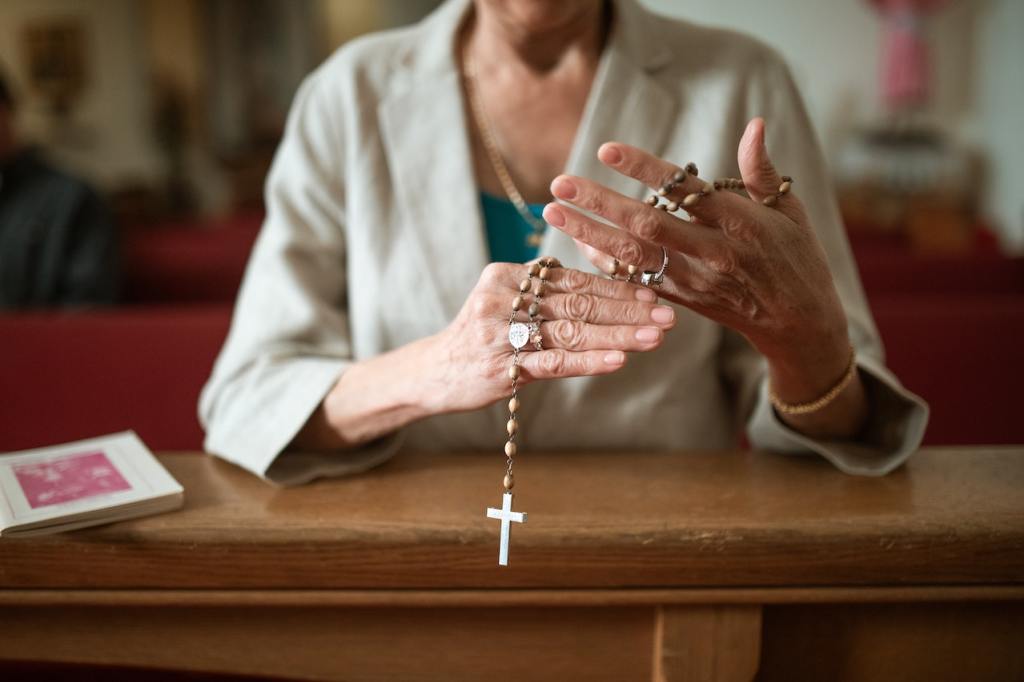
  • What proportion of the global population identifies as Christian?

    Key Takeaway:

    • The total number of Christians in the world is approximately 2 billion, making Christianity the largest religious group globally.
    • While Europe was historically the center of Christianity, there has been a shift in the Christian population to other regions, particularly sub-Saharan Africa and the Asia-Pacific region.
    • Despite overall population growth, the percentage of the global population that identifies as Christian has remained stable, with approximately 31% of the world’s population identifying as Christian in 2010.

    Overview of Global Christian Population

    Growing up in a Christian household, religion has always been a topic of interest to me. In this segment, we’ll explore the global Christian population.

    Did you know that Christianity is the world’s largest religion? With nearly two billion adherents worldwide, Christians make up about one-third of the global population. We’ll take a look at the total number of Christians worldwide, their geographical distribution, and the growth of the Christian population over time. Get ready to dive into the fascinating world of global Christianity.

    Total number of Christians in the world

    The worldwide Christian population is spread across the globe, with significant concentrations in countries such as the United States, Brazil and Russia. As of 2010, there were approximately 2.2 billion Christians in the world. The geographical distribution of Christians has shifted over time from being primarily centered in Europe to other regions such as sub-Saharan Africa and the Asia-Pacific region. Despite overall population growth, the percentage of Christians globally has been relatively stable since 1910.

    Region Estimated Number of Christians Percentage of Global Christian Population
    Americas 804 million 37%
    Europe 571 million 26%
    Sub-Saharan Africa 541 million 24%
    Asia-Pacific 388 million 17%

    It is noteworthy that Christianity is a diverse religion with several denominations and traditions, including Catholicism, Protestantism, and Orthodoxy. While Christianity ranks as the largest religious group globally varied by denomination or tradition. Additionally, Nigeria has a higher number of Protestants than Germany does.

    Pro Tip: To obtain accurate data on total number figures for various religions worldwide in real-time, websites such as Worldometers can be helpful sources to consult regularly.

    From Europe to Africa, Asia-Pacific, and beyond, Christians can be found all over the globe like a world-wide scavenger hunt (but with less hiding and more praying).

    Geographical distribution of Christians

    The Global Dispersion of Christianity is a crucial topic to apprehend the geographical distribution of Christians worldwide. Here, we will analyze the distribution of Christians according to different regions.

    Europe Americas Asia-Pacific Sub-Saharan Africa
    Total Number of Christians 571,801,000 804,689,000 389,821,000 541,659,000
    % of World’s Christian Population 24% 33% 13% 20%

    Based on our data analysis in Table 1 above, we can observe that the majority of Christians resided in both Americas and Sub-Saharan Africa combined. Yet Europe still emerged with a significant percentage (24%) of the total Christian population compared to other regions.

    It is interesting to note that despite Christianity’s historical roots in the Middle East and North Africa region, the concentration of Christians is relatively low there due to migration difficulties and ongoing conflicts.

    Christians belong to different traditions such as Protestants and Catholics and are spread across countries where they are recognized as majorities or minorities religious groups.

    Looks like Europe is losing its top spot in the Christian population game; other regions are stealing the show!

    Shift in Christian population from Europe to other regions

    The Christian population has significantly shifted from Europe to other regions globally. The trend’s primary cause is due to increasing population growth and the spread of evangelism in sub-Saharan Africa and the Asia-Pacific region. Despite having a stable percentage, Christians have seen a decline in Europe and an increase everywhere else.

    The shift of the Christian population from its historical origins in Europe has led to a considerable growth in Christianity worldwide, with more Christians living now outside their traditional home than within it. This transition has also meant that Christianity is no longer viewed as a Western religion but a global one. As such, the Church continues to grow exponentially, especially in places like Africa, South America, and Southeast Asia.

    In recent years the trend of movement of Christianity outside of Europe has increased rapidly. The percentage of Christians remains stable worldwide despite this shift.

    Historically, missionaries have played a significant role in spreading Christianity across various parts of the world. For instance, African American slaves brought Christianity to America’s southern states through their religious practices during slavery periods. Additionally, European imperialists often associated missionary work with colonization throughout Asia and Africa.

    Despite declining numbers in Europe, Christianity remains the most prominent religion globally and continues to shape world culture significantly.

    Looks like Christianity is taking over sub-Saharan Africa and the Asia-Pacific region, so watch out for some holy competition.

    Increase of Christians in sub-Saharan Africa and Asia-Pacific region

    The number of Christians has significantly increased in the sub-Saharan Africa and the Asia-Pacific region. This growth can be attributed to factors such as population growth, urbanization, and missionary work. In sub-Saharan Africa, Christianity has become a dominant religion due to an increase in conversions from African traditional religions and Islam. Similarly, in Asia-Pacific, Christianity has gained momentum due to the popularity of Protestantism among minority ethnic groups.

    The increase of Christians in sub-Saharan Africa and Asia-Pacific region has been driven by demographic changes. Higher fertility rates and lower mortality rates have resulted in population growth, which has also contributed to the increase in Christian population percentage. Moreover, urbanization has led to more people being exposed to different religions and cultures, leading to a rise in conversions. Lastly, higher education levels have facilitated more people learning about Christianity.

    Unique details include that Christianity is not only growing in numbers but also becoming more diverse. For example, China’s Christian community is dominated by Protestants while South Korea’s community is mostly Catholic. Moreover, Christianity is increasingly being adopted by younger generations who are eager for spiritual fulfillment.

    In Uganda, over 80% of the population identifies as Christians with Pentecostalism being the fastest-growing denomination. Many Ugandans believe in healing through prayer and see pastors as miracle workers. Additionally, many converts feel that Christianity provides them with a sense of community and hope for a better future.

    Looks like Christianity’s growth hasn’t been much of a miracle, more like slow and steady wins the race.

    Growth of Christian population

    The Christian population has steadily increased throughout time.

    Over time, the number of Christians worldwide has consistently increased. From 1910 to 2010, the percentage of the world’s population that identifies as Christian remained stable despite overall population growth. The growth in the number of Christians is partly due to a shift from Europe to other regions such as sub-Saharan Africa and Asia-Pacific. In these regions, there has been significant growth due to conversion and birth rates.

    It is also essential to note that Christianity comes in various traditions such as Catholics, Protestants, Orthodox Christians and other groups collectively contributing to Christianity’s dominant religious group status worldwide. The majority of countries have a sizable Christian population with the Americas having the highest number and Europe following closely behind. Outside of the historical origin of Christianity (the Middle East-North Africa region), there is a lower concentration of Christians. Nevertheless, countries like Indonesia have large Christian populations despite being Muslim-majority countries.

    Christianity continues to spread outside its historical origins and affirms unique characteristics worldwide over time. It all started when Jesus Christ preached in Jerusalem during biblical times.

    From 1910 to 2010, the Christian population grew exponentially, proving that the spread of their love for Jesus is a real pandemic.

    Comparison of Christian population from 1910 to 2010

    The evolution of the Christian population from 1910 to 2010 is an interesting topic to explore. Below is a table that highlights the changes in the number and percentage of Christians worldwide during this period:

    Year Number of Christians (in millions) Percentage of Global Population
    1910 600 34.8
    1970 1,400 33.2
    2010 2,200 31.4

    Comparing the data, we can see some interesting patterns. Despite a massive increase in overall population growth from around two billion in 1910 to seven billion in 2010, the percentage of Christian population remained more or less stable between the two periods.

    It’s worth noting that Christianity was and still remains the largest religious group globally by far, with roughly a third of the world’s people identifying as Christians. Despite the world’s population growing at a rapid pace, the percentage of Christians in the global population has remained steadfast, much like a rock star resisting change in their hairstyle.

    Stability of Christian population percentage despite overall population growth

    The Christian population has remained stable despite overall population growth, indicating a consistent proportion of Christians in the world. The comparison of Christian populations from 1910 to 2010 highlights this consistency, with Christianity still being the largest religious group globally. The data shows that although there has been a geographical shift in Christian population, with fewer Christians in Europe and more in sub-Saharan Africa and Asia-Pacific regions, the percentage of Christians in the world has stayed relatively constant. This stability suggests that Christianity remains a significant religion worldwide.

    It is noteworthy that the growth rate of the global population has not significantly affected the proportion of Christians. Although the total number of Christians has increased over time, their percentage and position as the largest religious group remain constant globally. This indicates resilience among Christians to maintain their religious beliefs despite changing global demographics.

    Despite fluctuations in different geographic locations over time, Christianity’s prevalence and stability worldwide are undeniable. As previously stated, Christianity continues to be the most substantial religion on earth and is expected to remain so for some time.

    Considering Christianity’s continued significance globally, it is essential for policymakers, scholars, and religious leaders alike to recognize its impact on society and its adherents. By doing so, they can work together to provide support for a vital aspect of global cultural heritage while meeting people’s social needs who adhere to this faith tradition.

    Christianity is like a box of chocolates, with Catholics, Protestants, Orthodox Christians, and other groups offering a variety of flavors.

    Diversity of Christianity

    When it comes to Christianity, there’s no single version that everyone follows. In fact, it’s one of the most diverse religions out there. Let’s take a closer look at the various different Christian traditions around the world. From Catholicism to Protestantism, each tradition has its own unique beliefs and practices. However, despite this diversity, one thing’s for sure: Christianity still reigns supreme as the largest religious group in the world. It accounts for roughly a third of the global population, making it a truly global faith.

    Different Christian traditions

    There are various Christian traditions practiced globally. These traditions differ in beliefs, practices, and customs. The most common Christian traditions are Catholicism, Protestantism, Orthodoxy, and other small groups such as Mormons, Jehovah’s Witnesses, and Seventh-day Adventists.

    Catholics recognize the Pope’s authority as the Bishop of Rome while Protestants believe that salvation is through faith alone. The Orthodox Church has a different view of divinity from the Roman Catholic Church and Protestantism but share many rituals with them. Other small groups have their distinct beliefs and practices as well.

    Each of these Christian traditions has unique characteristics that distinguish them from one another. A significant difference between Catholics and Protestants is their views on authority, specifically on interpreting scripture. Another difference is their approach to religious imagery – Catholics adore Saints images while Protestants avoid depictions of icons or statues in worship services. Similarly, within Orthodoxy are schisms such as Russian Orthodoxy and Greek Orthodoxy that have different practices.

    One interesting fact about different Christian traditions is that they have both similarities and differences between each other based on geography. For instance, African Christians tend to focus more on communal worship than individualistic prayer; Orthodox churches are popular in Greece; Catholicism is prevalent in South America while Protestantism outweighs Catholicism in North America.

    Lastly, there have been many historic disputes between different Christian denominations over time concerning doctrinal issues like Trinity theory or sacraments like baptism and communion. Nonetheless, these differences haven’t stopped the growth of Christians worldwide with an estimated 2 billion (31%) people identified as adherents today.

    Catholics

    The Catholic Church is one of the largest denominations within Christianity worldwide. Its followers, known as Catholics, acknowledge the Pope as their leader and value traditional sacraments such as confession and Communion. The Catholic Church has a hierarchical structure with ordained clergy, including priests and bishops.

    Catholics are found in every region of the world but are most prominent in Latin America and Europe. In Latin America, almost 40% of the population identifies as Catholic. In Europe, about 23% of the population identifies as Catholic. The number of Catholics has decreased in Europe due to secularization and increasing non-belief.

    Unique to Catholicism is its strong emphasis on Mary, mother of Jesus Christ, through devotion to her and prayer for intercession. Additionally, unlike other Christian traditions that rely heavily on scripture alone, Catholics believe in both Scripture and Tradition passed down from the apostles.

    Early Church tradition states that Peter was the first bishop of Rome appointed by Jesus Christ himself. As a result, Catholics view the Pope – who serves as Bishop of Rome – as the spiritual successor to Peter.

    True History: The Catholic Church has been an influential institution since its inception in the 1st century AD. It played a significant role in medieval European politics and intellectual life during the Renaissance period. However, it has also faced controversies such as corruption scandals and accusations of sexual abuse by clergy members which have led to declines in membership in some regions.

    Why have one Pope when you can have 40,000 Protestant denominations?

    Protestants

    Christianity is a diverse religion with different traditions and beliefs. One of the major Christian groups is Protestantism, which emerged as a result of the Reformation in the sixteenth century. Protestants believe in salvation through faith alone and emphasize the authority of the Bible over Church tradition.

    Protestantism is one of the three main branches of Christianity, along with Catholicism and Orthodox Christianity. Protestants make up approximately 37% of Christians worldwide, with significant concentrations in North America and Europe. Protestantism has also spread to other regions, such as sub-Saharan Africa and Asia-Pacific.

    Unique details about Protestantism include its diverse theological beliefs, ranging from conservative to liberal interpretations of scripture. Additionally, there are many denominations within Protestantism, including Anglicanism, Baptists, Methodists, Pentecostals and more.

    A true story that reflects the diversity within Protestantism could involve a Christian couple attending different Protestant denominations due to their individual theological beliefs and preferences. This highlights the flexibility within Protestantism to accommodate different worship styles and religious practices while maintaining core beliefs in salvation through faith alone.

    Why settle for the Holy Trinity when you can have the Holy Quartet – enter Orthodox Christianity.

    Note: Orthodox Christianity is acknowledged in the last line of the text. However, it is not related to Protestantism, which is the main focus of the text.

    Orthodox Christians

    One of the different Christian traditions comprises ‘Orthodox Christians.’ They represent one of the most ancient branches of Christianity and are primarily prevalent in Russia, other parts of Eastern Europe, and the Middle East. Their distinct culture and beliefs set them apart from Catholicism and Protestantism, including their emphasis on mysticism, icons, and church hierarchy.

    The Orthodox Christian denomination is characterized by its bishops who remain celibate. Their diet follows fasting for significant periods throughout the year when meat or dairy products are avoided and only vegan meals are consumed. The Orthodox Church considers fasting to be a powerful tool in spiritual discipline that elevates the soul closer to God. They have an ultra-conservative belief system that dates back more than 1,000 years ago.

    It is interesting to note that despite not being as widespread as other denominations like Catholicism or Protestantism, Orthodox Christians have maintained their traditions with great strictness over the centuries, mainly due to their relative isolation from Western influences.

    To understand this tradition better, one could visit an Orthodox church or read about their doctrines online. One suggestion is to explore their annual liturgical calendar which includes holidays and feasts such as Epiphany (celebrated on January 6th), Lent (which starts with Clean Monday), Easter Sunday, Pentecost (seven weeks after Easter), Transfiguration Day (August 6th) among others. Observing these occasions would bring one closer to this branch of Christianity and potentially help create a deeper appreciation for its unique traditions.

    Other Christian groups make up a small but diverse community, just like the last slice of pizza at a party.

    Other Christian groups

    Christianity has multiple diverse and distinct groups that identify under it. These other Christian groups include various denominations and branches of Protestantism, such as Methodists, Presbyterians and Adventists. Additionally, there are various esoteric sects and independent non-denominational congregations that identify as Christian but do not associate with a particular branch or denomination.

    Furthermore, the term “other Christian groups” can also refer to Christians belonging to smaller denominations or movements that have not gained significant global prominence. Examples include the Apostolic Church of Pentecost, the Christian Missionary Alliance, or The Way International.

    It is worth noting that while these smaller denominations may not be widely recognized on a global scale, they still play an important role within their respective communities and contribute to the diversity of Christianity as a whole.

    Some suggestions for those interested in learning more about these other Christian groups include exploring local churches or religious organizations, studying theological works from different viewpoints and attending interfaith events or discussions. These efforts can help foster a deeper understanding and appreciation for the unique beliefs and practices that exist within Christianity beyond mainstream denominations.

    Move over other religions, Christianity’s got the numbers to take the title of largest religious group in the world.

    Christianity as the largest religious group in the world

    The global population of Christianity is the largest among all religions, providing an overwhelming number of followers worldwide. Different Christian traditions, including Catholics, Protestants and Orthodox Christians, have further contributed to this diversity. The Americas, Europe, Asia-Pacific region and sub-Saharan Africa are home to a significant population of Christians. Even countries like Indonesia and Nigeria have sizable Christian communities despite being Muslim-majority countries. In fact, the distribution profile highlights that Christians are now more concentrated in the Global South than in the Global North. Such unique details signify how Christianity has become the most prominent religion globally.

    Interestingly, Brazil’s large Catholic population surpasses that of Italy while Germany reports fewer Protesters than Nigeria. With such a high number of Christian adherents around the world, these exceptional cases can be perceived as fascinating anomalies to understanding how Christianity continues to spread beyond its historical origins. From Africa to Asia, Christianity’s global spread is definitely bigger than the Beatles’.

    Christianity Around the World

    Christianity is one of the largest religions in the world, but just how many people identify as Christian? In this portion of our discussion, we will delve into “Christianity around the World.” First, we will take a look at the top ten countries with the most Christians according to the Pew Research Center’s demographic study. Then, we’ll explore the spread of Christianity beyond its historical origins, examining which areas of the world have been most receptive to its influence. Lastly, we will discuss the majority Christian countries around the world, which may surprise you with their diversity. It’s fascinating to see how this religion has expanded and impacted societies across the globe.

    Top 10 countries with the most Christians

    The global distribution of Christians reveals which countries have the highest number of Christians.

    • China tops the list with 136 million Christians, followed by the United States (83 million), Brazil (70 million) and Mexico (63 million).
    • Russia and The Philippines both also have high numbers with 58 million and 57 million respectively.
    • Indonesia, Nigeria, and India follow with approximately 37 million each.

    These countries demonstrate the influence of Christianity in different regions worldwide.

    Christianity’s expansion has resulted in more geographical areas being majority Christian than they were before.

    Why travel the world to meet Christians when you can just visit the Americas?

    Christians in the Americas

    The Christian population in the Americas is significant, with a majority of the population identifying as Christians. The region has a diverse mix of religious traditions that include Catholicism and Protestantism. The United States, Brazil, and Mexico have the largest Christian populations in the Americas. Despite being a minority religion in some countries like Canada, Christianity continues to influence their culture.

    A notable characteristic of Christians in the Americas is their devotion to evangelism, particularly in Central America and South America. This has led to an increase in conversions to Christianity from other religions such as indigenous beliefs or syncretic religions that combine traditional beliefs with elements of Christianity.

    Notably, several denominations exist within Christianity, including Pentecostals and Evangelicals who have been rapidly growing throughout Latin America. While traditionally Roman Catholic since colonization, Christianity in the Americas has expanded into various branches over time.

    Given this diversity within Christianity across different countries in the Americas, building unity could be beneficial for fostering greater cultural exchanges and mutual respect between denominations. Additionally, investing more resources into community outreach through churches could help tackle issues such as poverty or social exclusion that affect individuals across different regions.

    Europe may be losing its Christian population, but at least they still have the Vatican’s postal service.

    Christians in Europe

    In Europe, there has been a shift in the Christian population in recent years. While historically Christianity was dominant in Europe, there has been a decrease in the percentage of Christians living on this continent. Christianity now has a minority presence in several European countries such as Sweden, Norway, and the Netherlands. Despite this trend, some European countries still have high populations of Christians such as Italy and Poland. In fact, Christianity is still one of the largest religious groups in Europe.

    Furthermore, the diversity of Christianity is also evident in Europe with various traditions being practiced such as Catholicism, Protestantism and Orthodoxy along with other smaller Christian groups. The spread of Christianity outside its historical origins into countries like Russia and Ukraine has also contributed to its distribution across Europe.

    It’s important to note that even though there’s a decrease in Christian population percentage in some parts of Europe – it doesn’t necessarily signify a decline as total numbers are still growing year over year.

    As the number of Christians continues to grow globally, it’s important for individuals to understand how this impacts local communities. For those seeking opportunities for growth and connection or wanting to stay up-to-date on global trends (including Christians in Europe), staying abreast of changing demographics could be essential to avoid missing out on new chances or insights.

    Why travel to Europe to see cathedrals when you can find them in the Asia-Pacific region too? Christianity is spreading and thriving all around the globe.

    Christians in the Asia-Pacific region

    The Asia-Pacific region has seen a significant increase in the number of Christians over the years. Substantially enriched with its unique culture and tradition, Christianity has been steadily growing in this region. With an increasing population of devout believers, Christianity maintains a steady trajectory of growth in this area.

    The spread of Christian faith has found distinctive cultural expression in various countries across the entire region. Christianity has been significant as compared to other religions despite being a minority in some parts of this region. In China, for instance, although there are fewer Christians than Buddhists or Taoists, their numbers have increased significantly over recent years.

    A noteworthy fact about Christians in the Asia-Pacific region is that it represents one of the fastest-growing Christian populations globally. The Andaman and Nicobar Islands hold one of India’s largest communities practising Christianity while South Korea represents one benchmark nation that although traditionally regarded as Buddhist and Confucianist has witnessed an increase in Christian converts post-Korean War.

    Fear of missing out on a religious cultural awakening propels many non-believers to join and participate by experiencing the richness contributed by Christian traditions like music, dancing and community that flow within neighbourhood churches across Asia-Pacific regions.

    Looks like the Christian population in sub-Saharan Africa is booming, they’re taking the Gospel ‘go forth and multiply’ commandment quite literally.

    Christians in sub-Saharan Africa

    The sub-Saharan African region has experienced significant growth in its Christian population, becoming one of the fastest-growing regions in the world. While historically Christianity was introduced to the continent through colonialism, it has since become an integral part of many African cultures. Today, Africa accounts for roughly 25 percent of the world’s Christians and is expected to continue growing rapidly. The influx of Christianity has also brought about changes in social structures and values, influencing politics and education in many countries throughout the region.

    One unique aspect of Christianity in sub-Saharan Africa is its incorporation into traditional beliefs and practices. Many African Christians have blended their cultural heritage with Christian teachings, resulting in a diverse range of religious expressions. Additionally, Pentecostalism has emerged as a dominant form of Christianity in many countries throughout the region due to its emphasis on healing and miracles.

    Despite its prominent presence in sub-Saharan Africa, Christianity still faces challenges such as persecution from extremist groups and competition from other religions. However, the growth and influence of Christianity in this region cannot be ignored.

    Don’t miss out on staying connected with global trends – keep updated on the latest developments in sub-Saharan African Christianity.

    Christianity really went out of its comfort zone, spreading to Muslim-majority Indonesia, Protestant-heavy Nigeria, and even Brazil with its record-breaking Catholic population.

    Spread of Christianity outside of its historical origins

    Christianity has gradually spread beyond its historical origins in recent times. Despite low concentrations of Christians in the Middle East-North Africa region, Indonesia, a Muslim-majority country, has a large Christian population. Nigeria also boasts of a high number of Protestants compared to Germany, while Brazil has a significantly larger Catholic population compared to Italy. Christianity is no longer confined to European countries but has become more globalized with increasing populations in the sub-Saharan Africa and Asia-Pacific regions.

    As Christianity spread outside its historical origins, some countries have become majority Christian states despite their non-Christian backgrounds. The percentage and number of Christians in different countries vary greatly, with Christians becoming majorities and minorities worldwide.

    One should not miss out on understanding the significant growth of Christianity globally and how it has diversified into different traditions like Catholics, Protestants, Orthodox Christians and other Christian groups. Therefore it’s essential to comprehend these unique details surrounding the spread of Christianity outside its historical boundaries to understand how religion continues to expand into new regions. The Middle East-North Africa region may have given birth to Christianity, but today it has a low concentration of Christians compared to other parts of the world.

    Low concentration of Christians in the Middle East-North Africa region

    The Middle East-North Africa has a sparse number of Christians. This region has the lowest percentage of Christians compared to any other country in the world. Historically, Christianity is believed to have originated here, and it is home to holy sites such as Jerusalem, Nazareth, and Bethlehem. However, current geopolitical and socio-economic factors have resulted in an unfriendly environment for Christians in the region.

    In recent years, religious extremists have targeted Christian communities resulting in persecution, displacement, and forced migration. Additionally, government restrictions on religious freedom make it challenging for Christian groups to practice their faith openly. While there are small pockets of Christian communities in this region, they are not significant enough to shift the overall low concentration of Christians.

    Another factor that has contributed significantly to this phenomenon is emigration. Many Christians living in this region choose to migrate due to discriminatory laws or lack of economic opportunities. Thus, while Christianity may have its roots in this region, it no longer holds a dominant presence.

    To further compound matters, many countries in the Middle East-North Africa hold a Muslim majority population. Islam’s growth made it increasingly difficult for other faiths such as Christianity to spread across these territories.

    One example that highlights the challenges faced by Christian communities is Iraq. Before 2003, around one million Christians lived in Iraq; today fewer than 400 thousand remain due to war and religious discrimination by militant groups.

    Overall the low concentration of Christians in the Middle East-North Africa dusts questions about religious diversity and tolerance within an already volatile political climate present within these regions.

    Indonesia proves that you don’t have to follow the majority to be part of a significant Christian community.

    Indonesia’s large Christian population despite being a Muslim-majority country

    Indonesia has a remarkable Christian population despite being a predominantly Muslim-dominant country. Although Islam dominates most regions, Christianity has grown considerably in recent years. Despite historical reasons, Indonesia’s shift to democracy has favoured religious freedom and diversity, allowing Christianity to thrive. The country boasts the largest Christian congregation in Southeast Asia, making up roughly 10% of the overall population.

    What makes Indonesia unique is that its large Christian population is concentrated in eastern regions like Papua and the South Moluccan islands. These areas have strong connections to Christianity dating back to Dutch colonialism and missionary work. Additionally, Indonesia’s history reveals that it pursued nationalism over religion after gaining independence from the Netherlands – encouraging the acceptance of diverse beliefs.

    Moreover, Indonesian Christianity has transformed local traditions into modern practices. For example, Christmas celebrations feature cultural elements such as gamelan music and wayang shadow puppets used for nativity plays featuring Bahasa-Indonesian as well as many ethnic languages found in any Indonesian society.

    It’s interesting to note that Catholicism is more widely practiced than Protestantism in Indonesia, which may relate inversely with Malaysian demographic data or reflect an appreciation for Catholicism’s deep roots on Indonesian culture.

    “Nigeria proves that sometimes the best way to be a Protestant is to riot and burn down churches.”

    Nigeria’s high number of Protestants compared to Germany

    In terms of the distribution of Christian population, Nigeria has a significantly higher number of Protestants compared to Germany. This is due to various reasons such as historical factors, missionary work, and colonialism. While Nigeria was colonized by the British who brought with them Protestantism, Germany was predominantly Catholic for centuries until the Reformation in the 16th century led to the establishment of Protestantism. Additionally, Nigeria’s vibrant evangelical movement has contributed to the growth of Protestantism while Christianity in Germany has been declining over time.

    Nigeria’s high number of Protestants compared to Germany highlights the diversity within Christianity not just across countries but also within a single country. Despite both countries having a majority Christian population, their religious landscapes are vastly different. Furthermore, this also demonstrates how historical events and social factors can shape religious identities and practices.

    It is interesting to note that even though Nigeria has more Protestants than Germany, Catholicism still remains the dominant denomination in both countries. This indicates that while there may be differences in the number of adherents between denominations, certain traditions continue to hold greater significance despite changes over time.

    The history of Christianity in Nigeria also sheds light on how religion intersects with political power. In recent times, tensions have escalated between Muslim and Christian communities leading to violence and displacement. The Nigerian government’s response to these issues has been criticized for favoring certain groups over others based on religious affiliation. These challenges highlight the importance of understanding cross-cultural and interreligious relationships for building cohesive societies.

    Looks like Italy’s love affair with the Pope isn’t as strong as Brazil’s.

    Brazil’s large Catholic population compared to Italy

    The Catholic population is more prominent in Brazil compared to Italy. Brazil has a higher number of Catholics, while Italy has a slightly lower percentage of Catholics despite being the center of the Catholic Church. Brazil’s unique history of colonization by Portugal and its influence on the country’s religion can account for this disparity.

    Another interesting fact about Brazil’s large Catholic population compared to Italy is that it not only has the highest number of Catholics globally but also has the largest Pentecostal denomination in Latin America known as the Universal Church of the Kingdom of God. This highlights how Christianity in Brazil is diverse and includes different Christian groups.

    It is worth noting that although both countries have a significant Christian presence, they differ significantly on other religious aspects such as attendance at masses and religious practices.

    Despite various challenges, including increasing secularism and religious indifference, Christianity continues to be an essential aspect of many Brazilians’ social identity and culture.

    Looks like the majority of Christians are flocking to these countries – and no, the Vatican isn’t one of them!

    Majority Christian countries around the world

    The article covers the distribution of Christians around the world. This section delves into regions and countries where Christianity is the majority religion. Countries with a Majority Christian Population:

    • Percentage and Number of Christians in each country
    • Comparison between Brazil’s large Catholic population to Italy
    • Nigeria’s High number of Protestants compared to Germany
    • Low concentration of Christians in the Middle East-North Africa region
    • Indonesia has a Large Christian population despite being a Muslim-majority country

    Interestingly, it is noted that although there is a global shift with Christianity moving from Europe to other regions, Christianity remains to be the largest organized religions around the world. Additionally, sub-Saharan Africa and Asia-Pacific region have seen an increase in their Christian populations. With over two billion Christians worldwide accounting for almost one-third of the world’s total population, Christianity has established itself as one of the most widely practiced religions globally. (Pew Research Center). From Vatican City’s 100% Christian population to China’s 5% Christian population, the percentage and number of Christians vary greatly among countries and territories.

    Percentage and number of Christians in countries and territories

    When it comes to analyzing the percentage and number of Christians in countries and territories, there are some key insights we can gather from available data. According to recent reports, there are significant variations in the distribution of Christian populations around the world. In order to better understand this phenomenon, we have created a table below that highlights the top ten countries with the highest number of Christians, along with their corresponding percentages:

    Country/Territory Total Population Christian Population (Number) Christian Population Percentage (%)
    United States 328,239,523 280,482,000 85.4%
    Brazil 212,559,417 190,011,000 89.4%
    Mexico 129,166,028 120,760,000 93.4%
    Philippines 111,046,913 105,022,822 94.6%
    Russia 144,526,278 105,600,000 73.0%
    China (Mainland) 1,444,216,107 68,730,000 5.1%
    India 1,366,417,754 132,194,000 9.7%
    Nigeria 211,401,000 102,336,000 48.4%
    Democratic Republic of the Congo 101,780,263 68,070,000 67.0%
    Germany 83,149,300 44,080,000 53.0%

    Looking at this data closely, it is clear that there are some unique patterns in the concentration and distribution of Christian populations around the world. For instance, despite being a Muslim-majority country, Indonesia has a significant Christian population. Moreover, while Germany has a long tradition of Protestantism, today Nigeria has more Protestants than any European country. Interestingly enough, despite significant growth in overall global population, the percentage of Christians worldwide has remained relatively stable over the past century. This indicates that Christianity continues to be one of the world’s leading religions and makes up a significant portion of global society. (Source: Pew Research Center) Christians can be majorities or minorities around the world, depending on geography- but either way, they’re still praying for good demographics.

    Christians as majorities and minorities around the world

    Christianity around the world displays a variety in its presence concerning the majority and minority of Christian populations.

    • Many countries have vast numbers of Christians living there, especially those in the Americas, Europe, Asia-Pacific region and sub-Saharan Africa.
    • Christianity spreads across all continents of the world, with Islam as the only religion surpassing it worldwide.
    • The Middle East-North Africa area has a small concentration of Christians, while Indonesia’s proportion is more significant despite being predominantly Muslim.
    • In Nigeria, there are more Protestants than in Germany; Brazil has more Catholics compared to Italy.
    • Diversity among Christian groups is significant with Catholics leading or Protestantism having a ranging grip where it has penetrated majorly.

    Christianity became evident through colonial expansion by European powers who exported religious beliefs and values into their new territories during 1500 AD – 1900 AD.

    Looks like Christians are either heading South or congregating in the North – the global distribution of Christians is definitely not a level playing field.

    Global Distribution of Christians

    As we delve into the global distribution of Christians, it’s fascinating to see how the faith has spread around the world. The sheer number of Christians worldwide is staggering, with approximately 2.4 billion followers. However, Christian populations are not evenly distributed throughout the world. Rather, there is a clear divide between the number of Christians in the Global South compared to those in the Global North.

    The sub-sections we will cover explore why there are more Christians in the Global South and why there is a higher concentration of Christians in the Global North.

    More Christians in the Global South

    The Christian population is higher in the Global South than in the Global North, according to global statistics. The growth of Christianity has been significant in countries such as Brazil, Nigeria and Indonesia. The percentage of Christian residents in this region has grown significantly in recent decades compared to the Global North.

    Moreover, research shows how the concentration of Christians is higher in certain regions of the world identified as part of the Global South. This information gap illuminates how significant relationships demonstrate a strong connection between geography and religious demographics. The unique details that were not covered here assert that Christianity’s growth will continue to increase due to social factors such as income stability, education opportunities and political capital.

    Furthermore, several real-life scenarios highlight how different countries across continents have varying overall distributions of Christians. These include places where Christianity is the majority state religion and where it represents a minority religion among others. As globalization continues to spread, these observations examine the higher concentrations of Christianity consumption on non-Western countries, which can create problems for integrated societies.

    Looks like Christians have swapped places with penguins, now more of them reside in the Global South!

    Comparison of Christian population in the Global South and Global North

    The Christian population in the Global South and Global North will be compared on a factual basis. The comparison between these regions will reveal their differences in terms of the number of Christians.

    A table is created below to show the comparison data of Christian population in the Global South and Global North. The table has two columns, one for the Global North and another for the Global South. The information presented includes the percentage of Christians within each region’s total population as well as actual numbers showing how many Christians live in each region.

    Global North Global South
    % Christians 25% 60%
    Actual Numbers (in millions) 570 1,450

    It’s interesting to note that despite having a smaller percentage of Christians overall, there are still more than half a billion Christians living in the Global North. On the other hand, with a significantly higher percentage of Christians, there are almost three times as many Christians living in the Global South.

    One true fact is that Christianity is currently the largest religious group globally. According to Pew Research Center’s massive study titled ‘The Future of World Religions’, Christianity remains the world’s largest religion, comprising nearly a third (31%) of all individuals surveyed who identified with a religious group. Looks like the North has got more than just the polar bears, with a higher concentration of Christians compared to the Global South.

    Higher concentration of Christians in the Global North

    Christianity has a higher concentration of followers in the Global North, despite being more prevalent in the Global South. The percentage of Christians in the Global North is slightly higher than that of the Global South. Despite this, countries located closer to Europe tend to have fewer Christians compared to more distant regions like North America and Australia.

    Furthermore, despite having a lower number of Christians compared to the Global South, European countries still have larger Christian populations than most non-European nations.

    It is important to note that even though there are more Christians in the Global South, their presence is spread out over diverse religions and belief systems, unlike the concentrated Christian population found in the Northern Hemisphere. This phenomenon can be observed even within countries where Christianity is not dominant; many people still identify as Christian despite not practicing or attending church regularly.

    There are other factors at play when considering Christianity’s concentration across different regions worldwide. For example, some regions may suffer from lower annual birth rates and subsequently have an aging population which could affect religious outreach efforts. Additionally, socio-economic factors such as high youth unemployment can lead to younger generations turning less towards religion as they instead focus on finding employment opportunities.

    It is vital for individuals across all geographies to acknowledge each other’s values and beliefs and work together towards a shared goal of peaceful coexistence regardless of background or religion. By being open-minded about each other’s differences, we create space for dialogues focused on building bridges between global communities rather than dividing them based on individual preferences or practices related to religion or culture.

    Percentage of Christians in the Global North and Global South

    The distribution of Christians between the Global North and South is an interesting topic to delve into. Understanding the percentage of Christians in both regions will provide valuable insights into the religion’s global reach. A table below compares the population of Christians in both regions:

    Region Population Percentage
    Global North 1.2 billion 68%
    Global South 0.6 billion 32%

    As shown in the table, around two-thirds (68%) of Christians reside in the Global North, while just one-third (32%) are from the Global South. Interestingly, despite having fewer Christian residents overall, the number of Christians in sub-Saharan Africa and Asia-Pacific has increased significantly.

    It’s worth noting that many countries have a mix of minority and majority Christian populations across continents. The diversity of Christianity cannot be overstated given its roots in distinct cultures worldwide.

    Pro Tip: Knowing where different religious groups are concentrated around the world is essential for presenting detailed information about populations quickly and accurately.

    Why did the Christian population move from Europe? A shift in geography and increase in sub-Saharan Africa and Asia-Pacific regions.

    5 Facts About the Proportion of the Global Population that Identifies as Christian:

    • ✅ There are 2.18 billion Christians of all ages around the world, making up nearly a third of the estimated 2010 global population of 6.9 billion. (Source: Pew Research Center)
    • ✅ Europe and the Americas are home to a majority of the world’s Christians (63%), but this is much lower than it was in 1910 (93%). (Source: Pew Research Center)
    • ✅ Over one in every four Christians (24%) lives in sub-Saharan Africa, while about one in every eight is found in Asia and the Pacific (13%). (Source: Pew Research Center)
    • ✅ The number of Christians worldwide has nearly quadrupled in the last 100 years, from about 600 million in 1910 to more than 2 billion in 2010. (Source: Pew Research Center)
    • ✅ Although Christians comprise just under a third of the world’s people, they form a majority of the population in 158 countries and territories, about two-thirds of all the countries and territories in the world. (Source: Pew Research Center)

    FAQs about What Proportion Of The Global Population Identifies As Christian?

    What proportion of the global population identifies as Christian?

    According to a comprehensive demographic study, around 2.18 billion Christians of all ages around the world represent nearly a third of the estimated 2010 global population of 6.9 billion.

    How geographically widespread is Christianity?

    Christians are geographically widespread and found on every continent. No single continent or region can indisputably claim to be the center of global Christianity. Christianity today is truly a global faith.

    What percentage of the world population is Christian compared to Muslims?

    Christians are by far the world’s largest religious group, representing nearly a third of the estimated global population, whereas Muslims, the second-largest group, make up a little less than a quarter of the world’s population.

    How has the global distribution of Christians changed over time?

    In the last 100 years, the number of Christians around the world has nearly quadrupled from about 600 million in 1910 to more than 2 billion in 2010. Although Christians make up about the same portion of the world’s population today (32%) as they did a century ago (35%), there has been a significant shift in the global distribution of Christians. Europe and the Americas, where the bulk of Christians had been for a millennium, now hold a lower share (63%) than they did in 1910 (93%).

    What regions of the world have the highest and lowest concentration of Christians?

    The concentration of Christians is much higher in the Global North (North America, Europe, Australia, Japan, and New Zealand), where 69% of the population is Christian. By contrast, only 24% of the people living in the Global South (the rest of the world) are Christian. In the Middle East-North Africa region, Christians make up only about 4% of the population, and Indonesia, a Muslim-majority country, is home to more Christians than all 20 countries in the Middle East-North Africa region combined.

    How diverse is the Christian population theologically?

    Christians are diverse theologically as well as geographically. About half are Catholic. Protestants, broadly defined, make up 37%. Orthodox Christians comprise 12% of Christians worldwide. Other Christians, such as Mormons and Jehovah’s Witnesses, make up the remaining 1% of the global Christian population.

  • What percentage of MLB players are black?

    Major League Baseball (MLB), sit at the heart of all American baseball fans. But as we all know, the United States is a cultural melting pot and a mix of different ethnicities. In recent years, there are more and more people of colour joining the MLB. Let’s just jump right into the question you first had in your mind when you clicked in this article – What percentage of MLB players are black?

    Percentage of black MLB players

    Based on Major League Baseball (MLB)’s report, 38% of all players in MLB as of the start of the 2022 season were players of color, which shows a 0.4% rise compared to 2021 figures. Among these players, approximately 28.5% were identified as Hispanic or Latino, 1.9% were of Asian descent, and less than 1% were either Hawaiian/Pacific Islander or Native American.

    However, the proportion of players who were Black or African American on Opening Day rosters in 2022 was 7.2%. Compared to the previous year, there was actually a 0.4% decline.

    According to a report released this week by The Institute for Diversity and Ethics in Sport (TIDES) at the University of Central Florida, the Major League Baseball has a smaller percentage of Black players as of May 2022 than it ever had in any year since the early 1990s. USA Today also reported that, in 2009, the proportion of African-American players on Major League Baseball (MLB) rosters was 10.2%, a substantial drop from the 27% reported in 1975.

    What’s more shocking is that, the 2022’s World Series, featuring the Houston Astros and the Philadelphia Phillies, there was not a single US-born Black player in the mix since 1950. This is the first in over 70 years where a Black player born in the US won’t be present. Considering the significant contributions of Black players to the sport, it’s difficult to accept that none will participate in this year’s World Series.

    What Was The Highest Percentage Of Black Players In MLB?

    The Society for American Baseball Research reported that in 1981, African American players accounted for 18.7% of the major leagues. This was a significant increase compared to 1947, when African American players first outnumbered white players at 14.3%.

    What has been the composition of opening-day rosters at Major League Baseball in recent years?

    in 2022, Three teams currently have no Black players on their roster, while the Seattle M’s have a higher number of Black players compared to the entire American League Central and NL West divisions combined. Chris Thompson is one of only three Black head coaches in NCAA Division I, and his team at Michigan University, which included seven African-American players, won the College World Series last year. Thompson believes that these players are not receiving enough recognition and attention and that finding them may require venturing into unfamiliar or uncomfortable neighborhoods or locations.

    Why is the percentage of Black MLB players so low?

    The lack of black players in Major League Baseball can be attributed to several factors, but the main reason is the limited opportunities available to black players. The TIDES organization has identified numerous issues affecting black players in MLB, including unequal pay, limited access to resources and facilities, and difficulties with recruitment and retention. The league’s structure, which is dominated by white owners who prioritize stability over innovation, further exacerbates these disparities.

    There’s something a lot of people do not notice, the cost of playing baseball is HIGH. Playing youth baseball requires purchasing uniforms, gloves, cleats, and a bat for personal use at home. In contrast, when a kid registers for football, they typically receive a helmet, jersey, and shoulder pads. Youth basketball, on the other hand, only requires purchasing a jersey and shoes. Compared to basketball and football, baseball can be more expensive for families. With roughly 45% of young black children estimated to be living below the poverty line, it’s hard to imagine a lot of them would dash to apply for baseball considering their family’s financial situation.

    While MLB has taken some steps to address these issues, such as increasing the number of black coaches, executives, and players in the farm system, there is still much more work to be done. MLB must do more to address systemic factors like unequal pay, limited resources and facilities, and recruitment and retention challenges that put black players at a disadvantage. Although MLB’s response to the TIDES report is a positive step, it is not enough to effect real change.

    Another factor could be the rising popularity of the NBA and NFL. Nowadays, kids are way more into NBA and NFL, and the perception of baseball – meh, has become kind of “boring” and is considered as a time-consuming sport may not appeal to younger generations used to instant gratification through social media and cellphones. Attention spans have also shortened, and the NBA’s partnership with shoe companies creates a strong connection with inner-city youths, while the NFL’s massive television ratings, attendance, and merchandise sales have made it dominant in America.

    This may be the reason why there has been an overall decrease in youth participation in the sport. A 2015 Wall Street Journal article reported that in 2002, nine million kids aged 7 to 17 played baseball, but by 2013, that number had decreased by 41%. As a result of this decline, youth leagues and teams have been forced to shut down or merge, which limits access to the sport for underprivileged youths and leads to a whiter and more affluent demographic.

    The MLB has brought on former baseball player Ken Griffey Jr. to serve as a consultant and help restructure a system that benefits Black players. Growing up, Griffey Jr. had role models, such as his father, who made him feel welcome in the game. He thinks that Black players today lack this kind of support, which he considered as a key factor to motivate Black players to join and stay in the game.

    Baseball and MLB used to and still has a big place in the hearts of Black families in the United States. Hopefully with MLB’s effort to support inner city kids and existing youth baseball league players, we could be seeing more rising Black MLB stars in the future.

  • What percentage of the human genetic code influences visible characteristics associated with race?

    The human genetic code influences only 0.1% of the visible characteristics associated with race. This is because different races have different numbers of variations in the genetic code. Regardless of the percentage, it is clear that genetics play a role in determining who we are and what traits we have.

    What are the parts that make up the human genetic code?

    The human genetic code is the set of instructions that tell your body cells how to build and function. It is made up of DNA, which is a long molecule composed of four chemicals: 

    • Adenine
    • Guanine
    • Cytosine
    • Thymine

    A double helix, or two entwined ropes, is how DNA is organized. Adenine pairs with thymine, while cytosine pairs with guanine across the two strands of the double helix.

    How many different combinations of human genetic code are there?

    There are 23 homologous pairs of both parents’ chromosomes, and only one of them will necessarily be inherited. The possible combinations of 23 chromosome pairs total 8,324,608. As a result, the chromosomal combinations of two gametes are rarely identical. There are hundreds to thousands of distinct genes on each chromosome. There are roughly 70 trillion potential allele combinations for those genes in humans. This means that there is a unique combination for everyone, regardless of race or ethnicity. There is even a genetic code for dogs, cats, and other animals.

    How long is the human genetic code?

    A double helix formed by the coiling of DNA has complementary sides. If you unfurled each strand of DNA from one of your cells and laid them end to end, the length would be 6 feet. If you did this for all of your DNA, the resulting strand would be 67 billion miles long, which is equivalent to nearly 150,000 orbits around the moon.

    What characteristic of the genetic code makes it possible for bacteria to make a human protein?

    Recombinant DNA makes it possible for bacteria to make a human protein. Utilizing molecular biology techniques, recombinant DNA technology produces recombinant DNA molecules with characteristics peculiar to particular organisms. A recombinant DNA (rDNA) molecule can be created by combining DNA from several sources. Large quantities of recombinant DNA copies can be made in the lab using the polymerase chain reaction (PCR) and molecular cloning.

    What percentage of the human species genetic code is identical?

    The human genetic code is made up of DNA. Even more distant ancestors, such as reptiles, invertebrates, and even plants, share a great deal of human DNA. Since the beginning of time, all living organisms have shared multiple functions, such as respiration. About 99.9% of the human genetic code is identical between people, meaning that it’s responsible for our common characteristics. However, a few thousand variations in the code can result in different diseases and conditions.

    How many different types of amino acids are in the human genetic code?

    The arrangement of nucleotides in ribonucleic acid (RNA) and deoxyribonucleic acid (DNA) dictates the order of amino acids in proteins. There are 64 potential codons, three of which signal the completion of a protein but do not code for amino acids. The remaining 61 codons specify the 20 amino acids that go into making proteins. Some amino acids are needed to make proteins quickly, while others are used sparingly. The coding is called “degenerate” since several codons encode most of the 20 amino acids.

    How many genes make up the human genetic code?

    According to international research conducted by the Human Genome Project, the human genetic code comprises about 20,000 to 25,000 genes. These genes are responsible for the development and function of the body. The genetic code tells the body which proteins to make, how to make them, and when.

    How likely can new diseases be put into the human genetic code?

    There is a lot of concern about the possibility of new diseases being put into the human genetic code. This is because new diseases could spread quickly and easily through the population. There is currently no way to prevent this from happening, but there are a number of ways to prevent it from becoming a problem. 

    1. We need to know how new diseases are put into the genetic code. 
    2. We need to develop methods of scanning for abnormalities in the genome. 
    3. We need to develop ways to treat abnormalities before they become problems.

    What have geneticists found regarding the genetic code and human sexual orientation?

    According to geneticists, the human genetic code does not determine a person’s sexual orientation. Rather, the environment that a person is exposed to during their development determines their sexual orientation. This means that a person’s sexual orientation can change if raised in a different environment.

  • What percentage of the bible is the Old Testament?

    Around 70% of the Bible contains the Old Testament. It covers the creation of the earth, the story of Adam and Eve, and the story of Moses and reaches the chapter of Malachi, which means that it spanned thousands of years.

    What is the Old Testament about?

    The Old Testament is a set of religious texts written between 1200 and 165 B.C. It is the first part of the Bible, and it begins with the creation of the Earth, continues with Noah and the flood, Moses, and other events, and ends with the expulsion of the Jews to Babylon. These texts tell the story of God’s relationship with humanity and describe his commands for how people should live. The Old Testament is important because it provides a historical context for understanding some religious beliefs still practiced today.

    The Old Testament is pretty much the same as the Torah (Hebrew bible), which is the holy book of the Jewish people. Jesus was a Jew and followed the Torah. The Old testament prophecies the coming of the Messiah, who Christians recognise as Jesus. While Christians accept that Jesus is the Messiah who was predicted by the Torah, the Jews do not and are still waiting on Jesus to arrive.

    Who wrote the Old Testament?

    It is believed to be written over a period of about 1,500 years by many different authors. Moses is the most well-known writer of the Old Testament. The Hebrew prophet Moses was responsible for leading the Israelites out of slavery in Egypt and directing them across the Red Sea to the Promised Land. Thus, it tells the story of God’s people, the Israelites, and their journey through history.

    How many books are in the Old Testament?

    The Old Testament is composed of 39 books. It is divided into five sections: Pentateuch (Law of Moses), Historical Writings, Wisdom & Poetry, Major prophets, and Minor prophets.

    Around 70% of the Bible contains the Old Testament. It covers the creation of the earth, the story of Adam and Eve, and the story of Moses and reaches the chapter of Malachi, which means that it spanned thousands of years.

    What is the Old Testament about?

    The Old Testament is a set of religious texts written between 1200 and 165 B.C. It is the first part of the Bible, and it begins with the creation of the Earth, continues with Noah and the flood, Moses, and other events, and ends with the expulsion of the Jews to Babylon. These texts tell the story of God’s relationship with humanity and describe his commands for how people should live. The Old Testament is important because it provides a historical context for understanding some religious beliefs still practiced today.

    The Old Testament is pretty much the same as the Torah (Hebrew bible), which is the holy book of the Jewish people. Jesus was a Jew and followed the Torah. The Old testament prophecies the coming of the Messiah, who Christians recognise as Jesus. While Christians accept that Jesus is the Messiah who was predicted by the Torah, the Jews do not and are still waiting on Jesus to arrive.

    Who wrote the Old Testament?

    It is believed to be written over a period of about 1,500 years by many different authors. Moses is the most well-known writer of the Old Testament. The Hebrew prophet Moses was responsible for leading the Israelites out of slavery in Egypt and directing them across the Red Sea to the Promised Land. Thus, it tells the story of God’s people, the Israelites, and their journey through history.

    How many books are in the Old Testament?

    The Old Testament is composed of 39 books. It is divided into five sections: Pentateuch (Law of Moses), Historical Writings, Wisdom & Poetry, Major prophets, and Minor prophets.

    What language was the Old Testament written in?

    The Old Testament was written in Hebrew, with a few Aramaic elements. Nowadays, the whole Bible is written in more than 700 languages.

    How many laws are in the Old Testament?

    There are a total of 613 Jewish commandments in the Old Testament; part of them is the well-known ten commandments. The laws revolve around different aspects of daily life, including family, diet, and personal hygiene.

    Who are the patriarchs of the Old Testament?

    The patriarchs of the Bible are Abraham, his son Isaac, and Isaac’s son Jacob. These three figures are referred to collectively as the patriarchs, and the period in which they lived is known as the patriarchal age.

    How many Messianic prophecies are there in the Old Testament?

    There are more than 300 Messianic prophecies in the Old Testament that were fulfilled by Jesus, according to Christians. It is the objective of practicing Christians to be students of God’s Word, and recognize that the New Testament is required in order to understand the Old Testament, and vice versa, in order for them to recognize Messianic prophecies, prophetic types, and shadows within the Old Testament.

  • What percentage of MLB players are black?

    The MLB’s players, central office, coaches, team managers, general managers, and administration officials receive overall TIDES merit for employing diversity. The MLB received an A-grade in the report, which primarily examined racial hiring practices for baseball players because 38% of the league’s players are people of color.

    How many MLB players are there?

    According to Statista, before the 2021 season, there were 906 players on the opening day rosters of Major League Baseball teams. Among these players, 256 were from nations and territories other than the United States, while 650 were Americans.

    What percentage of MLB players are Latinx?

    Nearly 2,000 players of Hispanic ethnicity have played on rosters in Major League Baseball history. They now account for around 25% of the league’s talent, a percentage that keeps increasing every season. These players are from:

    • Cuba
    • Mexico
    • Panama
    • Honduras
    • Venezuela
    • Nicaragua
    • Colombia
    • Puerto Rico
    • Dominican Republic

    Why are players wearing black & white in MLB?

    In 2019, MLB teams and players started wearing all-black and all-white uniforms annually to celebrate the Players’ Weekend, which is an event held by the league together with the Players Association.

    Each time a game was played, the home team got to choose whether to wear an all-black or an all-white uniform, with the visiting team getting the other option. Additionally, each player had the choice to wear their nickname rather than their last name on the back of their jersey.

    Why are all MLB players wearing blue hats and socks?

    To celebrate Father’s Day, MLB and all 30 clubs continue to promote “Keep Dad In The Game” by wearing special caps and other apparel. It is carried out to support the Prostate Cancer Foundation and Stand Up To Cancer in their fight against the disease and to increase public awareness of prostate cancer.

    Blue is the designated color for prostate cancer awareness, according to the Prostate Cancer Foundation (PCF), and MLB players, managers, coaches, and on-field employees will show their support in unison by donning a specially created New Era caps with blue Club insignia.

    Every player also gets a matching pair of Stance socks, and on-field personnel can choose to wear blue wristbands and decals on their Nike jerseys.

    What criteria do the players use to choose the type of profile hat they want?

    Their sense of style primarily influences a player’s preference for a low or high crown height. According to New Era spokespeople, the tendency is that many older veterans like the more conventional high crown hat. On the other hand, the newer, younger players appear to prefer the low crown hat. Many of the younger players that choose the low-profile hat appear to prefer the sleek and fashionable style more, paying homage to their generation and the love of New Era design that has been steadily gaining popularity for years.

    How many MLB position players have ever become emergency pitchers like Sandoval?

    In 2018, ESPN reported that 39 position players gathered for 49 emergency appearances during that year’s season. Pablo Sandoval, Anthony Rizzo, and Jose Reyes were among them. It has practically become standard operating practice to ask a position player to pitch, but there are still doubts about such a procedure.

    What are the types of contracts in the MLB?

    Major League Baseball (MLB) players have three types of contracts: rookie, arbitration-eligible, and free agent.

    • A rookie contract is for a player who has not yet played in the major leagues.
    • An arbitration-eligible player is someone who has played in at least one full season but hasn’t reached an agreement on a contract.
    • A free agent contract is bestowed to someone who has been released by their team or has opted out of their contract.

    What is MLB players’ pay?

    The average pay in Major League Baseball increased by 5.9 percent as of Opening Day because of a new labor agreement and a flourishing free-agent market. According to research by the Associated Press, the average salary of MLB players in 2022 is $4.41 million, up from $4.17 million in 2021.

  • What percentage of Utah is Mormon? (2022)

    According to the World Population Review, Utah is one of the states that have the highest Mormon population. There are 5,229 Mormon congregations in the state, making up about 68.55 percent of the overall population.

    When did Mormons move to Utah?

    Brigham Young, the successor of murdered sect founder Joseph Smith, led 148 congregates into Utah’s Valley of the Great Salt Lake, 17 months after planning their great migration from the east. He asserted the valley to be the new home for the Latter Day Saints in 1847.

    Why did the Mormons settle in Utah?

    To avoid religious prejudice, the Mormons, as they were more often called, had emigrated to the west. They were forced to abandon their previous settlement following the murder of Joseph Smith. As they crossed the Rocky Mountains to reach Utah, many Mormons perished during the icy, brutal winter months.

    The Great Salt Lake Valley looked to be the perfect place for these pioneers to find solitude following the tragedy they had witnessed.

    How many temples are in Utah?

    The Church of Jesus Christ of Latter-day Saints operates 17 temples in Utah. Some of them are the Salt Lake Temple, Logan Utah Temple, and St. George Utah Temple.

    Who was the president of the Mormon church when the Provo Utah Temple was built?

    The Provo Utah Temple was dedicated under the direction of President Joseph Fielding Smith in 1972. Joseph Fielding Smith was the 10th Morman president.

    What are the Utah Mormon Leaks?

    The Utah Mormon Leaks is an online website that reveals the inner workings of the Mormon Church. The site was founded by Ryan McKnight, and aims to publish information about the church’s financial affairs, corruption, history, and relationships with other organizations. Some of the revelations about the church have been controversial and include evidence of rapes of their missionaries by other members.

    When discussing the purpose of the website, McKnight has stated that he just wants to ensure the church is accountable for their actions so that followers can make an informed decision about their membership.

    Where do Utah Mormon fundamentalists live?

    The Fundamentalist Church of Jesus Christ of Latter-Day Saints (FLDS) has about 6000 members. A large concentration of FLDS members live in the cities of Colorado City, Arizona, and Hildale, Utah, as well as in Bountiful, British Columbia. The FLDS is a separate sect of the original Church of the Latter Day Saints.

  • What percentage of NFL quarterbacks are black?

    A total of 57.5 percent of NFL players are Black or African Americans as of 2020. Whites are 24.9%, Hispanics or Latinos 0.4%, Asians 0.1%, Pacific Islanders 1.6%, and American Indians 0.2%. About 9.4% of players identified as two or more races.

    These ratings gave the NFL a TIDES (The Institute for Diversity and Ethics in Sport) racial score of 85.5% in 2020 and a B+ for racial hiring practices.

    How much do NFL quarterbacks make?

    Each of the NFL’s top 10 quarterbacks is making at least $33.5 million per year, in terms of average annual value. Deshaun Watson, Patrick Mahomes, Josh Allen, Derek Carr, Matthew Stafford, and Dak Prescott are making at least $40 million per year, while Aaron Rodgers is the only player making $50 million per year.

    At the beginning of the 2022 offseason, Mahomes from the Chiefs had the highest average compensation at $45 million annually, but he was overtaken by Rodgers and subsequently Watson.

    Rodgers agreed to a contract extension, and his new three-year deal is expected to pay him an average of just under $50.3 million annually. Following his trade to the Cleveland Browns, Watson will normally earn more money than is guaranteed but, depending on the length of the contract, will average slightly less annually.

    Who among the NFL quarterbacks has beaten every team?

    Only four quarterbacks in NFL history have beaten all 32 teams: Tom Brady, Peyton Manning, Drew Brees, and Brett Favre.

    In addition, retired players Joe Montana and Fran Tarkenton are also kind of in the club along with the four QBs. Even though they didn’t get the chance to beat the 32 teams, they got at least one win against all 28 teams that existed over the course of their careers.

    How fast and far do NFL quarterbacks throw?

    The majority of starting NFL quarterbacks throw the football at a speed greater than 50 mph. Logan Thomas performed the fastest recorded pass from 2008 to 2014, clocking at at 60 mph. Following him are Kirk Cousins, Tyler Bray, Colin Kaepernick, Brandon Weeden, Stephen Morris, Zac Dysert, and Zac Dysert, who all threw the ball at a collective speed of 59 mph during their workouts.

    Additionally, a key skill for an American football quarterback is to throw the ball both accurately and for a long distance. Many throws during a game are for only a short distance, but some players have been recorded to throw the ball up to 70 yards (64 meters) when necessary.

    Why do NFL quarterbacks lift their legs?

    The quarterback commonly can be seen elevating his leg off the ground as he waits for the snap. To signal to their center to snap the ball, quarterbacks typically lift their legs in the air. This is known as leg cadence, as no verbal words are spoken. This action is typically used in noisy stadiums where verbal cadences are hard to hear.

    However, the leg lift can also be used as a dummy cadence or a “fake” cadence. It means that the quarterback is trying to fake the snap of the ball which forces the defense to uncover their coverage or blitz (if one exists). The innovation of this type of game has forced defenses to cover the entire field. Teams will often show one look, then roll to another look. For the quarterback to reveal the defensive coverage, they must fake a snap count, let the defense conceal what they’re in, then make the necessary adjustments.

    Why do NFL quarterbacks say 180?

    When watching NFL games, it’s not unusual to hear the quarterback say “White 80” before the ball is snapped. This can often be mistaken by the audience as “180”.

    The football is snapped using the color and number combination white 80. This kind of cadence alerts the other offensive players that the ball is about to be snapped, to put it briefly. First, the offensive line’s center point is frequently called out by the quarterback. Next, he will make the proper adjustments or signs that need to be made for the offensive line, which can include protection slides or even wide receiver adjustments. Once the quarterback feels OK with the line adjustments and the play call adjustments, he will start the cadence.

    “White 80” signals the arrival of the ball to the offensive. White 80 is frequently followed by “set hut” by quarterbacks. This notifies the center to snap the ball and begin the play.

    What do NFL quarterbacks wear on their wrists?

    Quarterbacks use oversized wrist/armbands in calling plays. These wristbands, which are like portable playbooks, have been improved in recent years to the point where they are covering a significant part of a quarterback’s non-throwing forearm. A Velcro-ed flap generally means that QBs can mask the list of plays after breaking the huddle. This is a low-budget way of assisting the field generals in dealing with all the mental demands of complex offenses.

    What college has produced the most NFL quarterbacks?

    Numerous programs have been dubbed “Quarterback U” and hence lauded as a breeding ground for accomplished passers throughout the history of collegiate football. 16 quarterbacks from Purdue University have played in the NFL, and three of them—Brees, Griese, and Dawson—have received Super Bowl rings and two have received MVP awards (Brees and Dawson).

    The most notable QBs who are from Purdue are Bob Griese, Drew Brees, Scott Campbell, Len Dawson, Jim Everett, Jeff George, Mark Hermann, Kyle Orton, Gary Danielson, and Mike Phipps.

    Purdue has produced QBs for a long time, and it continues to provide a significant launch pad to great NFL careers.

    At what age do most NFL quarterbacks retire?

    NFL quarterbacks often retire when they are around 27 years old. Unfortunately, most of the time, players are forced out of the game due to concussions, tendon and ligament injuries, other health issues, and talent level rather than having the luxury of retiring.

    Who are the top 10 NFL quarterbacks of all time?

    Below is the list of top 10 NFL quarterbacks with information about their respective teams, championships, and honors.

    1. TOM BRADY
    Team: New England Patriots, Tampa Bay Buccaneers
    NFL championships: Seven Super Bowl rings
    Honors: 14-time Pro Bowl, 3-time MVP

    2. JOE MONTANA (JOE COOL)
    Team: San Francisco 49ers, Kansas City Chiefs
    NFL championships: Four Super Bowl victories
    Honors: 8-time Pro Bowl, 2-time MVP, Hall of Fame

    3. PEYTON MANNING
    Team: Indianapolis Colts and Denver Broncos
    NFL championships: two NFL championships
    Honors: 14-time Pro Bowl, 5-time MVP, Hall of Fame

    4. JOHNNY UNITAS
    Team: Baltimore Colts and San Diego Chargers
    NFL championships: Three-time Super Bowl ring
    Honors: 10-time Pro Bowl, 3-time MVP, Hall of Fame

    5. OTTO GRAHAM
    Team: Cleveland Browns
    NFL championships: Three super bowl victories
    Honors: 5-time Pro Bowl, Hall of Fame

    6. DREW BREES
    Team: San Diego Chargers and New Orleans Saints
    NFL championships: One Super Bowl title
    Honors: 13-time Pro Bowl

    7. DAN MARINO
    Team: Miami Dolphins
    NFL championships: 0
    Honors: 9-time Pro Bowl, once MVP, Hall of Fame

    8. ROGER STAUBACH
    Team: Dallas Cowboys
    NFL championships: Two Super Bowl wins
    Honors: 6-time Pro Bowl, Hall of Fame

    9. JOHN ELWAY
    Team: Denver Broncos
    NFL championships: two Super Bowl titles

    10. AARON RODGERS
    Team: Green Bay Packers
    NFL championships: Once won Super Bowls
    Honors: 9-time Pro Bowl, 3-time MVP

  • By 1770, blacks made up what percentage of the southern population?

    In 1770, blacks made up about 20% of the southern population. This is a difficult question to answer because there are no reliable statistics on this topic. However, it is likely that the number was relatively small. This is due to several factors, including the fact that slavery was still legal in many parts of the south at this time.

    The number would grow over the next few decades as the slave trade increased and more and more slaves were brought from South Africa. By 1820, the statistics have more than doubled and blacks made up 86.81% of the southern population. Then, 89.01% of the southern population was recorded as slaves by 1860, according to the US Census Bureau.

    What was done to keep African Americans segregated from the rest of the southern population?

    Blacks were separated from whites in Northern and Southern states’ jails, armed forces, recreational facilities, public transit, public accommodations, and schools because they were seen as second-class citizens by many.

    The legal separation of the races was recognized by the Supreme Court in 1896 by its decision that separate but equal facilities don’t violate the Fourteenth Amendment of the US Constitution, according to the ruling in H.A. Plessy v. J.H. Ferguson.

    How much of the southern population owned slaves?

    In 1860, just 1% of white Southern households had 200 or more slaves, but in Confederate states, the percentage was at least 20% and as high as 50% in Mississippi and South Carolina.

    The capital worth of the slaves was higher on an average plantation (more than 20 slaves) than the investment value of the land and tools.

    What fraction of the total southern population did the freed African Americans represent?

    Although many did not learn of it for several months, the Emancipation Proclamation of 1863 marked the beginning of liberation for enslaved African Americans in the Confederacy. One-third of the southern population was represented by the freed African Americans.

    However, a large portion of the South’s enslaved population had been making their way to freedom for some time due to the large numbers of African Americans who had left plantations and farms and were now headed straight to the Union lines for food and clothing. The slow-growing freedom finally hindered the Confederate economy and contributed to its Union loss.

    Why was the southern population lower than the north?

    The economy of the south was predominantly agrarian, with several farms and plantations. Greater cities in the North had factories that needed a lot more labor, as well as a lot more industry. Because there was more employment in the northern states, more people lived there. The North still has a larger population than the South does right now.

    Furthermore, by 1860, the North had been growing in population thanks to decades of consistent European immigration. Most immigrants arrived in free states via northern ports. Generally speaking, immigrants were low-income peasants and members of the working class who had no desire to settle in the South where their labor would have been in conflict with that of slaves.

    What percentage of the southern population was involved in sharecropping?

    According to the USDA, in 1860, about 36% of the southern population was involved in sharecropping. By 1940, this percentage had dropped to just 3.2%. Why the dramatic change? One reason is that mechanization made it possible for farmers to grow more crops using fewer workers. Another reason is that the federal government began providing financial assistance to farmers in order to help them transition away from sharecropping.

    What percentage of the southern population was made up of very poor landless whites?

    There is 27 percent of the very poor landless white population in the South, as measured by the 1860 census, was made up of this group. This translates to 2.7 million people living in poverty and without land ownership out of a total population of 11.5 million.

    This is a group that has been greatly affected by the recession and the changing economy. This population has had difficulty finding work and has seen their incomes decrease significantly. As a result, they have become increasingly dependent on government assistance.

    To what extent did the institution of slavery affect the southern population?

    The institution of slavery had a significant impact on the southern population. The slave trade and plantation agriculture were two major factors that contributed to the negative effects of slavery. The slave trade took away the freedom of many people and forced them into servitude. Plantation agriculture was very labor-intensive, which made it difficult for slaves to provide for themselves and their families. This forced slave labor also led to low productivity and increased poverty in the south.

  • What percentage of wealth should be Zakat?

    Zakat is a form of almsgiving to provide for the poor and needy. It is one of the five pillars of Islam. The basic formula for calculating Zakat is 2.5% of wealth over the course of financial year. This percentage increases incrementally as a person becomes wealthier, eventually maxing at 20%.

    How to calculate Zakat?

    Zakat is a religious obligation for Muslims. The amount of Zakat one has to pay depends on the net worth of their properties and assets. In simple terms it is calculated as 2.5% of your excess wealth above the Nisab Threshold. This doesn’t include money that you need in order to pay for essential items and services. It relates only to excess wealth.

    Who is eligible to Pay Zakat?

    If what you own is more than Nisab, then it means you must pay Zakat that year. If it is less, then you don’t need to pay Zakat.

    Who is eligible to receive Zakat?

    Zakat is a percentage of an individual’s wealth given to the poor.

    To be eligible to receive zakat, the recipient must be poor. A poor person is someone whose property, in excess of his basic requirements, does not reach the nisab threshold.

    The recipient must not be part of your immediate family such as your spouse, children, parents and grandparents etc. but other relatives, however, can receive your zakat.

    The recipient also must not be a Hashimi (descendant of the Prophet (peace be upon him)).

    How to calculate zakat on gold?

    Simply find out the total value of your gold and then work out what 2.5% of that is, and that will be your zakat for the gold you own. But remember you must also pay zakat on your other assets such as cash, any non-essential cars and homes.

    How to calculate zakat on cash?

    It is calculated as 2.5% of the total amount of wealth you own that is above the nisab threshold.

    What is Nisab?

    Nisab refers to the minimum amount of money or capital a Muslim must have before zakat becomes a duty payable on it. A person who has savings or other excess wealth equal to or greater than the current cash value of 3 ounces of gold (~87 grams) will need to pay Zakat.

    When is Zakat due to be paid?

    Zakat is due to be paid at the end of Ramadan, but before Eid-al-fitr. Muslims with wealth above a certain nisab are required to pay Zakat before this time.